
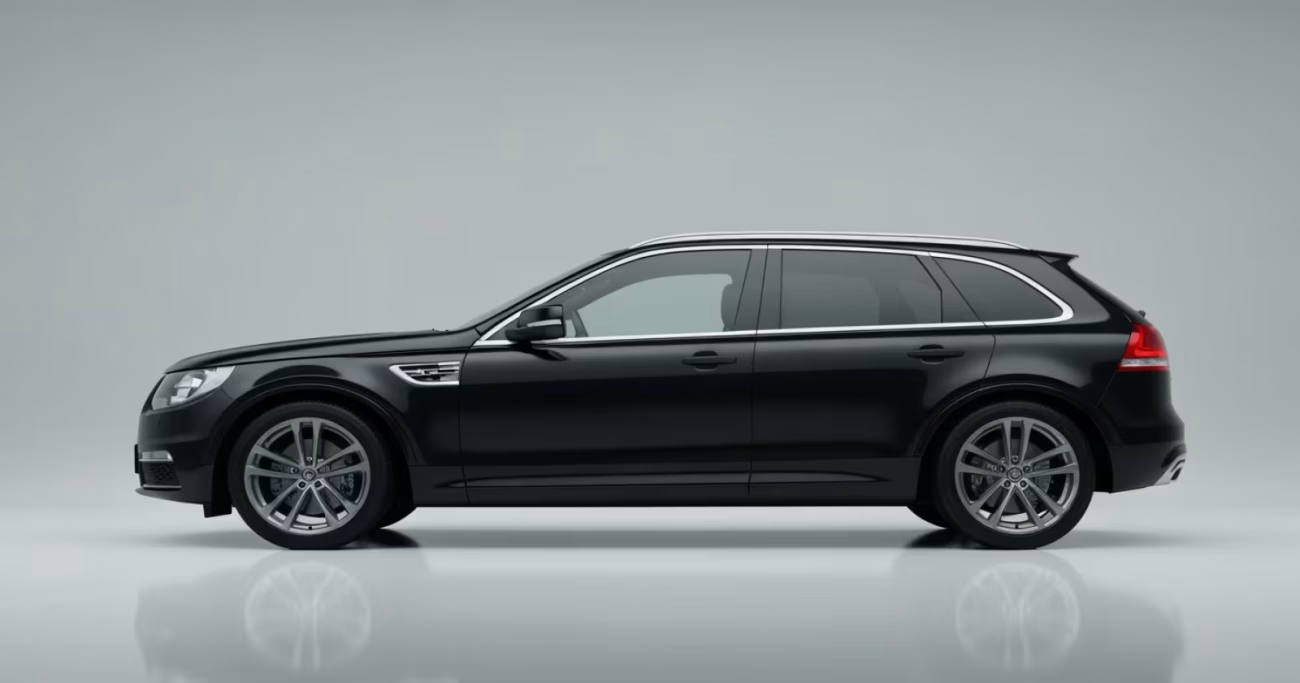
A nameplate most people assumed was dead just came back swinging — and it brought an 800V electric platform, Huawei LiDAR, and a direct rivalry with Porsche to the fight. The Freelander brand is no longer just a forgotten Land Rover badge; it’s now an independent automaker with 6 vehicles planned and China’s premium SUV market squarely in its crosshairs.
I’ve been tracking JLR’s complicated China strategy for a while, and this move genuinely surprised me. The Freelander 97 concept isn’t a rebadge or a quiet market exit dressed up as a launch — it’s a calculated bet on Chinese engineering, British design, and one of the most competitive EV markets on earth.
Why the Freelander 97 looks exactly like a Defender
The design here is not subtle. The boxy nose, upright tail, and squared-off profile are unmistakably pulled from the Defender playbook — intentionally so, since JLR’s contribution to the entire Freelander brand is styling and nothing else. The platform, the powertrain, and the tech all come from Chery.
What ties this back to the original Freelander identity are 2 very specific details: the opposed triangular rear side windows and the distinctive logo, both inherited directly from the 1997 original. It’s a smart design shortcut — use Defender credibility for mass recognition, then use the old Freelander glass pattern to signal heritage to anyone paying close attention. The coach-opening rear doors are a new addition that push the concept firmly into luxury territory.
The real story behind that 800V electric platform
Chery’s 800V pure electric architecture is what underpins the 97, and that puts this concept in the same technical tier as the Porsche Macan Electric and Hyundai‘s E-GMP platform. For a brand most Western buyers have never heard of, that’s an aggressive opening statement. Fast charging capability and performance-grade power delivery are built in from day one.
Here’s the catch, though: the production version will almost certainly shed some of what makes the concept exciting. The 3-row seating with that wide rear bench is pure show car. The name “97” is likely going away too — JLR confirmed the production model gets a new nameplate. What should survive are the Huawei Qiankun driver assistance system with LiDAR and the intelligent all-terrain setup with predictive active shocks and differential locks. Those features aren’t window dressing — they’re what separates this from a lifestyle crossover with off-road stickers.
Six models planned and Chery’s platform runs through all of them
The 97 is just the first of a family of 6 Freelander vehicles, all riding Chery’s architecture. Not all of them will be pure EVs — some will use PHEV or EREV systems, which gives the brand real flexibility across China’s tiered buyer market. That range is something JLR’s own lineup in China simply could not deliver at scale.
JLR pulled back from local Chinese production entirely, leaving one of the world’s biggest car markets without a meaningful presence. Freelander is the replacement strategy — premium-feeling vehicles that look like JLR designed them, built on local infrastructure, at a cost structure that actually works in 2026. The brand won’t wear a Land Rover badge, which fits JLR’s wider “House of Brands” pivot, but the visual DNA is close enough that the halo effect will be real.
| Model | Platform | Powertrain | ADAS | Edge |
|---|---|---|---|---|
| Freelander 97 (concept) | Chery 800V EV | Pure electric | Huawei Qiankun + LiDAR | Off-road tech + JLR styling |
| Porsche Macan Electric | PPE 800V | Pure electric | Porsche InnoDrive | Brand prestige + performance |
| Land Rover Defender | MLA (MHEV/PHEV/EV) | Multi-powertrain | Terrain Response 2 | Proven off-road heritage |
| Chery Exeed RX | Chery EV platform | PHEV / EV | Standard suite | Value pricing in China market |
Global ambitions that almost certainly won’t reach the US
JLR China boss Qing Pan went on record saying Freelander has “potential for global expansion,” and I don’t think that’s empty talk. Southeast Asia, the Middle East, and parts of Europe are plausible targets within the next few years if the China launch lands well. The styling quality alone gives this brand a real shot in markets that respond to visual luxury.
The US is a different conversation entirely. The combination of Chinese manufacturing, the complex joint venture structure, and the current regulatory climate around Chinese-made vehicles makes an American arrival a distant prospect at best. For now, the production version of the 97 — under whatever name JLR chooses — is expected to go on sale in China later in 2026. How that launch performs will determine whether “global expansion” stays a talking point or becomes a real roadmap.
If you follow JLR’s strategy, the Chinese EV market, or just love watching brand comebacks unfold in real time, this is the story to watch through the rest of 2026. The production reveal and final naming decision will tell us everything about how seriously JLR is treating Freelander as a long-term play — keep this one bookmarked and check back when that announcement drops.
