
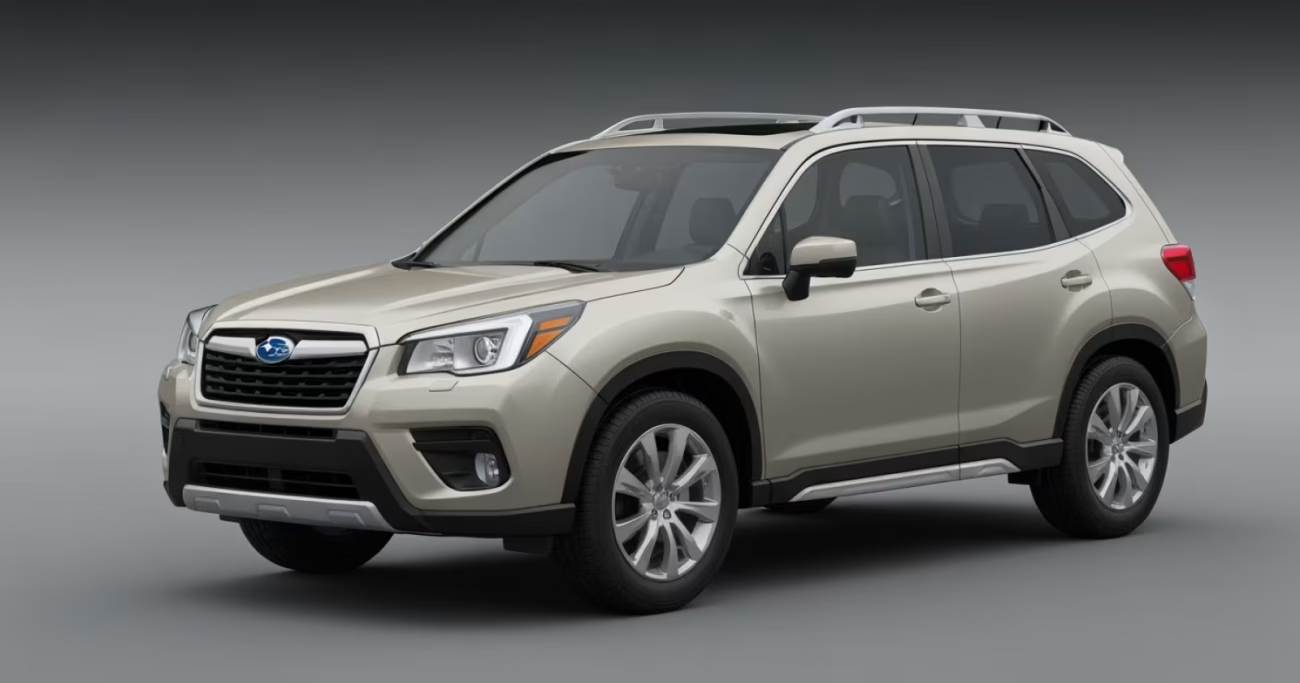
Subaru just proved that going green doesn’t have to mean going soft. The 2027 Forester Wilderness Hybrid landed at the New York Auto Show this week, and it’s the kind of reveal that makes you do a double-take — more horsepower, a dramatic fuel economy jump, and every single piece of trail-ready hardware from the original kept completely intact.
This is the first time Subaru has ever given the Wilderness badge a hybrid powertrain. And from where I’m standing, the timing couldn’t be better for buyers who want capability without the guilt trip at the pump.
More power and fewer fill-ups — at the same time
The setup under the hood is a 2.5-liter horizontally opposed boxer engine paired with electric motor assistance, producing a combined 194 hp. That’s a 14 hp improvement over the standard Wilderness model’s 180 hp figure, which already punches reasonably well in this segment.
But here’s the number that really turns heads: Subaru is claiming up to 25 percent better fuel economy compared to the existing Wilderness’s 28 city/24 highway ratings. For a truck that’s built to crawl through mud and gravel, that kind of efficiency gain without any sacrifice in off-road attitude is genuinely unusual. Most of the time, the eco version of a tough SUV quietly trims the capability list. Subaru went the other direction.
The off-road hardware is completely untouched — and that matters
What makes the Forester Wilderness tick in the dirt isn’t just marketing language. You get 9.3 inches of ground clearance, a mechanical all-wheel drive system that Subaru specifically differentiates from electronically simulated AWD, specially tuned suspension, all-terrain tires, and improved approach and departure angles. None of that changed when the hybrid badge went on.
Subaru’s argument here is clear: a proper mechanical AWD system behaves predictably off-road in a way that software-managed setups sometimes don’t. I’ve driven enough crossovers that confidently badge themselves as trail-ready only to spin out on a mild gravel slope to appreciate that distinction. The Wilderness Hybrid isn’t pretending to be capable — it starts from the same foundation that earned the non-hybrid version its reputation.
The interior keeps it real for people who actually use these things
Inside, you get an 11.6-inch central touchscreen and a configurable 12.3-inch digital gauge cluster, along with Subaru’s EyeSight driver assistance suite. These are the same features showing up across the refreshed Forester lineup, so there’s no feeling of being handed hand-me-down tech because you chose the off-road trim.
What I genuinely appreciate is the material choice throughout the cabin. Subaru went with weather-resistant, easy-clean surfaces designed specifically for people who return from a trail with wet boots, muddy gear, and zero patience for finicky interiors. It’s a small detail that adventure-focused buyers will feel immediately. The hybrid battery also doesn’t steal any luggage space — cargo capacity holds at 27.5 cubic feet with seats up and expands to a generous 69 cubic feet with them folded flat.
| Spec | Detail |
|---|---|
| Combined Output | 194 hp (197 PS) |
| Engine | 2.5-liter boxer + electric assist |
| Fuel Economy Improvement | Up to 25% over standard Wilderness |
| Ground Clearance | 9.3 inches (236 mm) |
| Cargo Space (seats up / down) | 27.5 / 69 cu-ft |
| Central Display | 11.6-inch touchscreen |
| Estimated Base Price | ~$41,000 (approx. $3,000 hybrid premium) |
| Expected On Sale | Late 2026 |
The price question Subaru isn’t answering yet — but we can do the math
Subaru hasn’t released official pricing for the Forester Wilderness Hybrid. The current non-hybrid Wilderness starts at $38,385, and looking at what the brand charges for the hybrid treatment on other Forester trims, a $3,000 premium lands us somewhere around $41,000 to start. That’s a reasonable ask for the efficiency gains on offer, though Subaru will need to confirm that before buyers can fully commit.
For context, a Jeep Wrangler 4xe — the most obvious comparison for someone wanting hybrid capability off-road — starts significantly higher and comes with a very different driving personality. The Forester Wilderness Hybrid is aimed at buyers who want weekend trail access without turning every commute into an expedition. It’s a more livable proposition, and the late 2026 arrival window gives Subaru time to sharpen that pricing story before the first deliveries roll out.
If you’ve been sitting on the fence about whether to go hybrid or stick with a traditional off-road-ready SUV, the Forester Wilderness Hybrid is exactly the kind of vehicle that removes that dilemma entirely. Keep an eye on Subaru’s official channel for pricing confirmation closer to the on-sale date — this is one worth tracking from now until the window sticker goes live.
