
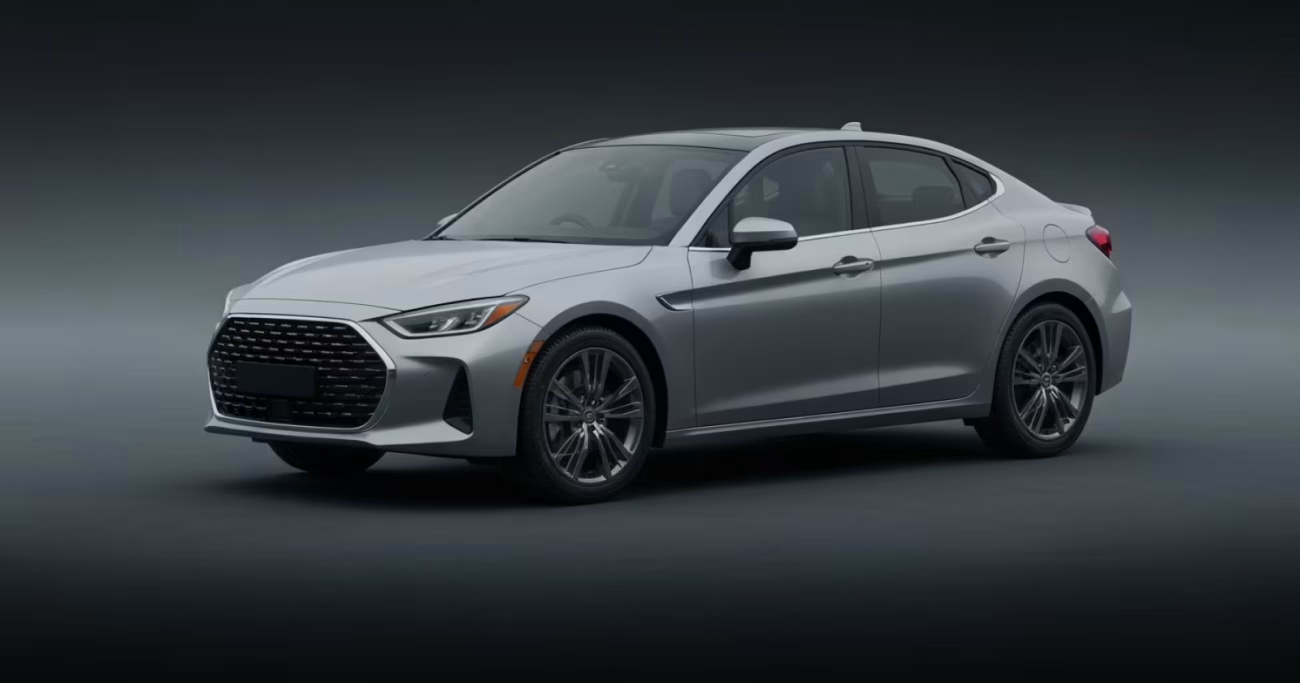
Nissan delivered just 56 Ariya electric SUVs across the entire United States in the first quarter of 2026. In that same period, Toyota moved 10,029 units of its bZ — a jump of nearly 79% year over year. Those two numbers tell almost the entire story of where the EV market stands right now.
Six months after the $7,500 federal EV tax credit was eliminated, the US battery-electric market is not dead. It is, however, splitting hard into winners and losers — and the gap between those two groups is widening every single month.
Toyota and Lexus Are Rewriting the EV Leaderboard
Toyota’s bZ posted first-quarter deliveries of 10,029 units, up a staggering 78.8% from Q1 2026. That is not a rounding error or a fleet distortion — that is genuine retail momentum in a market most analysts wrote off as stalled. The Lexus RZ went even further, more than tripling its quarterly pace to 4,456 units.
Here’s the real story: Toyota has more EV firepower on the way. The C-HR, the bZ Woodland, and the Highlander are all rolling out this year, meaning Q1 was just a preview. If the brand sustains anything close to this trajectory through the rest of 2026, Toyota could challenge GM’s position as the No. 2 EV seller behind Tesla before year’s end.
Hyundai’s Ioniq 5 Wins While the Ioniq 6 Gets Axed
Hyundai moved 9,790 Ioniq 5 units in the first quarter — a 14% gain that puts it right in the conversation with Toyota’s bZ. The brand also added 1,990 Ioniq 9 deliveries from its new three-row SUV, which only just launched. Overall, Hyundai’s 205,388 US deliveries were up 1% from Q1 2026, a result the company credited largely to hybrid models.
What Hyundai isn’t saying loudly enough is that the Ioniq 6 is done. Sales collapsed 75% to just 829 units this quarter, and in March the brand confirmed the sedan’s cancellation. The lesson is brutal but clear: American EV buyers want SUVs, not sedans, and no amount of efficiency awards will change that reality right now.
GM’s Numbers Look Ugly Even When They Don’t
GM still holds the No. 2 EV spot behind Tesla across its full brand portfolio, and that is genuinely impressive. The new Cadillac Optiq and Vistiq contributed 2,847 and 1,902 deliveries respectively, and the GMC Sierra EV pickup ticked up 3.1% to 1,288 units. Those are solid numbers for premium and work-focused segments.
Here’s the catch — the rest of GM’s EV lineup is bleeding out. Chevy Blazer EV fell 82.6% to 1,077 units. The Hummer pickup and SUV dropped 52.5% combined. Silverado EV slid 41%. Even the Equinox EV, GM’s most aggressively priced electric, slipped 7.2% to 9,589 units. The brand is simultaneously the EV market’s second-place holder and one of its biggest underperformers. Those two things can both be true.
| Model | Q1 2026 Units | Year-Over-Year Change | Starting Price |
|---|---|---|---|
| Toyota bZ | 10,029 | +78.8% | ~$38,000 |
| Hyundai Ioniq 5 | 9,790 | +14% | $35,000 |
| Chevy Equinox EV | 9,589 | -7.2% | ~$35,000 |
| Lexus RZ | 4,456 | +200%+ | ~$56,000 |
| Kia EV6 | 2,023 | -46% | ~$43,000 |
| Honda Prologue | 3,319 | -65.3% | ~$48,000 |
| Nissan Ariya | 56 | -98.6% | ~$41,000 |
Nissan and Honda Are Watching Their EV Futures Evaporate
56 units. That is what Nissan’s Ariya amounted to in Q1 2026 — down from 4,148 in the same quarter a year ago. The redesigned 2026 Leaf was supposed to cover that loss, but it opened at just 668 deliveries, down 71.2% from the previous generation’s Q1 pace. For a brand that once led the modern EV era with the original Leaf, this is a collapse that demands a serious strategic response.
Honda’s situation is equally grim. The Prologue SUV — co-developed with GM — fell 65.3% to 3,319 units, and the brand quietly killed the anticipated Acura RSX before it ever hit a showroom. American Honda’s total US sales were down 4.2% to 336,830 vehicles. The brand has no credible EV pipeline visible right now, which means every quarter from here gets harder, not easier.
Why This Matters
- Tax credit removal is separating genuinely competitive EVs from lineup fillers
- SUV body styles dominate — EV sedans are being cancelled across the industry
- Toyota’s late EV entry is now outpacing legacy EV players on volume
The verdict: The EV market in Q1 2026 is not in freefall — it is in a sorting process. Toyota and Hyundai proved that the right product at the right price still sells without a federal subsidy. Nissan and Honda proved the opposite just as clearly. I think buyers who have been waiting on the sidelines should pay attention to these numbers, because models from struggling brands are hitting dealerships with real discounts right now. The window to buy well below MSRP on an EV from a brand fighting for volume is open — and it will not stay open forever.
If you are shopping for an EV in 2026, use this quarter’s data as your roadmap. The brands growing sales do not need to discount heavily. The brands shrinking will deal. Choose your moment accordingly.
