
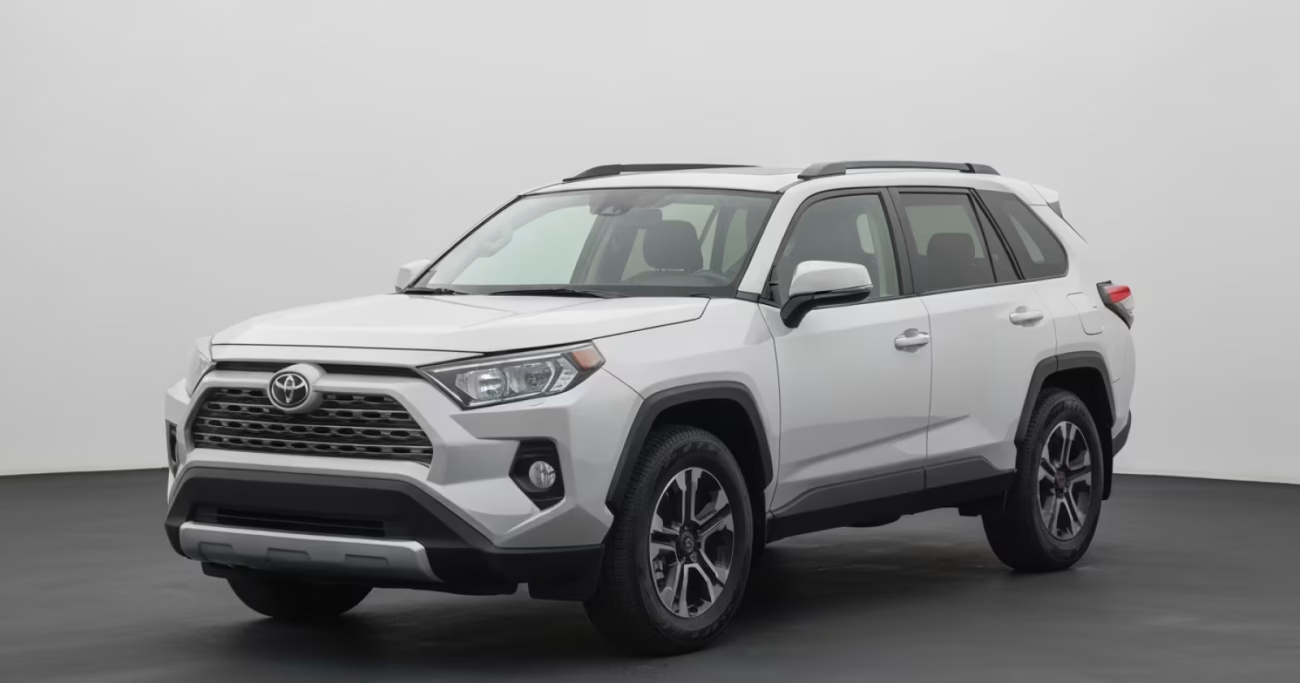
America’s best-selling non-truck SUV just posted its worst quarterly numbers in years — and the timing couldn’t be more uncomfortable for Toyota. The RAV4, a vehicle that nearly hit 500,000 sales in 2026, has been cut almost in half through the first three months of 2026.
Here’s the catch: this isn’t a demand problem. It’s a supply crisis hiding behind a model launch, and the ripple effects are already reshaping which Toyotas are flying off lots right now.
A production gap nobody prepared buyers for
When Toyota rolled out the all-new 2026 RAV4, it did so without having its Kentucky manufacturing plant fully ramped up. The result? Walk into a dealer today and the handful of new RAV4s on the lot carry VINs traced back to Japan or Canada — not the domestic plant that normally floods the US market with inventory.
March sales told the whole ugly story. Units moved dropped from 41,509 in March 2026 to just 21,693 this year. Year-to-date, the figure collapsed from 115,402 to 59,869 — a shortfall roughly equal to Toyota’s entire Highlander run last year. A Toyota spokesperson confirmed to CarBuzz that “RAV4 volume was impacted by the model changeover to the all-new model,” adding that production shifts during transitions like this are typical. Typical, yes. Painless, absolutely not.
The 4Runner surge that nobody expected this early
While the RAV4 bled units, something unexpected happened across the rest of Toyota’s showroom floor. The 4Runner went from moving 6,980 units in March 2026 to 12,380 this March — a 77% monthly jump. Year-to-date, the numbers are even more staggering: 33,244 sales versus just 8,435 in the same period last year, a 294% increase that frankly reads like a typo until you verify it twice.
The Grand Highlander picked up additional slack, climbing from 10,059 to 13,985 units in March alone, up 35% for the year. It looks like buyers who walked in for a RAV4 and found empty lots simply moved up the size and price ladder. Toyota didn’t lose those customers — it accidentally upsold them.
The electric side of Toyota is quietly having a moment
I’ll be honest: I didn’t expect the bZ EV story to be this strong given everything happening with the RAV4. But the bZ jumped from 1,678 units a year ago to 4,019 last month, with year-to-date sales up 79%. That’s not a fluke — that’s a trend building real momentum.
Over at Lexus, the RZ electric grew 161% in March to 1,842 units and is up 207% year-to-date at 4,456 sales. These are still modest numbers in absolute terms, but the trajectory signals that Toyota’s electric push is finding its audience faster than the skeptics predicted. The real story here is that Toyota’s EV division is growing while most competitors are struggling to hold ground.
What Toyota isn’t saying about the markup situation
Toyota says full production capacity should return by summer 2026. That sounds reassuring until you do the math: nearly half a year of constrained supply on a vehicle that typically drives close to half a million annual sales. The damage to the annual scorecard will be significant, no matter how fast Kentucky ramps back up.
The other thing worth understanding is dealer behavior right now. Lots with even a small stock of 2026 RAV4s are reportedly attaching steep markups — because scarcity always brings out that playbook. If you’re shopping for one today, expect to negotiate harder than usual or wait until summer inventory normalizes. Toyota’s overall Q1 numbers only dropped 0.1%, from 569,420 to 570,270, which sounds almost miraculous given the RAV4 hole. The 4Runner, Grand Highlander, and bZ together essentially absorbed a 55,000-unit deficit. That resilience is genuinely impressive — but it won’t last forever if the RAV4 doesn’t come back strong in Q2 and Q3.
| Model | March 2026 | March 2026 | YTD Change |
|---|---|---|---|
| RAV4 | 41,509 | 21,693 | -48% |
| 4Runner | 6,980 | 12,380 | +294% |
| Grand Highlander | 10,059 | 13,985 | +35% |
| bZ EV | 1,678 | 4,019 | +79% |
| Lexus RZ | 706 | 1,842 | +207% |
If you’re in the market for a new SUV right now, this situation actually creates a rare window of opportunity. The 4Runner is surging in popularity but dealers still have inventory at reasonable prices. The Grand Highlander is offering more space and features than the RAV4 at a competitive price point, and sales staff are motivated. Don’t wait for RAV4 stock to normalize if your lease or trade-in timeline is pressing — explore what Toyota’s lineup has pivoted toward, because right now those models are priced and stocked to move.
