
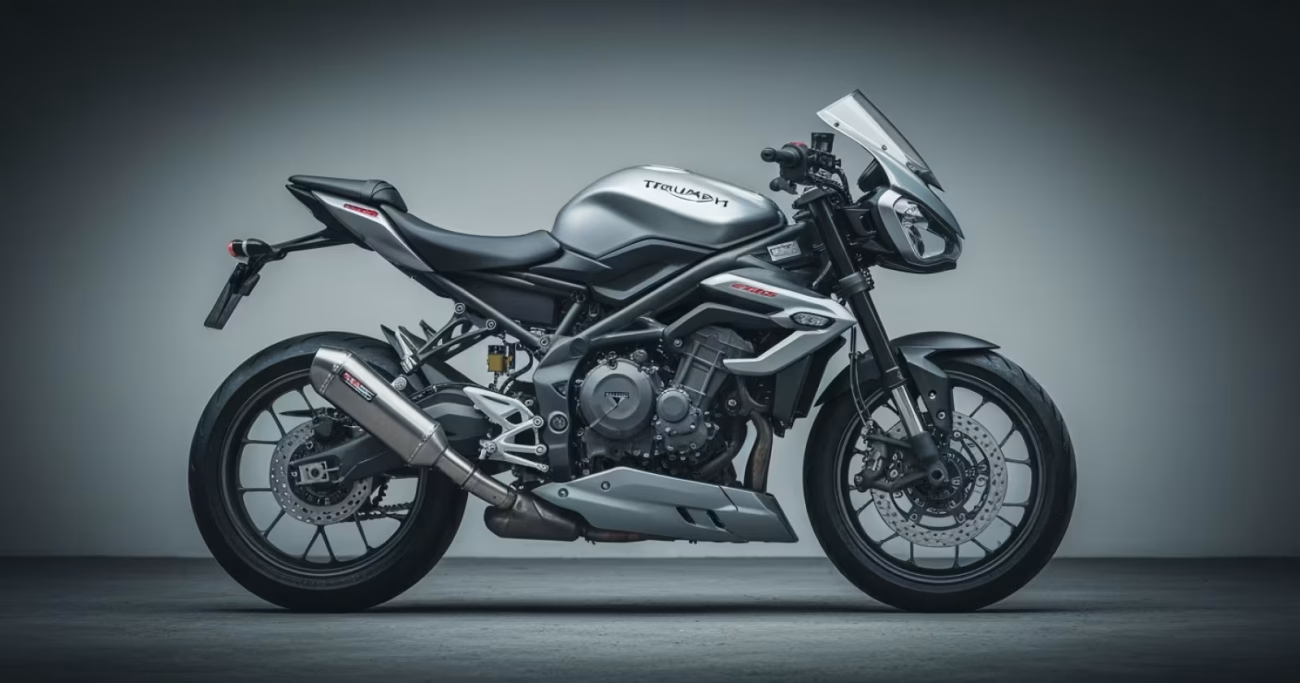
Something unexpected is happening at Triumph dealerships across India right now, and the riding community cannot stop talking about it. The 2026 model year Triumph — still wearing its ‘400’ badge — has started arriving on showroom floors ahead of an official launch on April 6, but what sits beneath that unchanged skin may quietly reshape the 400cc segment forever.
I have been following this story closely, and the more dealer-level images surface, the clearer the picture becomes. This is not a facelift. This is not a new colour refresh. This is a calculated engine-displacement swap driven by India’s tax laws, wrapped inside a body that looks exactly like last year’s Speed 400.
Same Face, New Engine — The Identity Game Bajaj-Triumph Is Playing
Walk into a Triumph showroom today and the MY26 unit on the floor will look completely familiar. Same body panels, same silhouette, same colour options — and yes, the ‘400’ badge is still firmly bolted on. So why is everyone calling this the Speed 350?
India’s revised GST structure places motorcycles above 350cc displacement in a significantly higher tax bracket. To stay competitive on pricing and protect buyer value, Bajaj Auto — Triumph’s local manufacturing partner — has been developing a new engine that falls just below the 350cc threshold. This is not unprecedented. Bajaj’s own Dominar 400 has run a 373cc engine for years while keeping the ‘400’ name. Badge logic and displacement math rarely need to agree in India.
What The New Engine Actually Delivers
The outgoing Speed 400 is powered by a 398.15cc single-cylinder unit. The incoming engine is expected to use a reduced bore while retaining the same stroke, bringing it under the 350cc GST cutoff. Despite downsizing, the performance numbers are genuinely impressive.
The new engine produces 40.6 PS at 9,000 rpm and 33.2 Nm at 7,500 rpm. Peak power is essentially identical to the current model — outstanding engineering work. Torque does see a dip from the current 37.5 Nm, but 33.2 Nm delivered at 7,500 rpm will still feel punchy across Indian city roads and open highways where the Speed 400 already shines. The 6-speed gearbox and slipper clutch setup are expected to carry over completely unchanged.
Colours Spotted At Showrooms
Two colour combinations have been seen in the fresh batch of dealer arrivals — Racing Red with Pearl Metallic White, and Racing Yellow with Pearl Metallic White. Both are existing shades from the current lineup. Bajaj-Triumph is clearly maintaining full visual continuity, meaning a MY26 unit and a current showroom model would be impossible to tell apart at a glance.
That consistency is deliberate. It signals that no buyer who already owns a Speed 400 will feel their motorcycle has been superseded by something dramatically different — and no new buyer will feel like they are getting a lesser product.
Speed 350 vs Speed 400 — Key Numbers At A Glance
| Specification | Speed 400 (Current) | Speed 350 MY26 |
|---|---|---|
| Engine Displacement | 398.15cc | Sub-350cc (TBA) |
| Max Power | ~40 PS @ 8,000 rpm | 40.6 PS @ 9,000 rpm |
| Peak Torque | 37.5 Nm | 33.2 Nm @ 7,500 rpm |
| Gearbox | 6-speed + Slipper Clutch | 6-speed + Slipper Clutch |
| Badging | Speed 400 | Speed 400 (unchanged) |
| Official Launch | Already on sale | April 6, 2026 |
The GST Strategy — Smarter Than It Looks
When GST was first revised to penalise motorcycles above 350cc, Bajaj chose to absorb the extra cost rather than pass it on to buyers. That decision built significant goodwill and helped the Speed 400 hold its ground in a fiercely competitive market. With the new sub-350cc engine, the motorcycle now falls into a lower tax bracket — opening the door for Bajaj to either stabilise pricing again or even quietly pass on a modest benefit to new buyers.
This engine swap is expected to roll out across the entire Triumph 400 family in India — the Scrambler 400X, Speed T4, Scrambler 400 XC, and the rumoured Thruxton 400 are all likely candidates. That is a sweeping portfolio shift driven entirely by tax strategy, not by any engineering weakness in the current platform.
What This Means For Royal Enfield And The Segment
The Speed 400’s most direct competition in India has always been Royal Enfield — specifically the Hunter 350 and the Meteor 350. At its current price point, the Speed 400 offers a premium European-badged package that has consistently attracted buyers who want something beyond the RE universe without paying import-spec money.
A smarter-taxed, same-badged, nearly identical-performing Speed 350 arriving in April 2026 is genuinely concerning news for Royal Enfield’s product planners. If the price holds or dips slightly, the value equation tilts even further in Triumph’s favour. The Hunter 350 has done well on accessibility and brand loyalty — but the Speed 350 is now gunning for exactly the same wallet.
April 6 Is The Date That Matters
The official launch on April 6 will confirm the final displacement figure, whether the ‘400’ badge officially becomes ‘350’, and crucially — whether pricing moves at all. My strong instinct is that Bajaj-Triumph keeps the ‘400’ name intact, just as Bajaj did with the Dominar 400. It is as much a branding decision as an engineering one, and changing a badge that has already earned loyalty in the market would be unnecessary risk.
If you have been holding off on buying a Speed 400, I genuinely recommend waiting until April 7 before making any decision. The MY26 units on showroom floors right now are a preview of something more tax-efficient, and the full story is just around the corner. Visit your nearest Triumph dealership, get a walkaround on the new arrival, and book a test ride slot — this one deserves your full attention before you sign anything.
