
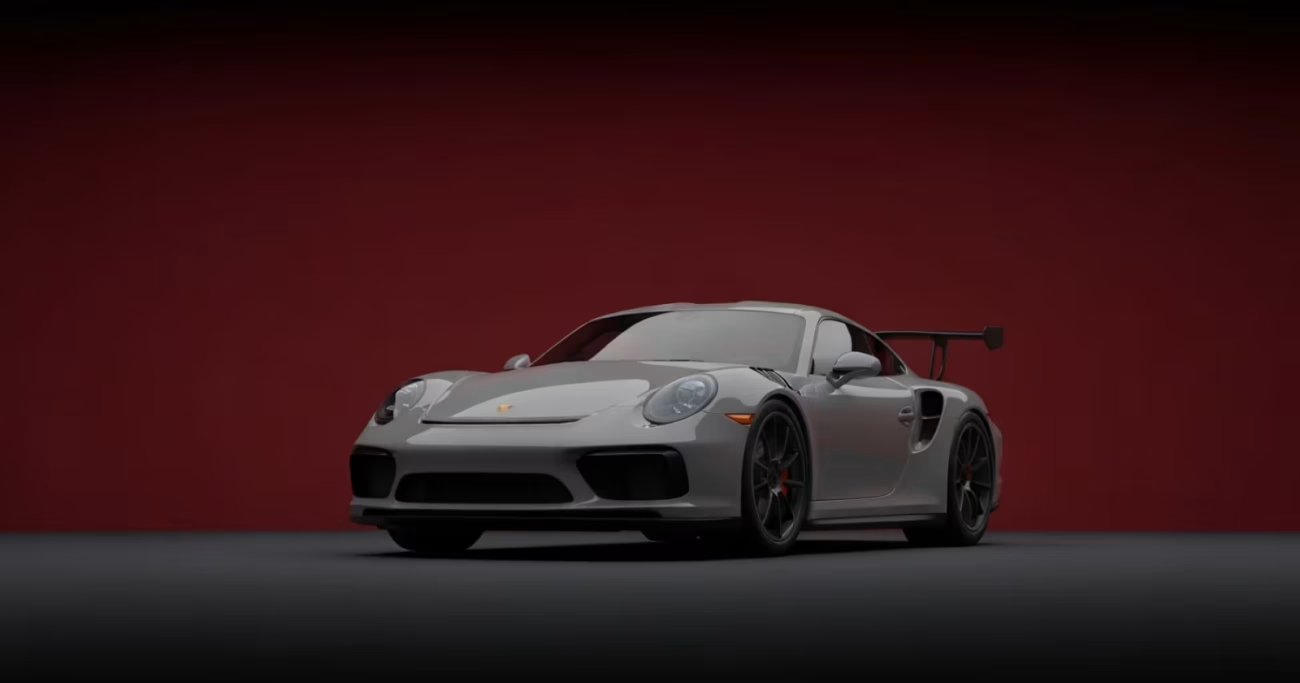
The 9,000-rpm scream of a naturally aspirated Porsche flat-six might have an expiration date. The man who has run Porsche’s GT car program for over 2 decades just cracked the door open on a future nobody in the enthusiast world wants to think about.
At a glance
| Spec | Detail |
|---|---|
| Current GT3 engine | 4.0L naturally aspirated flat-six |
| Redline | 9,000 rpm |
| Current GT3 output | ~502 hp |
| 911 GTS output (hybrid turbo) | 532 hp |
| 911 Turbo S output | 701 hp |
| Likely future GT3 range | 600+ hp (estimated) |
| Biggest threat | European emissions regulations |
What Andreas Preuninger isn’t saying out loud
In a recent interview with Car and Driver, Andreas Preuninger — the head of Porsche’s GT division since 2000 — was asked point-blank how long the naturally aspirated GT3 can survive. He didn’t give a timeline. But he didn’t shut the door either, and that silence tells you everything.
Preuninger acknowledged that turbocharging is on the table. He also hinted that European emissions rules would likely force the change there first, with the U.S. market potentially holding on a bit longer. When the guy who literally builds these cars starts hedging, the writing is on the wall.
Every other 911 already breathes through a turbo — think about that
Here’s the part that makes this feel inevitable. Every single 911 variant outside the GT3 already uses forced induction. The base Carrera runs twin turbos to make 388 hp. The GTS uses a single turbo with an electric motor keeping the compressor spooled. The GT3 is the last holdout in the entire lineup.
I find it hard to believe Porsche can keep justifying a standalone naturally aspirated engine program for one model when the rest of the range has moved on. Engineering resources are finite, and emissions compliance costs real money. The economics alone are pushing this toward a conclusion most purists don’t want to hear.
The real story is the power gap that makes no sense
Right now the GT3 sits at roughly 500 hp. The GTS — a car positioned below it — already makes 532 hp with its hybrid turbo setup. That hierarchy is broken. A turbocharged or hybridized GT3 would almost certainly leap well past 600 hp, slotting neatly between the GTS and the 701-hp Turbo S.
That kind of power in a car with the GT3’s chassis tuning, its center-lock wheels, its rear-axle steering, and its obsessive weight savings would be genuinely terrifying. I’m not saying more horsepower automatically means a better GT3. But Porsche’s engineers have earned the benefit of the doubt when it comes to making turbocharged engines feel alive.
Purists face an uncomfortable choice — boost or batteries
There’s a fork in the road and neither path leads where traditionalists want to go. Porsche could turbocharge the GT3’s flat-six and preserve a purely combustion powertrain. Or they could keep it naturally aspirated but bolt on hybrid assistance to meet emissions targets. Either way, the current formula dies.
I’d argue the turbo route is more honest. Porsche’s latest e-turbo technology in the GTS eliminates most of the lag that made older turbocharged cars feel disconnected. A GT3-spec version of that tech, tuned for track response rather than daily comfort, could deliver something genuinely special. The character would change, yes. But character has changed before — the jump from air-cooled to water-cooled felt like the end of the world in 1998, and the 911 came out stronger.
How it stacks up
| Model | Power | Aspiration | Starting Price | Edge |
|---|---|---|---|---|
| Porsche 911 GT3 (current) | 502 hp | Natural | ~$175,000 | 9,000-rpm redline, purist icon |
| Porsche 911 GTS | 532 hp | Hybrid turbo | ~$152,000 | More power, lower price |
| McLaren Artura | 690 hp | Hybrid twin-turbo | ~$237,000 | Raw output, mid-engine layout |
| BMW M4 CSL | 543 hp | Twin-turbo | ~$140,000 | Price-to-power ratio |
Why this matters
- The last naturally aspirated performance flat-six may disappear
- Future GT3 could jump past 600 hp for the first time
- European emissions rules are dictating supercar engineering timelines
The verdict
The naturally aspirated GT3 is living on borrowed time, and Preuninger’s comments make that clearer than anything Porsche has said publicly before. A turbocharged GT3 with north of 600 hp and Porsche’s latest e-turbo tech would be a different animal — faster, probably more capable, but missing that mechanical purity that made the car a legend. If you’ve been on the fence about buying a current GT3, this is your signal. The next one will be brilliant, but it won’t sound like 9,000 rpm of unassisted fury. That era is closing, and it won’t come back.
