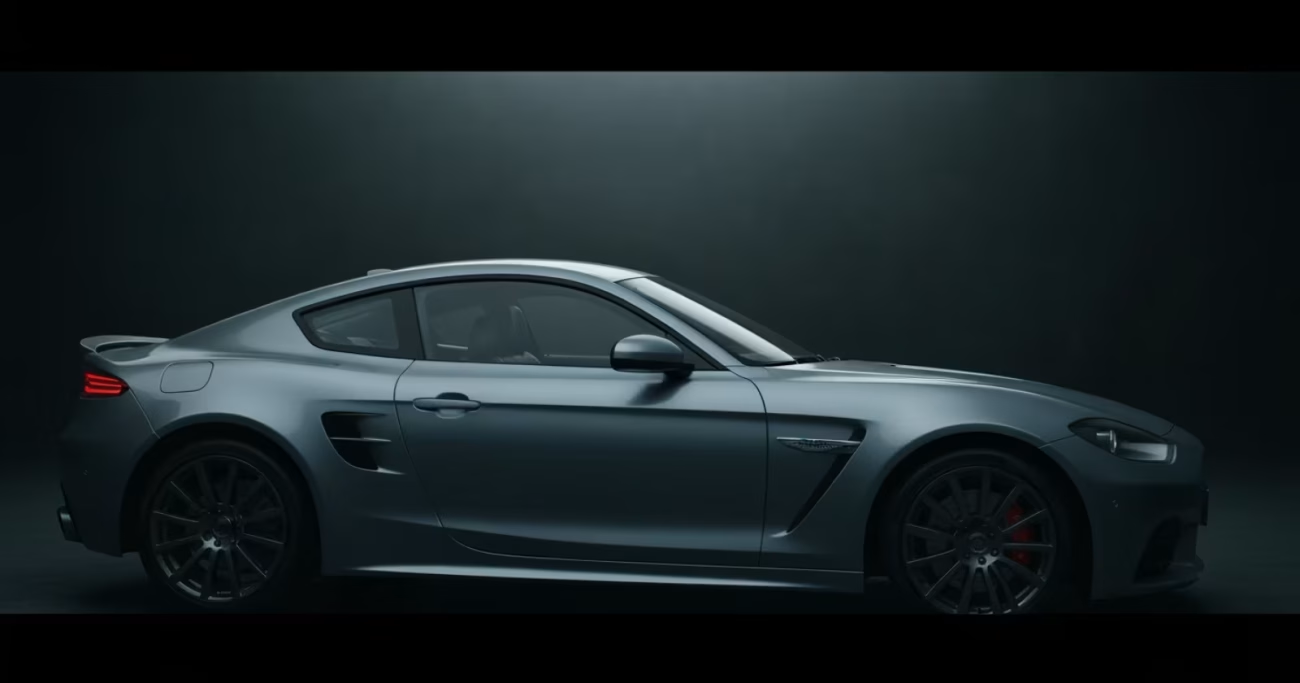
A British luxury automaker is picking a legal fight with the same company that owns a massive chunk of its stock. That kind of corporate drama doesn’t happen every day, and the fallout could get expensive for everyone involved.
Aston Martin has filed an appeal with the High Court of England and Wales, challenging a March 2026 ruling that sided with Chinese automotive giant Geely over a winged logo used on London black cabs. Geely holds roughly 17 percent of Aston Martin. Let that sink in for a moment.
At a glance
| Spec | Detail |
|---|---|
| Plaintiff | Aston Martin (founded 1913, Gaydon, UK) |
| Defendant | Geely / LEVC (17% Aston Martin shareholder) |
| Disputed logo | LEVC winged emblem introduced in 2022 |
| Initial ruling | UKIPO dismissed Aston Martin’s claim, March 2026 |
| Court fees owed | £2,200 (under $3,000) paid by Aston Martin |
| Appeal filed with | High Court of England and Wales, April 2026 |
| Aston Martin CEO | Adrian Hallmark |
Why suing your own investor changes everything
Corporate lawsuits happen all the time. But suing a company that owns 17 percent of your shares is a different animal entirely. Geely is Aston Martin’s 3rd largest shareholder, sitting behind the Yew Tree Consortium led by Canadian billionaire Lawrence Stroll and the Public Investment Fund of Saudi Arabia. This is not some faceless patent troll. This is family.
The real story here is what this says about Aston Martin’s priorities. The company has been navigating financial turbulence for years, and picking a fight with one of the entities propping up your balance sheet feels like a bold move. Either Aston Martin’s legal team believes the brand identity is worth the risk, or internal tensions between these stakeholders run deeper than anyone on the outside realizes.
Geely’s defense worked once and it might work again
Aston Martin first challenged the LEVC logo back in January 2023, filing a formal opposition with the UK Intellectual Property Office. The argument was straightforward. LEVC’s winged emblem looked too much like the iconic wings that have graced the hoods of the Vantage, DB12, Vanquish, and DBX for decades. Geely’s lawyers came prepared with a simple counter: winged logos are everywhere in the auto industry.
They pointed to Bentley, Mini, and several other brands that use wing-styled designs. The UKIPO agreed and highlighted specific differences in the LEVC emblem, including a circular medallion with a horse at its center versus Aston Martin’s rectangular wordmark. The straight lines radiating from the LEVC badge look nothing like the geometric feathers on an Aston Martin. Honestly, if I had to pick the closest visual match, I would say the LEVC logo borrows more from Mini than from Aston Martin.
What Aston Martin isn’t saying about the real risk
Here is the catch nobody seems to be discussing. Aston Martin is already in a fragile financial position. The company has struggled with profitability for years, cycling through restructuring efforts and leadership changes. Alienating a shareholder that controls 17 percent of your equity is not just a legal gamble. It is a financial one.
Geely is not a small player. The Chinese conglomerate owns Volvo, Polestar, Lotus, and a stake in Mercedes-Benz. If this legal battle sours the relationship, Geely could reduce its position in Aston Martin or become a far less cooperative partner at the board level. The £2,200 in court fees from the first ruling was pocket change. The strategic consequences of a prolonged fight could cost orders of magnitude more.
The one detail that makes this appeal a long shot
The UKIPO ruling was not ambiguous. The office specifically noted that no reasonable consumer would confuse an Aston Martin sports car with a London black cab. These are 2 completely different vehicles serving completely different markets at completely different price points. A DB12 starts north of $240,000. An LEVC TX electric taxi is a workhorse built for city streets. The overlap in buyer demographics is essentially zero.
For the High Court appeal to succeed, Aston Martin will need to present a fundamentally different argument than the one the UKIPO already rejected. Trademark law does allow for broader brand dilution claims, and that may be the angle here. But proving dilution when the products are this far apart is a steep hill to climb. Courts tend to look at actual consumer confusion, and I struggle to imagine anyone walking into an Aston Martin dealership thinking they are buying a taxi.
How it stacks up
| Brand | Logo style | Vehicle segment | Starting price | Edge |
|---|---|---|---|---|
| Aston Martin | Winged wordmark | Luxury sports cars | ~$150,000+ | Most iconic wing design in automotive history |
| LEVC (Geely) | Winged horse medallion | Electric taxis | ~$75,000 | Distinct circular emblem with horse motif |
| Bentley | Winged B | Ultra-luxury sedans/GTs | ~$200,000+ | Wings predate most competitors |
| Genesis | Winged crest | Premium sedans/SUVs | ~$42,000 | Modern wing design, no legal challenges |
Why this matters
- Shareholder-versus-brand lawsuits could set new corporate governance precedent
- Winged logo disputes may force industry-wide trademark clarity
- Aston Martin’s financial stability hangs on stakeholder relationships
The verdict
Aston Martin is betting its brand identity is worth more than shareholder harmony, and that is a calculation that could backfire spectacularly. The UKIPO ruling was clear, the logos are different enough, and the products occupy entirely separate universes. If the High Court agrees with the original decision, Aston Martin will have spent legal resources and political capital for nothing while potentially damaging a critical investor relationship. This case is less about wings on a badge and more about how far a legacy brand will go to protect its image in an era of global automotive consolidation.
If you are following the business side of the auto industry, keep a close eye on this appeal. The outcome will signal how aggressively legacy brands can defend visual trademarks when winged logos are practically an industry standard. Bookmark this story and stay tuned for the High Court ruling, because the implications stretch far beyond Gaydon.
