
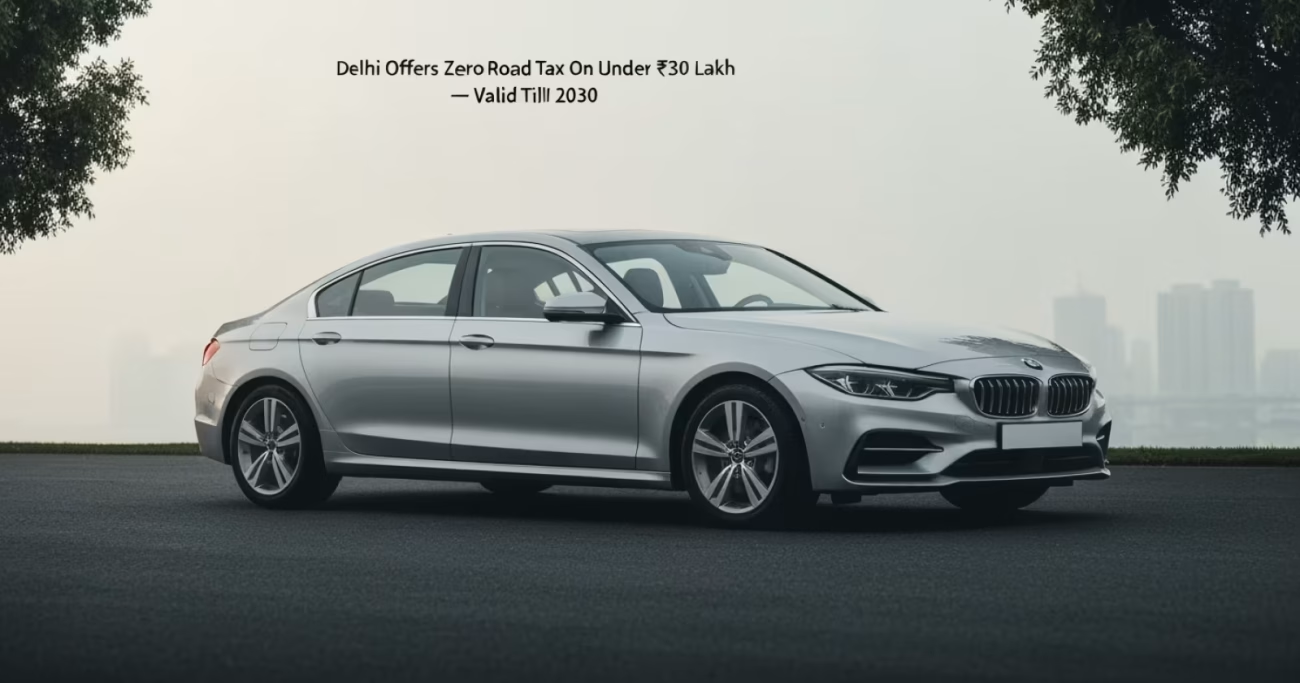
Delhi’s government has just handed EV buyers what might be the biggest financial incentive seen in the national capital in years — and if you’re planning to buy an electric car in 2026, this draft policy could literally save you lakhs on your on-road price. The Delhi Draft EV Policy 2026–2030 is out for public feedback, and the details are genuinely exciting for anyone eyeing an affordable electric vehicle.
As per the draft, electric cars priced up to ₹30 lakh (ex-showroom) will receive a 100% exemption on both road tax and registration fees — and this benefit runs all the way until March 31, 2030. That’s not a small saving. In Delhi, road tax and registration can add anywhere from ₹1.5 lakh to nearly ₹3 lakh to an EV’s on-road cost depending on the price band. Eliminating that entirely changes the buying math dramatically.
Which EV Brands Gain The Most From This Policy
I think it’s clear who wins the most here — and the numbers back it up. Tata Motors, Mahindra, and MG Motor India are currently the top three EV brands in India, commanding a combined market share of over 87% in FY2026. Every single one of their core models falls within the ₹30 lakh bracket, which means the full benefit lands directly on the cars most people are actually buying.
Tata’s lineup — the Punch EV, Nexon EV, and Harrier EV — are all well under this threshold. The Safari EV, expected to launch later this year, is also expected to slot within this price range. Mahindra’s new electric SUVs, including the BE 6 and XEV 9e, have variants that qualify. MG’s Windsor EV, currently one of the best-selling EVs in the country, qualifies comfortably too. For buyers in Delhi, this could mean that the on-road price of these EVs comes dangerously close to — or even dips below — the equivalent petrol model from the same segment. That’s the tipping point the industry has been waiting for.
The Hybrid Surprise That Stirred The Industry
Here’s where the policy gets more nuanced — and a little controversial. The draft also proposes a 50% exemption on road tax and registration fees for strong hybrid vehicles priced under ₹30 lakh. This is a major win for Maruti Suzuki and Toyota, who currently dominate the strong hybrid space in India.
Models like the Grand Vitara, Hyryder, Innova HyCross, and Invicto all sit within the eligible price band and will benefit from this partial relief. Honda’s City Hybrid also qualifies, making it an even stronger proposition for buyers who want better fuel efficiency without fully committing to an EV. Looking further ahead, Kia is reportedly working on a made-in-India hybrid Sorento, and Hyundai is also developing hybrid offerings — both of which could land just in time to benefit from this framework.
That said, pure-play EV manufacturers are not entirely comfortable with this move. They’ve consistently argued that subsidising hybrids dilutes the push toward full electrification. The debate around this is likely to heat up during the 30-day public consultation period the government has opened before finalising the policy.
What The Numbers Look Like For Buyers
| Model | Brand | Approx. Price (Ex-showroom) | Road Tax Benefit |
|---|---|---|---|
| Punch EV | Tata Motors | ₹10–15 lakh | 100% Waiver |
| Nexon EV | Tata Motors | ₹14–20 lakh | 100% Waiver |
| Harrier EV | Tata Motors | ₹22–28 lakh | 100% Waiver |
| BE 6 | Mahindra | ₹19–27 lakh | 100% Waiver |
| Windsor EV | MG Motor | ₹14–21 lakh | 100% Waiver |
| Grand Vitara Hybrid | Maruti Suzuki | ₹17–24 lakh | 50% Waiver |
| Hyryder Hybrid | Toyota | ₹17–22 lakh | 50% Waiver |
| City Hybrid | Honda | ₹20–22 lakh | 50% Waiver |
The Broader Vision Behind The Policy
This isn’t just about cutting taxes. The Delhi Draft EV Policy 2026–2030 is designed to build on the foundation laid by the 2020 EV policy and push electrification into every corner of the capital’s transport ecosystem. One of the most significant announcements in the document is that from January 1, 2027, only electric three-wheelers will be allowed to be registered in Delhi. That’s a hard deadline — and it signals how serious the government is about reshaping the city’s mobility landscape.
The backdrop to all this is strong market momentum. India’s electric car sales surged approximately 84% year-on-year to nearly 2 lakh units in FY2026. Strong hybrid sales grew 35% to about 1.12 lakh units in the same period. The policy is clearly designed to accelerate both curves, though EVs receive the more generous treatment.
Premiums EVs Miss Out — And That’s Intentional
One detail worth flagging: EVs priced above ₹30 lakh receive zero benefit under this draft. Luxury electric offerings from BMW, Mercedes-Benz, and even higher-spec variants of some domestic brands won’t see any road tax relief. The government has made a deliberate choice to concentrate incentives where they drive the most market movement — the mass-market segment where price sensitivity is highest. I think that’s a smart call, and it keeps the policy focused rather than scattered.
If you’re a Delhi resident currently comparing an EV against a petrol or diesel alternative, my honest advice is this — run the on-road price calculation now, before the policy is finalised. Once it goes live, the savings on registration and road tax could make the decision significantly easier than it looks on paper today. Share your feedback with the government during the consultation window, and get your numbers ready. This window until 2030 is genuinely one of the best financial cases for going electric that Delhi has ever seen.
