
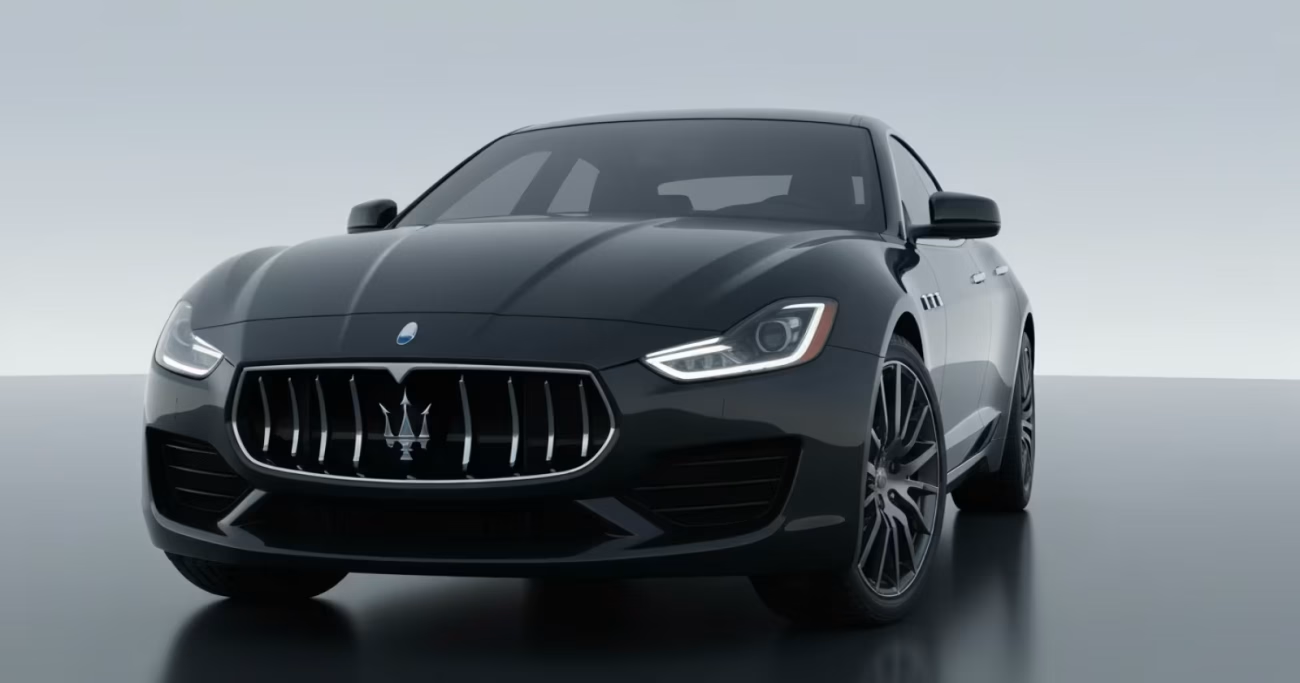
Maserati sold fewer than 8,000 cars in all of last year — a number that would embarrass a small regional automaker, let alone a century-old Italian icon. Now, with a new concept set to land at Paris in October, the brand is making what might be its most important public statement in a generation.
I’ve been watching Maserati limp through one crisis after another for years, but this moment feels genuinely different. Here’s why that October reveal could define whether Maserati survives the decade — or quietly disappears into Stellantis’ asset column.
A brand on the edge with one chance to matter again
Let’s be honest about where Maserati stands right now. Three models in the lineup. One grand tourer that’s nearly 20 years old. An SUV riding on Jeep underpinnings. A supercar sold in such small quantities it barely registers as a production vehicle. That is not the portfolio of a healthy, thriving luxury automaker.
Sales have been cut in half despite new model launches. The previous Stellantis CEO called it a marketing problem. He’s gone now, and the new leadership isn’t saying much more — except that an investor event in May will bring “more details.” For a brand this close to the edge, vague promises from executives don’t inspire confidence. What Maserati needs is a moment. Paris in October is that moment.
Gilles Vidal says the current design era is finished
Gilles Vidal, the newly appointed head of design for Stellantis in Europe, is the man holding the pencil on whatever comes next. He told Auto Express plainly that “the current look is now kind of finished.” That’s a significant statement from someone running design across one of the world’s largest automotive groups.
Vidal mapped out Maserati’s design history in broad strokes — curvy and romantic through the 1950s and ’60s, sharp and wedge-driven through the ’70s and ’80s, then a return to softer curves in the modern era. Each shift took roughly two decades. We’re due. When Vidal says “if you wait a few months, you’ll see what we are thinking,” that’s not corporate deflection — that’s a designer who’s genuinely excited about something and barely containing it.
| Detail | Info |
|---|---|
| Concept reveal event | Paris Motor Show, October 2026 |
| Design lead | Gilles Vidal, Stellantis Europe Design Head |
| Maserati 2026 global sales | Under 8,000 units |
| EV investment scrapped | Over $1.5 billion |
| Current lineup size | 3 models |
| Oldest current model age | ~20 years (GranTurismo lineage) |
| Design shift frequency | Every ~20 years historically |
The $1.5 billion EV retreat nobody wants to explain
Here’s the catch that gets buried in the optimistic concept-car headlines. Maserati went all-in on electrification — not halfway, not cautiously, but with over $1.5 billion committed. Then the EV market softened, particularly in the United States, and Stellantis pulled the plug. Some of those projects were canceled before they were ever publicly revealed. That’s not a pivot. That’s a retreat.
The real story is what that retreat signals about Maserati’s internal status within Stellantis. With 14 brands under one roof and pressure from shareholders to consolidate, every brand needs a clear reason to exist. Maserati’s reason used to be electrified Italian exclusivity. Now that story is gone, and the replacement hasn’t been written yet. The concept car in Paris needs to be the first chapter of something credible — not just a beautiful distraction.
Why Stellantis keeping Maserati alive is not guaranteed
Stellantis CEO Antonio Filosa addressed Maserati’s future during an earnings call, but only to say that more would be revealed at an investor event in May. That kind of answer — defer, delay, manage expectations — is exactly what gets brands quietly shelved. Stellantis has brands that sell virtually no unique models at all, and even they survive the quarterly review. But Maserati’s losses are harder to hide.
The brand has survived worse. It’s been pulled from the grave multiple times across its history, always by someone who couldn’t resist the pull of the trident badge. The question in 2026 isn’t whether Maserati deserves to live — it almost certainly does. The question is whether Stellantis has the appetite to fund what a genuine revival actually costs. A concept car is cheap. The production program that follows it is not.
I genuinely want this to work. Maserati at its best produces cars that make no rational sense and are completely irresistible because of it. If Vidal and his team deliver something at Paris that resets the brand’s visual identity the way the early 2000s GranTurismo did, there’s a real path forward. If you care even slightly about the survival of real automotive character — the kind that doesn’t get built by algorithm — keep October blocked on your calendar. This one is worth your attention.
