
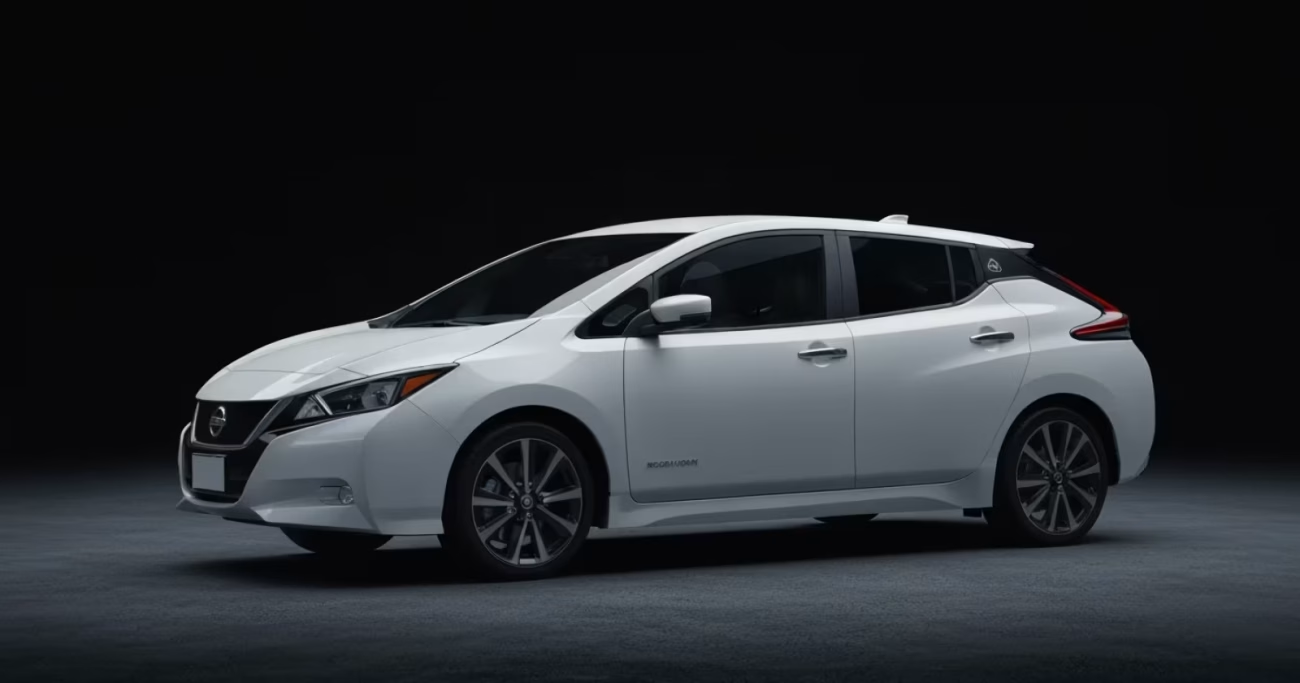
A brand-new electric vehicle catching fire while parked, switched off, and not even plugged in is the kind of nightmare scenario most EV owners assume will never happen to them. For 51 owners of Nissan’s latest Leaf, that scenario is very real — and Nissan is now telling them to stop using their cars entirely.
I’ve covered a lot of EV recalls, but this one hits differently. The fact that the vehicle doesn’t need to be charging or even running to potentially ignite makes this significantly more alarming than the average battery safety notice.
What is actually wrong with these Leaf batteries
The root cause traces back to Nissan’s 78-kWh lithium-ion battery pack and a manufacturing defect at the supplier level. During production, the edge of a battery cathode may have been torn. If that torn section folds over inside the cell, it creates an internal short circuit — and that’s where the danger begins.
An internal short circuit can cause the battery to overheat rapidly. Nissan describes the worst-case outcome as a “thermal event,” which is industry language for a battery fire. The terrifying part is that this can happen spontaneously, with no warning signs, while the car is simply sitting in a driveway or parking lot.
Two fires have already happened — neither car was charging
This isn’t a theoretical risk. Two real incidents have already been confirmed. The first occurred on February 16 in Japan, when a parked 2026 Leaf suffered a thermal event while sitting outside. The second happened on March 2, right at a Nissan dealership in the United States.
In both cases, the vehicles were completely off and not connected to any charger. That detail is critical. Most EV fire stories involve charging sessions gone wrong, which at least gives owners a window of awareness. Here, there’s no trigger event — no charger, no ignition, no warning light. The fire can start with zero input from the driver.
| Detail | Information |
|---|---|
| Affected Vehicles | 51 units of the 2026 Nissan Leaf |
| Battery Pack | 78-kWh lithium-ion |
| Root Cause | Torn battery cathode edge during supplier manufacturing |
| Risk | Internal short circuit leading to thermal event (fire) |
| Confirmed Incidents | 2 (Japan: Feb 16, US: Mar 2) |
| Injuries Reported | None |
| Nissan’s Shipping Halt | March 17, 2026 |
| Fix | Free battery module or full pack replacement |
How Nissan tracked down exactly which cars are affected
What’s actually impressive here is how Nissan identified the 51 vehicles. The company used telematics data to scan other Leafs actively in use, looking for unusual battery behavior. From there, it traced suspect battery packs directly to specific VINs using what it calls “one-to-one traceability” between the battery and each affected car.
That level of supply chain visibility is genuinely useful in a crisis like this. Nissan stopped shipping potentially affected Leafs on March 17 and placed vehicles already at ports on hold. The targeted approach means most 2026 Leaf owners are in the clear — but the 51 flagged vehicles represent a live fire risk sitting in driveways right now.
What affected owners need to do starting today
Nissan says affected owners will receive direct calls immediately, with interim recall letters set to go out starting April 17. But waiting for a letter is not the right move if you suspect your vehicle is included. The guidance is straightforward: park the car outside, away from any structure or building, stop charging it entirely, and bring it to a dealer as soon as possible.
Dealers are prepared to hand over a free rental car while the fix is developed. When a proper remedy is ready, Nissan will replace the damaged battery modules — or the entire battery pack if needed — at no cost to the owner. No out-of-pocket expenses, no arguments. Given the severity of the risk, that’s the bare minimum Nissan could offer, and they’re delivering it.
If I owned one of these 51 vehicles, I wouldn’t wait for any letter. I’d be calling my Nissan dealer today, describing the recall, and arranging that rental car before tonight. A free fix is meaningless if a fire happens in your garage first.
The broader lesson here isn’t that EVs are dangerous — it’s that manufacturing quality control at the supplier level is still one of the weakest links in the EV supply chain. This specific defect could have affected any automaker using a similar battery supplier. Nissan’s quick use of telematics to isolate affected VINs is actually a model for how recalls should be handled, but the underlying problem — a torn cathode that slipped through quality checks — is a reminder that battery manufacturing tolerances need to be tighter industry-wide.
If you own a 2026 Nissan Leaf or know someone who does, share this immediately and contact Nissan directly at their customer support line to verify whether your VIN is among the 51 flagged vehicles. Don’t park it in an enclosed garage tonight until you know for certain.
