
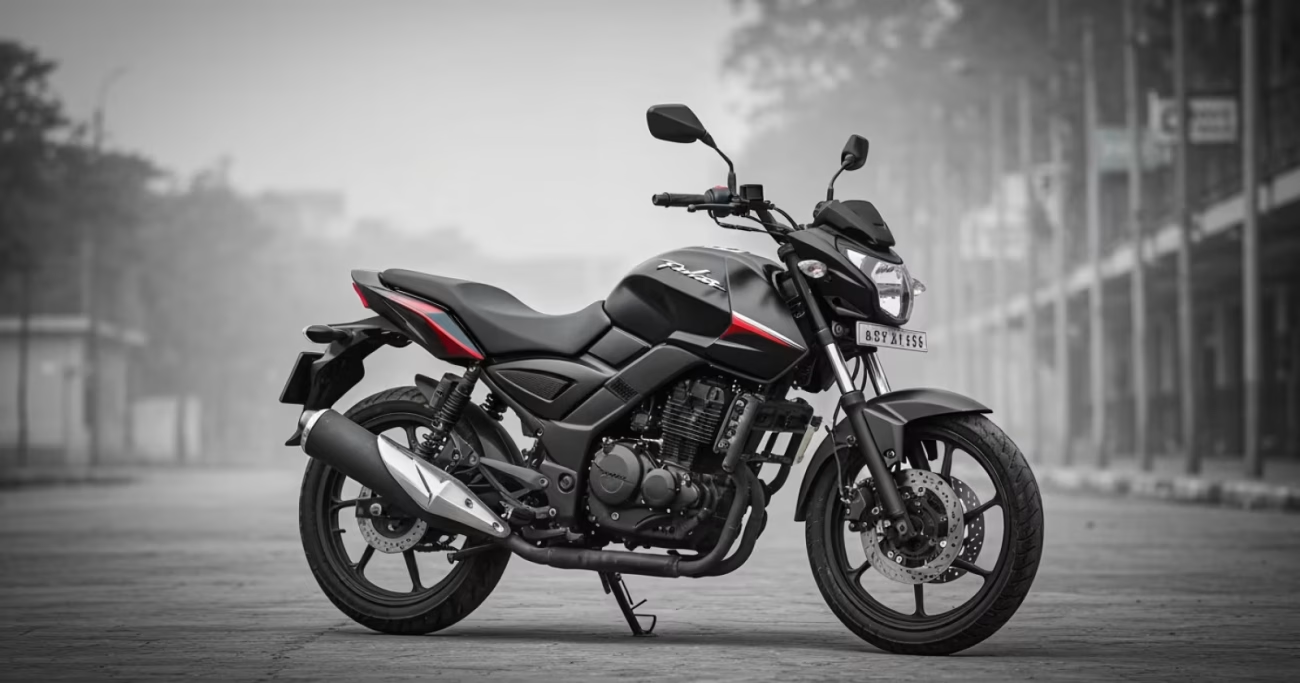
Few rivalries in Indian two-wheeler history hit as hard as this one. Bajaj has just brought the Pulsar 180 back to the 180cc arena in 2026, and TVS Motor’s Apache RTR 180 is not about to hand over the crown without a fight.
I’ve gone deep into the specs, features and equipment of both bikes so you don’t have to. Whether you’re choosing your first performance commuter or upgrading from something smaller, here is everything you need to know before you walk into a showroom.
The Price Gap That Starts The Conversation
The Bajaj Pulsar 180 is priced at ₹1.22 lakh ex-showroom, while the TVS Apache RTR 180 costs ₹1.26 lakh ex-showroom. That ₹4,000 gap is slim, but in the Indian two-wheeler market, slim gaps matter. Bajaj is clearly positioning the Pulsar 180 as the value-aggressive option. The question is whether that small saving means compromise anywhere important — and the answer is more nuanced than you’d expect.
Design — Muscle vs Sport
Design is always subjective, but both brands know exactly what they’re doing here. The Pulsar 180 arrives with a new White colour that genuinely looks premium, and it carries the Pulsar 220F’s chunky exhaust — giving it a more muscular, road-presence-heavy silhouette. Bajaj has also made a smart move by equipping the Pulsar 180 with a full LED lighting setup across the board.
The Apache RTR 180 has a sharper, sportier aesthetic that TVS fans have loved for years. It also offers a White variant that looks equally sharp. However, I noticed that the Apache RTR 180 still ships with halogen turn indicators in 2026, which feels like a step behind for a bike in this price bracket. Both bikes share clip-on handlebars, a stepped single seat, and a 790 mm seat height — so ergonomics will feel familiar to riders switching between them.
Engine and Performance Numbers
Both bikes run engines close to the 180cc mark, and the peak power figure of 16.7 bhp is identical. That’s not a coincidence — this is a fiercely competitive segment. Where the Apache RTR 180 pulls a small advantage is torque: 15.5 Nm against the Pulsar 180’s figure, which gives it a slight edge in mid-range pull.
Here is where it gets interesting, though. The Pulsar 180 reaches its peak power and peak torque at lower RPMs than the Apache. That means real-world city riding — traffic lights, stop-go conditions, overtaking slower vehicles — could actually feel more effortless on the Pulsar. Both use a 5-speed gearbox, so gear ratios are broadly similar in spread.
Chassis, Weight and Ride Dynamics
The Apache RTR 180 has a shorter wheelbase at 1,326 mm versus the Pulsar 180’s 1,340 mm. Shorter wheelbase typically translates to sharper turn-in, which TVS riders already know. The Apache also has a higher ground clearance at 180 mm — useful on India’s unpredictable roads.
The single biggest chassis differentiator, in my view, is weight. The Apache RTR 180 weighs just 140 kg. The Pulsar 180 comes in at 156 kg — a 16 kg difference. That gap directly impacts the power-to-weight ratio, acceleration feel and overall agility. Lighter usually feels livelier, especially in aggressive urban riding.
Where Bajaj fights back is with the fuel tank. The Pulsar 180 gets a larger 15-litre tank, which is a meaningful real-world advantage for daily commuters and weekend highway riders who hate stopping at petrol pumps. On suspension, both get RSU telescopic front forks and twin-shock rear units. Braking hardware sees the Pulsar 180 offer larger disc brakes at both ends, though both bikes are equipped with single-channel ABS on the front wheel only.
Features Face-Off — The Spec Sheet Surprises
| Feature | Bajaj Pulsar 180 | TVS Apache RTR 180 |
|---|---|---|
| Price (Ex-showroom) | ₹1.22 lakh | ₹1.26 lakh |
| Peak Power | 16.7 bhp | 16.7 bhp |
| Peak Torque | Lower than RTR 180 | 15.5 Nm |
| Kerb Weight | 156 kg | 140 kg |
| Ground Clearance | — | 180 mm |
| Fuel Tank | 15 litres | Smaller |
| Instrument Cluster | Fully Digital LCD | Fully Digital LCD |
| Smartphone Connectivity | Yes | Yes |
| Turn-by-Turn Navigation | No | Yes |
| USB Charging Port | Type-A (standard) | No |
| Adjustable Levers | No | Optional |
| Ride Modes | No | Yes |
| Full LED Lighting | Yes | Partial (halogen indicators) |
| Front Disc Size | Larger | Smaller |
| ABS Type | Single-channel (front) | Single-channel (front) |
Feature Highlights That Could Swing Your Decision
The Apache RTR 180 is the only bike here to offer Ride Modes — a feature that genuinely alters the bike’s performance character. That is a significant premium-feel advantage for TVS. It also offers turn-by-turn navigation through its connected cluster and optional adjustable clutch and brake levers, which sporty riders appreciate on longer runs.
Bajaj, on the other hand, gives you a standard Type-A USB charging port — something the Apache does not include. In everyday Indian use, being able to charge your phone on the move is underrated utility. The Pulsar 180 also wins on lighting completeness with its full LED setup and on sheer stopping hardware with larger discs at both ends.
So, Which One Should You Buy?
If you want a lighter, more agile machine with Ride Modes, navigation and a sportier edge, the Apache RTR 180 at ₹1.26 lakh makes a compelling case. It’s the choice for riders who chase performance feel and tech sophistication. But if you want full LED lighting, a bigger fuel tank, larger disc brakes, a USB port, and you’d rather save ₹4,000, the Pulsar 180 is a serious everyday weapon that Bajaj has clearly calibrated for Indian roads and Indian commuters.
Head to your nearest Bajaj or TVS dealership this week, take both bikes for a test ride back to back, and let your instincts make the final call. Drop your verdict in the comments below — I genuinely want to know which 180cc king wins on your streets.
