
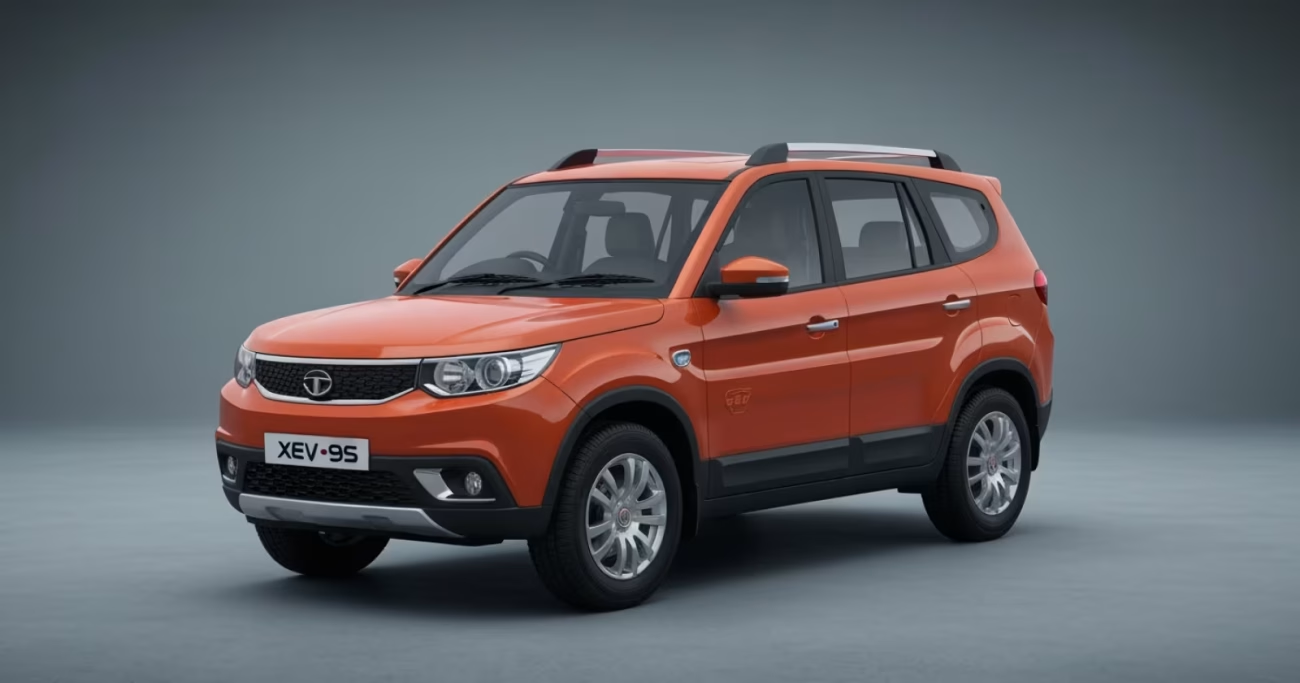
India’s electric SUV war is about to get a serious third row — and Tata Motors is the one bringing it. If you thought the Harrier EV was Tata’s biggest swing yet, the Safari EV is about to raise the stakes all over again.
The Tata Safari EV, internally codenamed Tayrona, is widely expected to launch around the Diwali festive season in 2026 — and when it does, it will become India’s first proper three-row electric SUV from a mainstream Indian brand. Here’s everything we know so far, and why I think this one genuinely matters.
Why the Safari EV Makes Complete Sense Right Now
Tata Motors has built an impressive EV portfolio — from the Tiago EV at the entry level all the way up to the Harrier EV at the top. But one glaring gap remained: the Safari, which is the only Tata model without an electric counterpart. That changes this festive season.
Just like the ICE relationship — where the Safari is essentially the 7-seat big brother to the Harrier — the Safari EV will sit above the Harrier EV as a 7-seat electric alternative. The logic is clean, the positioning is obvious, and frankly, it’s a segment nobody in India is currently serving well. Production is slated to begin around August 2026, which keeps the Diwali timeline realistic.
Platform, Design and What’s Changing Inside
The Safari EV is expected to ride on the same acti.ev+ platform that underpins the Harrier EV. From a design standpoint, expect the same signature EV treatment Tata gave the Harrier — a closed-off grille to optimise airflow, a slightly reworked front bumper, and new alloy wheel designs specific to the EV variant.
On the inside, Tata is likely to carry over much of the existing Safari ICE cabin — the same strategy they used successfully with the Harrier EV. That means familiar dashboard architecture, but layered with Tata’s TIDAL (Tata Intelligent Digital Architecture Layer) — the same system from the Harrier EV. This brings genuinely exciting features including auto park assist, a 540-degree surround camera system, off-road assist modes, a summon feature, and more advanced ADAS capabilities than what the current ICE Safari offers.
Battery, Range and Powertrain Options
Battery and range specs are expected to mirror the Harrier EV closely. That means two battery options — a 65 kWh unit for lower variants and a larger 75 kWh pack for top-spec versions. The Harrier EV already delivers an impressive claimed range of up to 627 km, and the Safari EV should land in a similar ballpark given the shared platform.
Drive configuration is expected to follow the same pattern: single-motor rear-wheel drive on the 65 kWh trims, and a dual-motor all-wheel-drive (QWD) system on the 75 kWh variants. Tata doesn’t publish a combined system power figure for the Harrier EV, but they do quote a combined torque output of 504 Nm — with the rear motor rated at 238 PS and the front motor at 158 PS. Expect similar numbers on the Safari EV. Fast charging at 100 kW DC is also anticipated.
Spec Comparison: Safari EV vs Mahindra XEV 9S
| Feature | Tata Safari EV (Expected) | Mahindra XEV 9S |
|---|---|---|
| Seating | 7-seat, 3-row | 6/7-seat, 3-row |
| Battery Options | 65 kWh / 75 kWh | 79 kWh / 98 kWh |
| Expected Range | ~580-627 km (claimed) | ~620 km (claimed) |
| Drive Options | RWD / AWD (QWD) | RWD / AWD |
| Fast Charging | 100 kW DC (expected) | 175 kW DC |
| ADAS | Advanced (TIDAL platform) | Advanced (MAIA platform) |
| Expected Price | ₹25 lakh+ (Ex-sh, estimated) | ₹29.99 lakh+ (Ex-sh) |
| Launch Timeline | Diwali 2026 | Expected H2 2026 |
Where the Safari EV Will Be Priced
The Harrier EV currently retails between ₹21.49 lakh and ₹28.99 lakh (ex-showroom). The Safari EV, being the larger 3-row flagship, will naturally command a premium. My expectation — and this aligns with what the segment logic suggests — is a starting price somewhere north of ₹25 lakh, likely stretching to ₹32-33 lakh for the fully loaded dual-motor AWD variant.
That pricing, if accurate, puts it right in the crosshairs of the Mahindra XEV 9S and the upcoming Vinfast VF MPV 7 (marketed under the Limo Green badge in India). But here’s the critical edge Tata brings: brand trust, an established charging network, and service infrastructure that none of the newer entrants can match today.
Why This One Is Different From Every Other 3-Row EV Attempt
India has been waiting for a proper mass-market 3-row electric SUV for years. The Kia EV9 exists but lives in a completely different price universe. The Safari EV is positioned where real Indian family buyers actually shop — and with a brand they already trust. Add TIDAL’s tech layer, the summon feature, 540-degree cameras, and proper off-road assist, and you’ve got something that isn’t just a family hauler — it’s a genuinely capable machine wrapped in a body Indian buyers are already emotionally connected to.
If Tata sticks to the Diwali 2026 launch window, the Safari EV could easily become the most talked-about EV launch of the year. I’d strongly suggest keeping a close eye on official Tata announcements in the coming months — and if you’re in the market for a 7-seat electric SUV, it’s worth waiting just a few more months before making any decision. This one could completely reset your shortlist.
