
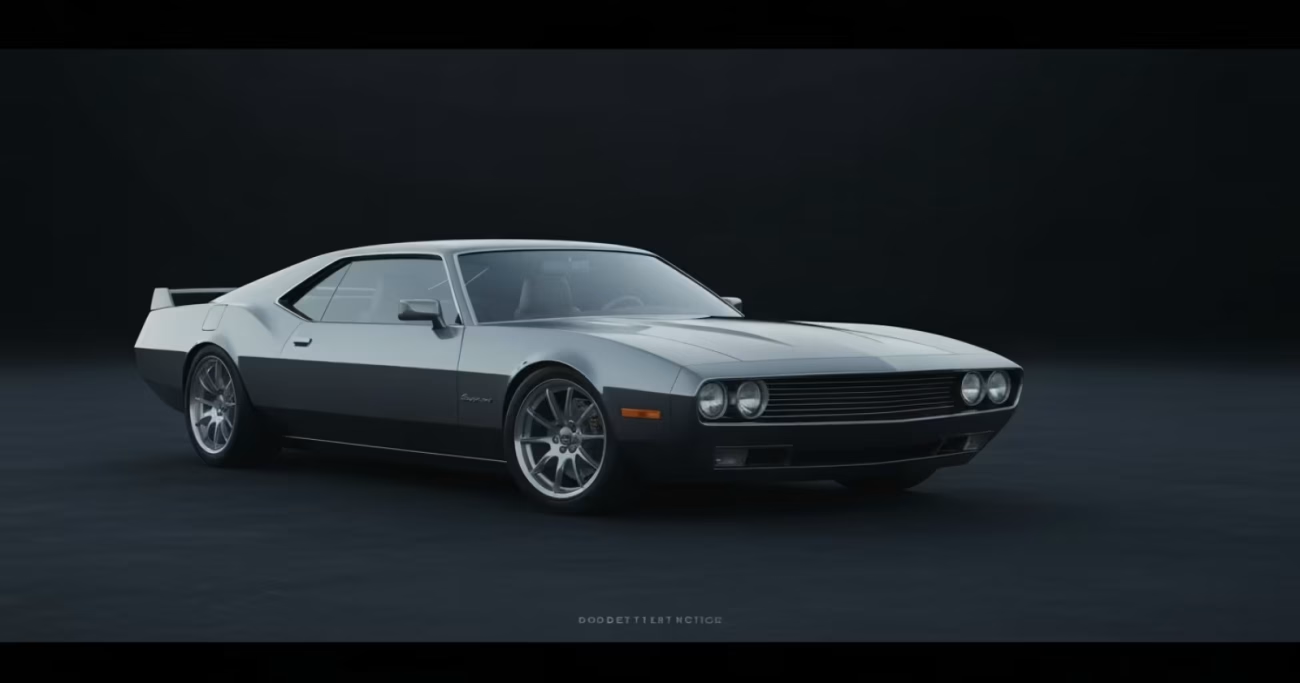
Dodge has one of the richest automotive archives on the planet, spanning over 100 years of genuine American muscle history. So it’s genuinely baffling that the brand chose to ignore all of it and let an AI hallucinate fake “family photos” instead.
The post hit Dodge’s official Instagram account like a flatbed truck with no brakes — and the comment section lit up almost immediately. I went through every image, every mistake, and every awkward brand banter exchange so you don’t have to suffer alone.
Dodge posted 3 AI images and got almost everything wrong
The setup was charming enough on paper. Dodge captioned the post “Was cleaning out the garage and came across some old family photos” — a trend that works beautifully when actual nostalgia is involved. Real old photos. Real awkward haircuts. Real cars with real histories.
Instead, what appeared was a trio of AI-generated images that looked like they were prompted by someone who had heard of Dodge vehicles but never actually seen one. The errors aren’t subtle. They’re the kind of thing any casual enthusiast catches in under 3 seconds. And that’s exactly what made the whole thing go sideways so fast.
The Neon SRT-4 recreation is a complete fiction
The first image is supposed to show a Dodge Neon — specifically captioned as “my little brother at the height of his goth phase” with what the post calls a third-gen Ram 1500 parked nearby. The Ram is mostly passable, aside from a mysteriously missing window on the extended cab. The Neon is where things collapse entirely.
The real Dodge Neon had one of the most distinctive front ends of the 1990s. That single, almost-round headlight was its signature — the face behind the famous “Hi” ad campaign that made the car feel like a personality, not just a product. The AI replaced it with double bubble headlights that Dodge never put on any Neon at any point in production. The hood is wrong. The grille is wrong. The lower fascia is wrong. Even the wheels are geometrically broken, with the hub sitting closer to the bottom of the tire than the top. This was supposed to be an SRT-4 tribute. It isn’t close.
The Viper R/T10 somehow got worse from there
The second image pairs a vintage Viper R/T10 with a Dodge Dakota in that classic reversed ghost silhouette layout — a format that actually works well when executed properly. The Dakota itself is mostly fine in the main image. Then you look at the silhouette version of the same truck and it’s a completely different vehicle. Different cab style. Different wheels. Inexplicable amounts of space above the rear tires that makes the truck look like it’s floating.
The Viper is the real disaster though. The original R/T10 had iconic 3-spoke wheels — one of the most recognizable design details in American sports car history. The AI gave the main image 4-spoke wheels, then went full abstract with deep-dish 2-spokes on the silhouette version. The roll bar and windshield were chopped down and the whole car was bulked up into something that looks more like a fever dream than a first-gen Viper. The generations of the Dakota and Viper shown don’t even match up chronologically, which after everything else barely registers as the biggest problem.
The Shadow convertible was real — but not like this
Here’s the thing most people don’t know: Dodge actually did make a Shadow Convertible. It existed. It had a big puffy soft-top cover that looked remarkably similar to a VW Cabrio. So credit where it’s due — the AI at least picked a real vehicle. The execution, however, didn’t hold up.
The sides of the car feature a body channel that never existed on the actual Shadow. A real convertible would have had body-color door handles, not what appears in the image. It’s a small detail but it’s the kind of thing that makes enthusiasts feel like the brand doesn’t actually respect its own history enough to get the basics right. And then there’s the banter between the official Dodge and Ram brand accounts beneath the post — featuring gems like “Mom did always call you her ‘heavy boy'” directed at Ram. The cringe level there is difficult to quantify.
| Image | Vehicle Shown | Key Error | Real Version Exists? |
|---|---|---|---|
| Photo 1 | Dodge Neon SRT-4 | Double bubble headlights, wrong grille, broken wheel geometry | Yes — 2003 SRT-4 is a real car |
| Photo 1 (background) | Third-gen Ram 1500 | Missing extended cab window | Yes — mostly accurate otherwise |
| Photo 2 | Viper R/T10 + Dakota | Wrong spoke count on wheels, chopped windshield, mismatched generations | Yes — both real vehicles |
| Photo 3 | Dodge Shadow Convertible | Non-existent body channel, wrong door handles | Yes — soft-top Shadow was produced |
Dodge has a real archive and chose not to use it
This is the part that stings the most. Stellantis maintains a legitimate media archive with legacy vehicle photos going back over a century. It’s publicly accessible. It’s not locked in some vault. The original photography, the real SRT-4, the actual Viper R/T10 with its proper 3-spoke wheels — all of it is sitting there, ready to be used. None of it requires a single AI prompt.
There’s a charitable reading of this whole situation: maybe Dodge deliberately made the images bad as a self-aware joke about AI car images flooding social feeds. If that was the plan, it wasn’t executed clearly enough to land. Because whether intentional or not, the overwhelming response online read it as laziness, not irony. And that’s a brand perception problem that a 3-image Instagram post probably shouldn’t be creating. The 2020 Charger GT AWD winter campaign already gave Dodge one embarrassing photoshop moment. This one makes it a pattern.
If you grew up with a Neon in the driveway or spent your teenage years dreaming about a Viper, you deserve better than AI slop standing in for your actual automotive memories. Share this with someone who owned one of these cars — they’ll either laugh or wince, possibly both. And Dodge, if you’re reading: the archive is right there. Use it.
