
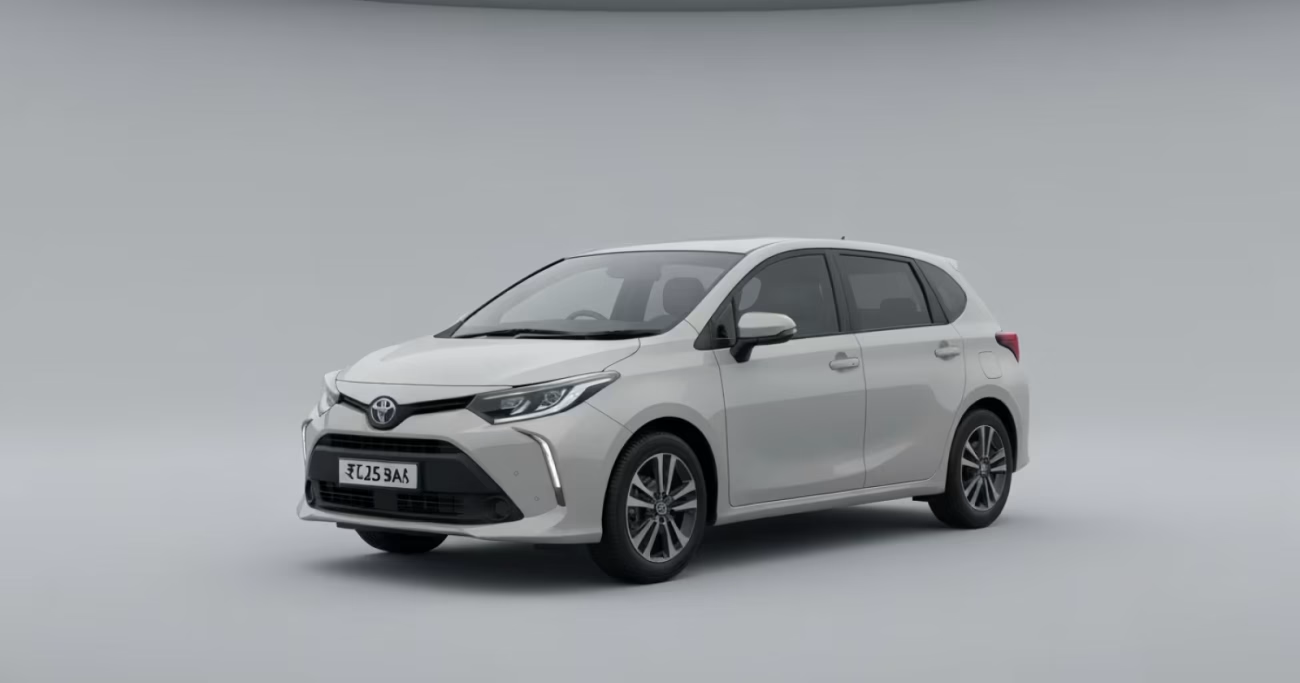
The most interesting part of Toyota’s new electric SUV is not just the badge or the range, but the way the price has been split for buyers. I think this move could make showroom conversations in India a lot more complicated, especially for anyone comparing it directly with the Maruti Suzuki eVitara.
Toyota has finally entered the mainstream electric SUV space in India with the Ebella, a badge-engineered sibling of the Maruti Suzuki eVitara. It is being manufactured by Maruti Suzuki at the Gujarat plant, but Toyota has given it a more premium identity and a pricing strategy that deserves a closer look.
Toyota takes the premium EV SUV route
The Ebella has been launched in one fully loaded variant for now, called E3. This top-spec version carries an ex-showroom price of ₹23.60 lakh, placing it clearly above its Maruti cousin in outright purchase cost.
What makes the launch more attention-grabbing is the Battery-as-a-Service pricing model. Toyota has advertised a BaaS entry price of ₹15.25 lakh, along with a battery rental charge of ₹4.99 per km.
I would treat this as the headline figure, but with one important caution. Toyota has showcased this BaaS number in its marketing communication, while the detailed official price list clarity still appears limited around whether this applies specifically to the E3 variant.
How it compares with Maruti eVitara
The natural comparison is with the Maruti Suzuki eVitara, because both SUVs are closely related under the skin. Maruti’s top-spec eVitara Alpha has been priced at ₹20.01 lakh ex-showroom without BaaS.
With BaaS, the eVitara Alpha comes in at ₹14.51 lakh, plus ₹4.39 per km as battery rental. That makes the Toyota more expensive by ₹3.59 lakh in regular ex-showroom pricing, ₹74,000 higher in BaaS entry price, and ₹0.60 per km costlier in battery rental.
| Model | Variant | Ex-showroom price | BaaS price | Battery rental |
|---|---|---|---|---|
| Toyota Ebella | E3 | ₹23.60 lakh | ₹15.25 lakh | ₹4.99 per km |
| Maruti Suzuki eVitara | Alpha | ₹20.01 lakh | ₹14.51 lakh | ₹4.39 per km |
This is where Toyota seems to be leaning on brand positioning. The Ebella may not win the price war on paper, but it could appeal to buyers who prefer Toyota’s showroom experience, styling direction, and long-term brand trust.
Battery, range and charging details
The Ebella E3 uses the larger 61 kWh battery pack. Toyota is claiming a driving range of around 543 km on a single charge, which is a strong figure for Indian urban and highway use.
Fast DC charging support is also part of the package. With the right charger, the battery can go from 10 percent to 80 percent state of charge in about 45 minutes.
For a buyer in Mumbai, Bengaluru, Delhi NCR, Pune, Hyderabad or Ahmedabad, this matters because highway charging infrastructure is slowly becoming more usable in 2026. A 543 km claimed range should reduce range anxiety for city commutes and weekend runs, although real-world numbers will depend on AC usage, speed, load and traffic.
Performance looks practical, not wild
The electric motor produces 172 bhp and 193 Nm of torque. Power goes to the front wheels, which keeps the setup simple and efficiency-focused.
I do not see Toyota pitching this as a performance EV in the dramatic sense. Instead, the numbers suggest a quick, smooth and comfortable family SUV meant for daily use, premium commuting and relaxed highway drives.
That should work well for India, where many EV buyers want silent acceleration, low running costs and easy drivability more than aggressive sportscar-style performance. The instant torque should still feel responsive in city traffic, especially compared with regular petrol SUVs.
Feature list is loaded
Toyota has not gone light on equipment with the E3. The SUV gets a floating centre console, ventilated front seats, a sliding and reclining rear bench, and a 40:20:40 split layout for added flexibility.
The cabin also includes a 10.1-inch infotainment screen and a 10.2-inch TFT instrument cluster. These features should help the Ebella feel modern enough against newer electric SUVs and tech-heavy rivals.
Other highlights include auto climate control, Level-2 ADAS, JBL sound system, all-wheel disc brakes, 18-inch alloy wheels and even a full-size alloy spare wheel. That last detail is important because Indian buyers still value a proper spare, especially for highway trips.
E1 and E2 prices could change the story
For now, Toyota has only revealed the top E3 variant price. Lower E1 and E2 trims are expected later, and those will decide how aggressively Toyota wants to compete in the electric SUV space.
Maruti has already priced the eVitara Delta from ₹15.99 lakh and the Zeta at ₹17.49 lakh ex-showroom. If Toyota keeps a similar premium gap over Maruti on lower trims, the Ebella may remain a more expensive alternative rather than a direct value pick.
However, I would not rule out buyer interest. Many Indian customers already pay extra for Toyota-badged models when they believe the ownership experience, resale confidence and service support justify the premium.
BaaS makes the decision more personal
The BaaS model lowers the upfront purchase price, but it shifts part of the ownership cost to running usage. This makes sense for buyers who want a lower initial payment, but the per-km charge must be calculated carefully.
If someone drives very little every month, BaaS may look attractive. But high-mileage users, especially intercity commuters or fleet-style users, will need to compare the long-term rental cost with the full battery purchase price.
This is why I feel Toyota must explain the fine print clearly at dealerships. Indian EV buyers are getting smarter, and they will want details on billing, battery warranty, transfer rules, resale process and what happens after years of ownership.
My take on the Toyota Ebella launch
The Ebella is not trying to be the cheapest electric SUV in India. It is trying to be the more premium Toyota alternative to the eVitara, with strong range, a loaded feature list and a flexible pricing route through BaaS.
The biggest challenge is simple. Toyota has to convince buyers that the extra money over Maruti is worth it, especially when the two SUVs share so much of their core engineering.
Still, I think this launch is important because it adds credibility to mainstream EV adoption in India. When Toyota and Maruti both push related electric SUVs through mass-market networks, more buyers start taking EVs seriously.
If you are planning an electric SUV in 2026, I would compare the Ebella and eVitara side by side at the showroom, calculate your monthly running, and then decide between full purchase and BaaS. Do not just look at the lower entry price; ask for the complete ownership cost before booking.
