
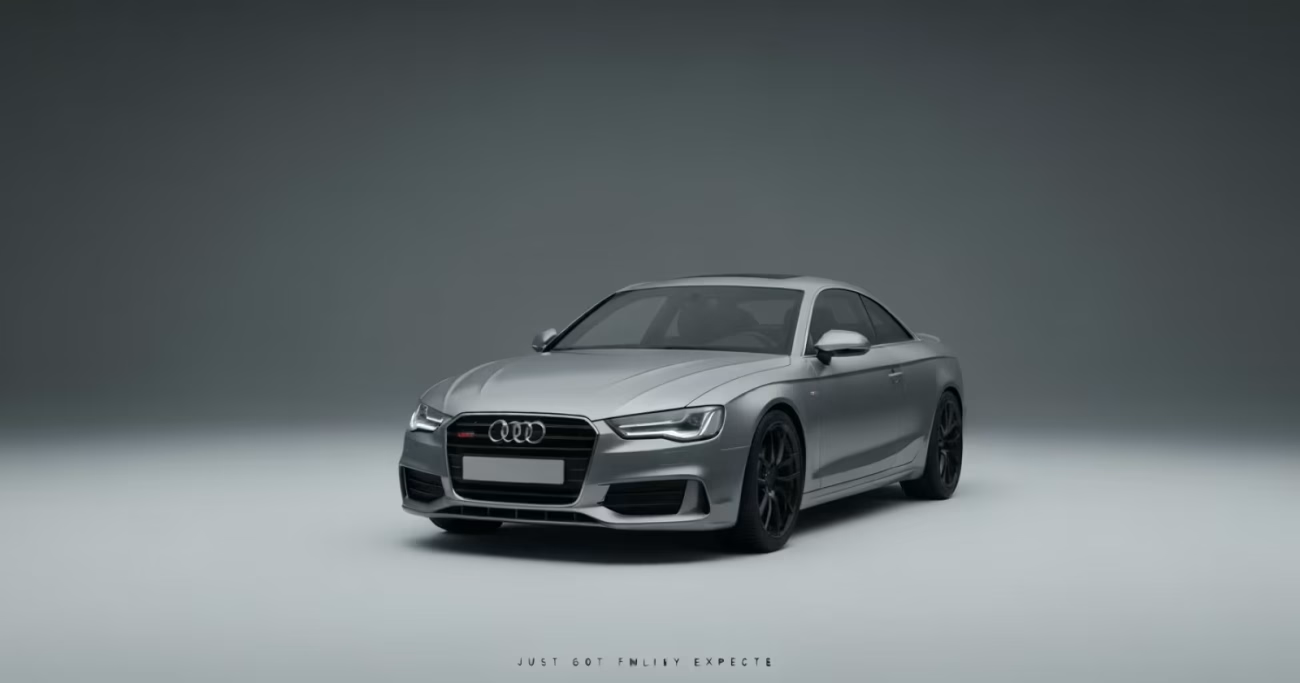
A month ago, the obituary was practically written. Audi’s turbocharged five-cylinder, the oddball engine that defined a half-century of compact performance cars, was headed for the scrapyard courtesy of Euro 7 emissions rules. Turns out the eulogy was premature.
Audi Sport CEO Rolf Michl just cracked the door open on a plan that could keep the legendary inline-five breathing well into the electrified era. And the solution is one that nobody in the enthusiast community saw coming.
At a glance
| Spec | Detail |
|---|---|
| Engine | 2.5L turbocharged inline-five (EA855) |
| Output | 394 hp / 369 lb-ft |
| Starting price (US) | $66,100 |
| Transmission | 7-speed DSG dual-clutch |
| Drivetrain | Quattro all-wheel drive |
| Threat | Euro 7 regulations, effective November 2026 |
| Proposed fix | Hybrid electrification of the inline-five |
Why bolting on an electric motor changes everything for the RS3
The core problem is straightforward. Euro 7 emissions standards arrive in November 2026, and the EA855 engine, in its current form, cannot pass. A month ago, reports indicated Audi had simply accepted the engine’s fate. Production would wind down, the RS3 would eventually transition to something else, and 50 years of five-cylinder heritage would quietly end.
Michl’s comments to Autocar tell a very different story. Audi is actively exploring a hybrid powertrain that pairs the 2.5-liter turbo five with an electric motor, a setup the brand already uses in plug-in versions of the A3 Sportback, A5, A6, and Q5 with four-cylinder engines. Swapping in the inline-five would theoretically bring emissions into compliance while preserving the asymmetric firing order and raspy exhaust note that made the engine iconic in the first place. I think this is the smartest path Audi could take, and the engineering groundwork is already there.
What Audi isn’t saying about the real cost of saving this engine
Here’s the catch. The EA855 currently powers exactly 3 vehicles on the planet: the RS3 sedan and hatch, the limited-run Competition edition, and Cupra’s Formentor VZ5. That is an incredibly small production footprint to justify a full hybrid re-engineering program. Audi’s board reportedly flinched at the expense, and I honestly can’t blame them from a pure spreadsheet perspective.
But Michl’s language was deliberate. “We are absolutely aware of the DNA of a five-cylinder engine and we are open to every possibility,” he said. That is not the language of a CEO who has been told no. That is the language of someone building internal consensus. The real story here is not whether the technology works. Audi already proved it does with the four-cylinder PHEVs. The real story is whether the emotional argument can win a boardroom fight against the financial one.
The US market gets a safety net either way
Even if the hybrid plan falls apart entirely, American buyers have less reason to panic than their European counterparts. US emissions regulations are less restrictive than Euro 7, which means the current non-hybridized EA855 can legally remain on sale stateside. The third-generation RS3 has been available in the US since spring of last year, and there is no immediate regulatory pressure to pull it.
I find this scenario fascinating because it creates a potential split. European RS3 buyers could end up with a hybridized five-cylinder making even more combined output, while US customers stick with the pure internal combustion version. Both camps would claim they got the better deal, and both would probably be right for entirely different reasons.
The irony Audi probably doesn’t want to talk about
For all the passion surrounding the five-cylinder, the cold sales numbers tell a humbling story. In the US last year, Audi moved 46,215 units of the Q5, its turbocharged four-cylinder SUV and comfortable bestseller. The entire A3 lineup, which includes the RS3, managed just 8,315 sales across the same period. That is roughly an 18 percent ratio.
There was a small bright spot. A3 sales actually ticked up by about 700 units in Q4 compared to the same quarter in the prior year, a modest but unexpected resurgence for Audi’s compact sedan range. Still, the math is clear. The overwhelming majority of Audi customers walking into US dealerships are not cross-shopping the RS3. They want a Q5 or a Q7. The five-cylinder is a halo product, a brand statement, not a volume play. And that makes the boardroom math even harder to justify.
How it stacks up
| Model | Power | Starting price | Cylinders | Edge |
|---|---|---|---|---|
| Audi RS3 | 394 hp | $66,100 | 5 | Unique engine character, quattro AWD |
| BMW M2 | 473 hp | $65,095 | 6 | More power, rear-drive purity |
| Mercedes-AMG CLA 45 S | 416 hp | $65,900 | 4 | Highest output 4-cylinder in class |
| BMW M3 | 473 hp | $76,900 | 6 | More space, higher price ceiling |
Why this matters
- Proves hybrid tech can preserve iconic combustion engines, not just replace them
- Sets a template other brands may follow for low-volume performance motors
- Signals Audi Sport is fighting to keep emotional products alive post-Euro 7
The verdict
Audi’s five-cylinder has always been the underdog engine, the one that made no logical sense on a balance sheet but made perfect sense the moment you heard it rev. Michl’s comments suggest the brand understands that killing it would erase something no electric motor or turbocharged four can replicate. If the hybrid plan gets the green light, it could become the blueprint for how legacy performance engines survive the emissions era. I would not bet against the inline-five just yet.
If you have been on the fence about the RS3 or just love following the fate of combustion engines in 2026, keep this one on your radar. The next few months will determine whether the five-cylinder lives on or becomes a collector’s footnote. Either way, it is a story worth watching closely.
