
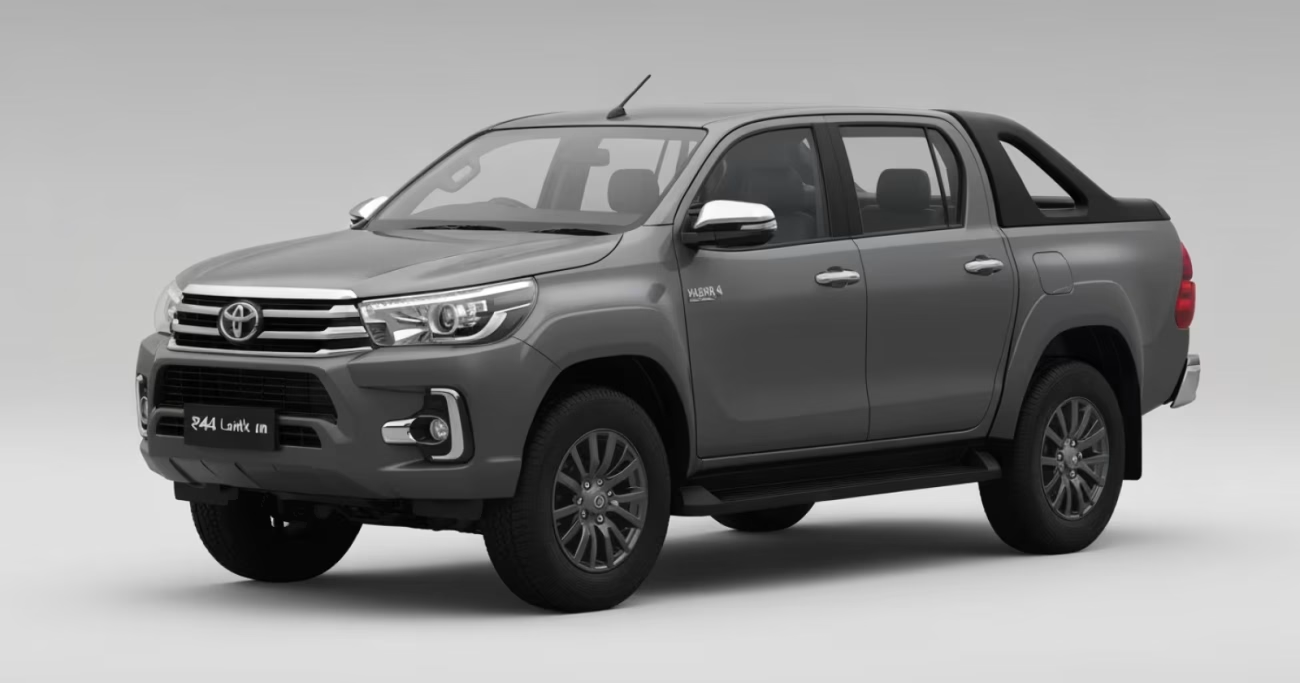
A pickup truck that can wade through 700 mm of water, tow 3,500 kg, and still run a mild hybrid system — that’s exactly what Toyota just put on sale in Europe. The 9th-generation Hilux with a diesel hybrid powertrain has officially gone on sale in Poland, and the pricing gives us a very clear picture of what to expect when it eventually reaches Indian showrooms.
What Toyota Just Launched in Poland
Toyota has rolled out the new Hilux diesel MHEV across four trim levels in Poland. The base Live variant starts at €40,102, which translates to roughly ₹43.89 lakh. That’s the entry point. The range-topping Invincible trim pushes the price to €52,140 or about ₹57.07 lakh. For context, the current Hilux in India retails between ₹28.52 lakh and ₹36 lakh — so there’s a noticeable gap, but the new truck brings a lot more to the table.
I find it interesting that Toyota chose Poland as one of the first European markets for this variant. It signals a phased rollout strategy, and other European countries are expected to follow soon. The BEV version of the Hilux is also being lined up for Western Europe, targeting urban fleets and green operations.
The 48V Mild Hybrid System Explained
At the heart of this new Hilux sits the familiar 2.8-litre, 4-cylinder turbo-diesel engine producing 204 PS of max power. Torque figures remain impressive — 420 Nm with the 6-speed manual and 500 Nm with the 6-speed automatic. What’s new is the 48V mild hybrid system bolted onto this proven powertrain.
The setup includes a 48-volt battery and an electric motor generator. It doesn’t make the Hilux a full hybrid or an EV — think of it as an intelligent assist system. The electric motor helps with smoother starts, takes the load off the diesel engine during low-speed manoeuvres, and recovers energy through regenerative braking. Toyota claims a 5-10% improvement in fuel efficiency, bringing the mileage figure to around 10 km/l.
For a truck this size and capability, that’s a meaningful gain. Every litre saved adds up when you’re running a Hilux as a daily workhorse or a weekend adventure rig.
Off-Road Capability Stays Untouched
Here’s what I was most curious about — did going hybrid compromise the Hilux’s legendary toughness? The short answer is no. Toyota has engineered the electric components with secure placement that doesn’t interfere with the truck’s off-road geometry. The water wading depth remains at 700 mm, identical to the outgoing model. Towing capacity holds steady at 3,500 kg.
The ladder-on-frame chassis is carried over, which means this is still a proper body-on-frame truck built for rough terrain. The Multi-Terrain Select system lets you pick driving modes suited to different surfaces, and the four-camera Multi-Terrain Monitor gives you eyes on every angle when you’re navigating tight trails or rocky paths.
Pricing Across All Four Trims
| Trim | Price (Euro) | Price (Approx ₹) | Key Highlights |
|---|---|---|---|
| Live (Base) | €40,102 | ₹43.89 Lakh | Core MHEV setup, 4WD, safety essentials |
| Active | €45,767 | ₹50.09 Lakh | Enhanced comfort, additional tech features |
| Executive | €48,364 | ₹52.93 Lakh | Leather upholstery, premium audio, heated seats |
| Invincible | €52,140 | ₹57.07 Lakh | Full-loaded, 12.3-inch screen, JBL sound, 360° camera |
Feature-Loaded Cabin for 2026
The Hilux has traditionally been about ruggedness over refinement, but the 9th-gen model changes that narrative significantly. Higher trims get a 12.3-inch touchscreen infotainment system with wireless Android Auto and Apple CarPlay. There’s a 7-inch digital instrument cluster, which is a nice step up from the older analogue setup.
Comfort features include perforated leather upholstery, a JBL premium sound system with nine speakers, heated front and rear seats, a heated steering wheel, and wireless charging. The driver’s seat gets electric adjustment, and you get 18-inch alloy wheels filling out the wheel arches. Dual-zone climate control rounds out the cabin experience. For a pickup truck, this is genuinely premium territory.
I’ve always felt the Hilux interior lagged behind competitors like the Isuzu V-Cross in terms of tech. This generation closes that gap convincingly.
Safety Kit Worth Noting
Toyota hasn’t skimped on safety either. The new Hilux comes equipped with front and rear parking sensors, a rearview camera, blind spot monitoring, and an emergency braking signalling system. Slope descent control is standard for off-road situations, and the Multi-Terrain Select system doubles as both a capability and safety feature on challenging surfaces.
LED fog lights improve visibility in poor conditions, and the 360-degree camera system is genuinely useful for a vehicle this large — especially when parking in tight Indian city spaces or navigating narrow mountain roads.
What This Means for India
Toyota currently sells the older Hilux in India with the same 2.8-litre diesel engine but without the mild hybrid system. The India-spec truck tops out at ₹36 lakh, and all variants come with 4WD. The 9th-gen Hilux is expected to arrive in India later in 2026, though Toyota hasn’t confirmed an exact timeline.
The big question is whether India will get the MHEV variant or stick with the conventional diesel. Given the government’s push toward electrification and the relatively modest cost of a 48V system, I’d expect Toyota to bring the mild hybrid option here. It makes commercial sense — fleet buyers and adventure enthusiasts alike would appreciate the improved efficiency without sacrificing capability.
The Indian pickup truck segment is small but growing. The Isuzu V-Cross remains the primary rival, and Mahindra‘s Scorpio Getaway has its own loyal following. A hybrid Hilux would give Toyota a unique selling point that neither competitor can currently match.
The Bigger Powertrain Picture
What makes the 9th-gen Hilux truly remarkable is the breadth of its powertrain lineup. Toyota is offering this single model with petrol, diesel, diesel MHEV, a full battery electric version, and even an upcoming hydrogen fuel cell variant. No other pickup truck in the world offers this kind of powertrain diversity. It tells you Toyota is hedging its bets across every possible energy future — and the Hilux is the platform they’ve chosen to prove it.
The BEV Hilux will target urban commercial fleets in Western Europe, while the hydrogen FCEV version is still in development. For markets like India, Australia, and Southeast Asia, the diesel and diesel MHEV variants will likely remain the volume sellers for the foreseeable future.
Should You Wait for the New Hilux?
If you’re in the market for a capable pickup truck in India and you’re not in a rush, waiting for the 9th-gen Hilux makes a lot of sense. The mild hybrid efficiency gains, the significantly upgraded interior, and the retained off-road prowess make this a compelling package. The current Hilux is already a solid truck, but the new one is a generational leap in terms of technology and refinement.
Keep an eye on Toyota India’s announcements through the rest of 2026. If the European pricing is any indication, expect the Indian launch price to land somewhere between ₹30-38 lakh depending on whether Toyota localises the MHEV components. That would keep it competitive against the Isuzu V-Cross and make it the most advanced pickup truck you can buy in India. Head to your nearest Toyota dealership and register your interest — this one’s worth the wait.
