
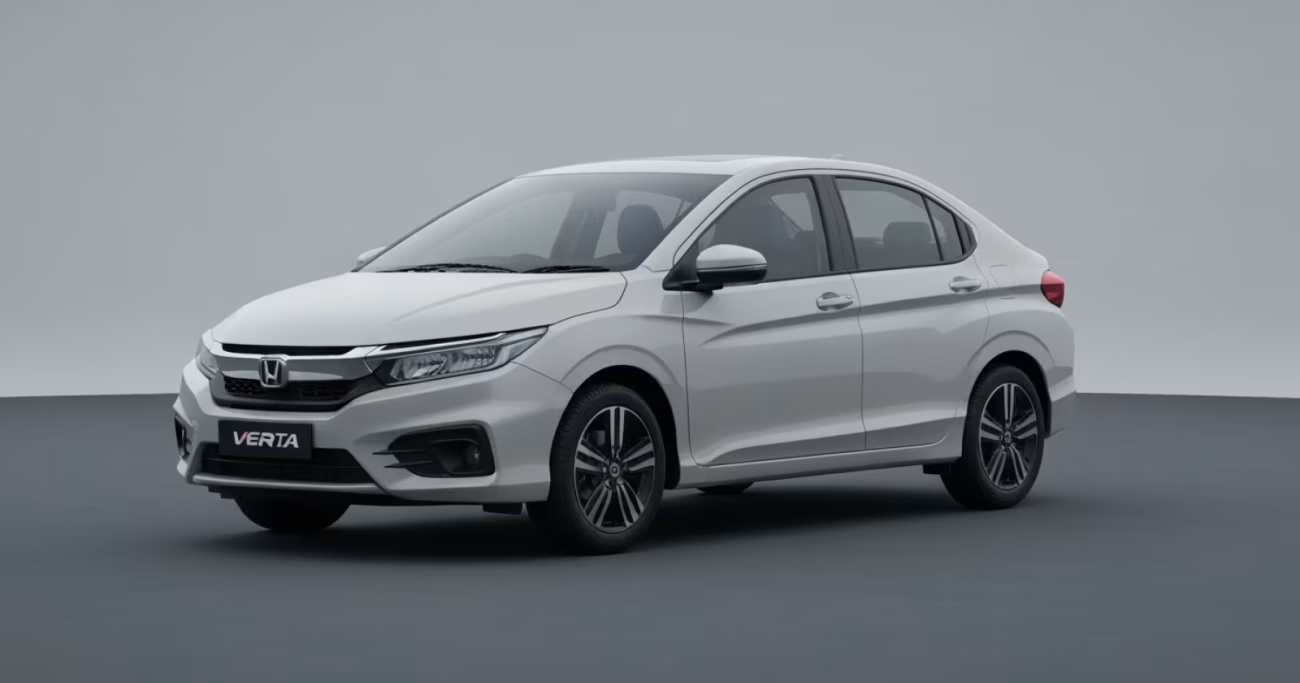
Honda is about to do something it rarely does in India — launch two cars on the same day. And one of them is a sedan that refuses to die quietly in an SUV-obsessed market. I find that genuinely interesting, and if you have ever owned or considered a City, you probably do too.
On 22 May 2026, Honda India will pull the covers off the updated City facelift alongside the all-new ZR-V Hybrid SUV. This is part of Honda’s aggressive plan to bring 10 new models to India by 2030, and the City refresh is a calculated move to keep its best-selling sedan competitive until the next-generation model arrives around 2028.
What Changes On The Outside
Let me be upfront — this is not a radical redesign. If you are expecting a completely new car, that is not what a mid-cycle facelift delivers. This is the second facelift for the fifth-generation City, following the one Honda introduced back in 2023. The changes are evolutionary, not revolutionary.
From what we know, the front end gets a refreshed grille and updated LED lighting signatures. The bumpers, both front and rear, receive subtle tweaks that should give the car a slightly sharper presence on the road. The side profile stays largely the same — the City’s clean, flowing silhouette was never a problem to begin with. Honda may introduce new alloy wheel designs, which honestly can change the visual character of a sedan more than people give credit for.
At the back, expect minor revisions to the tail lamp detailing and rear bumper. Honda is also likely to add new colour options to the palette. Fresh paint shades are a low-cost way to make a familiar car feel new again on the showroom floor, and Honda knows this well.
Inside The Cabin — One Key Addition
The interior story is similar. The dashboard layout carries over, and that is perfectly fine because the current City’s cabin is one of the better-designed spaces in this segment. Clean, functional, and well-assembled — Honda does not need to fix what is not broken here.
The meaningful update inside is the expected addition of a 360-degree camera system. This feature has become almost mandatory in the midsize sedan and SUV space, and the City was one of the few holdouts. Rivals like the Hyundai Verna and Skoda Slavia already offer surround-view cameras, so Honda is essentially closing a gap rather than creating an advantage.
Everything else you liked about the current City stays. The 8-inch touchscreen infotainment system with wireless Android Auto and Apple CarPlay, the digital instrument cluster, and connected car technology all carry forward. The Honda Sensing ADAS suite remains a headline feature, offering adaptive cruise control, lane keep assist, and collision mitigation braking. In my view, Honda Sensing is still one of the most complete ADAS packages available at this price point in India, and it gives the City a genuine edge over the Verna and Slavia in terms of active safety.
Upholstery and trim inserts may get a refresh to add a sense of newness inside. Small touches, but they matter when a buyer sits inside a car at the dealership and compares it mentally to the competition.
Engines Stay Unchanged — And That Is Fine
Honda is not touching the powertrain lineup, and I think that is the right call. Both engine options have proven themselves over the years, and they remain competitive in the segment.
| Specification | 1.5L Petrol | 1.5L e:HEV Hybrid |
|---|---|---|
| Engine Type | 1.5L Naturally Aspirated | 1.5L Hybrid (e:HEV) |
| Power Output | 121 PS | 126 PS (combined) |
| Torque | 145 Nm | 253 Nm (electric motor) |
| Transmission | 6-speed MT / CVT | e-CVT |
| Fuel Efficiency | Approx. 18-20 kmpl | Approx. 27+ kmpl |
| ADAS (Honda Sensing) | Available on top trims | Standard |
| Expected Price Range | ₹12 – ₹16 Lakh | ₹19 – ₹20 Lakh |
The 1.5-litre naturally aspirated petrol engine with 121 PS and 145 Nm continues to offer a smooth, refined driving experience. You get the choice of a 6-speed manual or a CVT, and both are well-suited to Indian city and highway driving conditions. The CVT in particular has been praised for its smoothness in bumper-to-bumper traffic — something every Indian metro commuter will appreciate.
The strong hybrid e:HEV variant is where the City truly stands apart. With a combined output of 126 PS and the intelligent e-CVT transmission, this variant delivers fuel efficiency figures that no other sedan in this segment can match. If you do a lot of city driving, the hybrid City can return genuinely impressive real-world mileage numbers. It remains one of the most underrated powertrain options available in India today.
The Competition Has Not Been Sitting Idle
The midsize sedan segment in India is a tough place to be right now. The Hyundai Verna brought a dramatic design overhaul and a strong feature list. The Skoda Slavia and Volkswagen Virtus offer turbocharged petrol engines that appeal to driving enthusiasts. And looming over all of them is the simple reality that many buyers in this budget are now cross-shopping compact SUVs like the Creta, Seltos, and even the Tata Curvv.
Honda knows this. The City facelift is not trying to reinvent the wheel. It is trying to keep a proven, reliable, and well-loved sedan fresh enough to hold its loyal customer base while attracting new buyers who value refinement over rugged SUV styling. The addition of a 360-degree camera and the continuation of Honda Sensing ADAS are smart moves that address the two things modern Indian buyers care about most — convenience and safety.
Pricing And What To Expect On Launch Day
Honda has not revealed pricing yet, and the official numbers will come on 22 May when the car launches alongside the ZR-V Hybrid. A slight premium over the current model’s pricing is expected, which is standard practice for any facelift. I would estimate the range to start around ₹12 lakh for the base petrol variant and go up to approximately ₹20 lakh for the top-spec hybrid, all ex-showroom.
The fact that Honda is launching the City facelift on the same day as the ZR-V Hybrid is a deliberate strategy. It signals that Honda is serious about its India comeback, covering both the sedan and SUV segments in one event. For the City specifically, this dual launch gives it extra media attention it might not have received on its own.
Should You Wait For It
If you are currently in the market for a midsize sedan and have been considering the City, waiting until 22 May makes complete sense. The updates are not dramatic, but the 360-degree camera addition and potential new colour options add value. And if you are interested in the hybrid variant, there is simply nothing else like it in this price bracket in India.
If you already own a 2023 or later City, upgrading for a facelift alone probably does not make financial sense. But if you are coming from an older car or switching segments entirely, the 2026 City facelift deserves a spot on your shortlist. I would recommend visiting your nearest Honda dealership after 22 May, taking a proper test drive — especially the hybrid if your city driving is heavy — and comparing it back-to-back with the Verna and Slavia before making your decision. The sedan might be losing ground to SUVs in India, but the City keeps proving there is still a very good reason this nameplate has survived for decades.
