
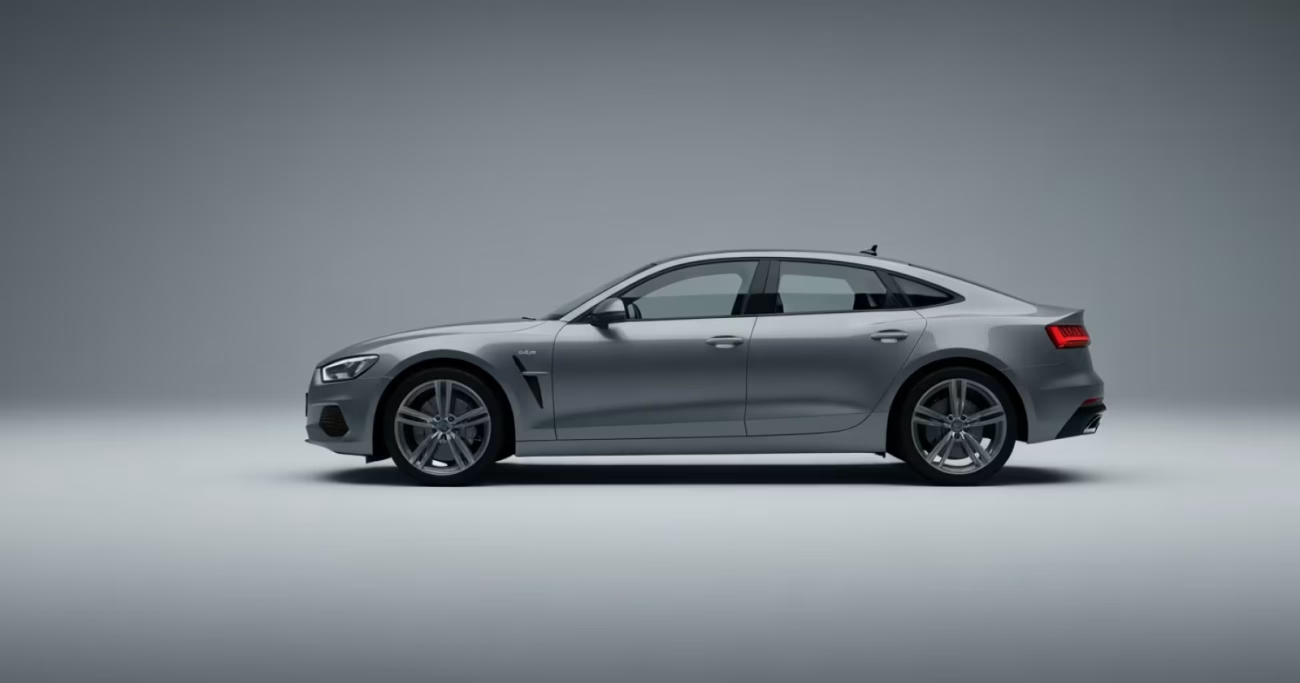
A single loose screw. That is all it takes to completely disconnect your brake pedal from the braking system in nearly 19,000 Audi electric vehicles. Press the pedal, and nothing happens — the car just keeps rolling.
Audi has filed recall documents with the NHTSA covering 18,853 units of the e-tron and e-tron Sportback built between 2019 and 2024. The root cause is almost absurdly simple, but the potential consequences are terrifying. I have covered hundreds of automotive recalls over the years, and this one genuinely made me pause.
At a glance
| Spec | Detail |
|---|---|
| Vehicles affected | 18,853 units |
| Models | e-tron (2019-2024), e-tron Sportback (2020-2024) |
| Defect | Brake pedal input rod screw can loosen and detach |
| Root cause | Faulty screwdriving station at supplier |
| Warning signs | Strange noise on pedal release, incomplete pedal return |
| Fix | Dealer inspection, torque to spec, replace if damaged |
| Owner notification | Letters mailing mid-June 2026 |
What Audi isn’t saying about one tiny screw
The defect traces back to a single screwdriving station at a supplier facility. That station failed to properly torque the screw connecting the brake pedal’s input rod to the brake booster’s actuator rod. In plain terms, the physical link between your foot and the car’s ability to stop was never tightened correctly from the factory on affected vehicles.
Here’s the catch. The pedal does not just drop to the floor and announce the problem. It can feel perfectly normal for thousands of miles while that screw slowly works itself loose. Audi says the only warning signs are a faint noise when you release the pedal or the pedal not returning fully to its resting position. Miss those subtle cues, and the next thing you know, you are pressing a pedal connected to absolutely nothing.
Losing your brakes in an EV is a different kind of nightmare
I will give the e-tron one small credit here. Because it is a fully electric vehicle, it has regenerative braking that can help slow the car when you lift off the accelerator. That buys you some time. But regenerative braking alone cannot bring a 5,700-pound electric SUV to a full stop, especially in an emergency situation where every second counts.
Audi’s official guidance is to use the electronic parking brake if the pedal fails. That means pressing and holding a small button on the center console while your car is still moving. The automaker also recommends reading your owner’s manual to familiarize yourself with the procedure before you ever need it. I would strongly suggest doing that today if you own one of these vehicles, not after you discover the problem at 60 mph approaching a red light.
This is actually the second time Audi has recalled for this exact issue
The real story here goes deeper than a single recall. Audi already knew about this problem. Back in August 2024, the company recalled 1,453 vehicles for the identical defect — same models, same years, same loose screw. That should have been the end of it. It was not.
In January 2026, Audi discovered 2 additional affected vehicles that fell outside the scope of that original recall. That triggered a much broader investigation, which ultimately expanded the recall to cover 18,853 units. I find it hard not to wonder whether the original recall should have been wider from the start. A problem traced to a specific supplier station suggests a systemic manufacturing issue, not a handful of random defects.
The one catch nobody is talking about
Audi states it is not aware of any crashes, injuries, or deaths in the US related to this defect. That is genuinely good news. But the absence of reported incidents does not mean the absence of close calls. A brake pedal that gradually loses connection could produce dozens of frightening moments that never get formally reported to anyone.
The fix itself is straightforward. Dealers will inspect the screw, torque it to the correct specification, and repair or replace any damaged components. It costs owners nothing. But letters will not reach mailboxes until mid-June 2026, and I would not wait for a letter if I owned one of these cars. You can check your VIN right now through Audi’s recall portal or the NHTSA database.
How it stacks up
| Model | Recall volume | Defect severity | Fix complexity | Edge |
|---|---|---|---|---|
| Audi e-tron (2026 recall) | 18,853 | Brake disconnection | Inspection and torque | Simple fix, severe risk |
| Tesla Model X (2024 brake recall) | 15,383 | Brake fluid leak | Component replacement | More complex repair |
| BMW iX (2024 brake recall) | 4,854 | Reduced braking force | Software update | Lower unit count |
Why this matters
- Repeat recalls for identical defects erode trust in EV quality control.
- Supplier-level failures can affect thousands more vehicles than initially estimated.
- Brake system defects carry the highest possible safety stakes for owners.
The verdict
This is one of the most unsettling recalls I have covered in 2026. A brake pedal that silently disconnects from the braking system with almost no warning is the kind of defect that keeps safety engineers up at night. The fact that Audi already recalled for this same issue in 2024 and had to come back with a much larger action raises serious questions about how thoroughly the original scope was investigated. If you own a 2019-2024 e-tron or e-tron Sportback, do not wait for that June letter. Check your VIN today, call your dealer, and get this handled before you find out the hard way that your brake pedal is just a suggestion.
