
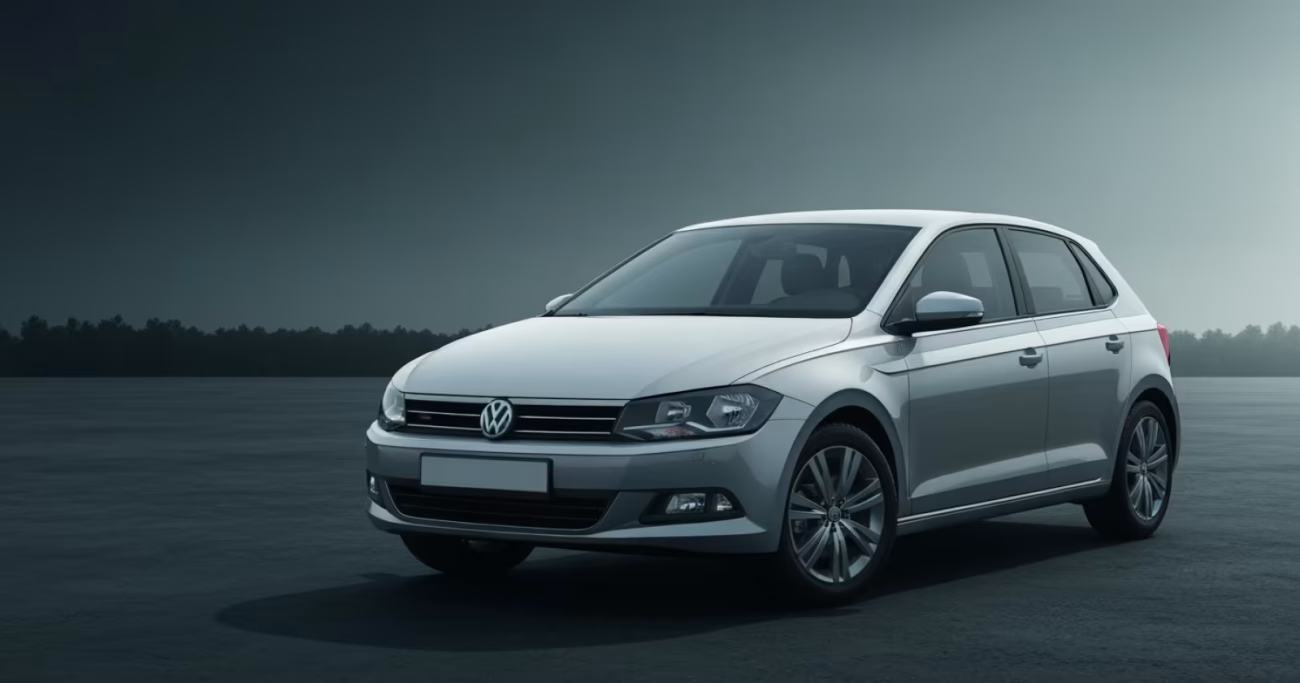
Volkswagen just turned one of Europe’s most beloved hatchbacks into a full electric car — and the numbers are genuinely impressive. With a 455 km certified range, a starting price of roughly ₹28 lakh, and a footprint just over 4 metres long, the all-new Polo Electric could reshape how we think about affordable EVs globally.
I have been tracking this one since the ID.2all concept dropped back in 2023, and I have to say, the production version stays remarkably faithful to that original vision. Volkswagen has clearly learned from the criticism that the ID.3 and ID.4 received for being too radical a departure from what people loved about VW. The Polo Electric feels like a proper Volkswagen — just without the tailpipe.
Built On A Brand New Platform
The Polo Electric rides on Volkswagen’s new MEB+ architecture, which is a significant evolution of the MEB platform that underpins the ID.4 and ID.5. This is a dedicated EV platform, not a converted ICE chassis, and that distinction matters enormously. It means the battery sits flat in the floor, the cabin is pushed outward to the edges, and interior space is dramatically better than the petrol Polo most of us know.
Front-wheel drive is standard across all variants. Volkswagen has kept things simple here — no all-wheel-drive option at launch, which helps keep costs and weight in check. For a hatchback that will spend most of its life in city traffic and on highways, this is the right call.
Two Battery Packs, Three Power Levels
This is where it gets interesting. Volkswagen is offering two distinct battery options, and the chemistry differs between them. The entry-level pack is a 37 kWh lithium iron phosphate (LFP) unit — the same chemistry Tata uses in the Nexon EV. LFP is cheaper, more durable, and handles Indian-style heat better than most alternatives. With this pack, buyers can choose between an 85 kW (116 PS) motor or a 99 kW (135 PS) motor. Range tops out at 329 km on the WLTP cycle.
The larger 52 kWh pack uses nickel-manganese-cobalt (NMC) chemistry, which is energy-dense and delivers the headline 455 km range. This variant gets a considerably more powerful 155 kW (211 PS) electric motor. For context, that is more power than a Volkswagen Polo GTI petrol ever made.
And speaking of GTI — Volkswagen has confirmed an electric GTI variant for 2027 with a 166 kW (226 PS) motor. That will be the brand’s first-ever electric GTI, which is a genuinely historic moment for the nameplate.
| Specification | 37 kWh (Base) | 37 kWh (Mid) | 52 kWh (Top) |
|---|---|---|---|
| Battery Chemistry | LFP | LFP | NMC |
| Motor Output | 85 kW (116 PS) | 99 kW (135 PS) | 155 kW (211 PS) |
| WLTP Range | 329 km | 329 km | 455 km |
| DC Fast Charging | 90 kW | 90 kW | 105 kW |
| 10-80% Charge Time | ~27 min | ~27 min | ~24 min |
| Length | 4,053 mm | ||
| Width | 1,816 mm | ||
| Height | 1,530 mm | ||
| Wheelbase | 2,600 mm | ||
| Boot Space | 441 litres (1,243 litres seats folded) | ||
Design That Stays True To The Polo DNA
From the outside, the Polo Electric looks like a natural evolution rather than a sci-fi concept. The top-mounted DRLs sit above sleek headlamps, and there is an illuminated VW logo up front that gives it a premium presence at night. The grille is closed off, as you would expect from an EV, but the prominent bumper with slatted inserts keeps the face from looking bland.
The side profile is clean and modern. Blacked-out ORVMs, circular wheel arches, and distinctive dual-tone alloy wheels give it a sporty stance. I particularly like the C-pillar-mounted rear door handles — they create a visual trick that makes the car look like a three-door coupe from certain angles. The charging port sits above the right front fender, which is a practical placement for pull-in charging stations.
At the rear, a raked windshield and connected taillamp design keep things contemporary. The illuminated Polo badging is a nice touch that adds to the premium feel. At 4,053 mm long, this is noticeably larger than the current ICE Polo, and that extra length translates directly into cabin and boot space.
Interior Gets Physical Buttons Back
This might be the best news in the entire announcement. After years of frustrating touch-sensitive controls in the ID.3 and ID.4, Volkswagen has brought back physical buttons for climate control and audio functions in the Polo Electric. I cannot overstate how important this is for daily usability, especially in Indian traffic where you need to adjust the AC without taking your eyes off the road.
The cabin features a 13-inch central infotainment screen and a 10-inch digital instrument cluster. There is also a retro display mode that gives the instrument console a classic VW look — a charming nod to the brand’s heritage. The interior follows VW’s new Pure Positive design language, which prioritises warmth and simplicity over cold minimalism.
Boot space has jumped from 351 litres in the ICE Polo to 441 litres here, with 1,243 litres available when the rear seats fold down. That is genuinely competitive with some compact SUVs.
Three Trim Levels With Sensible Feature Distribution
Volkswagen is offering the Polo Electric in Trend, Life, and Style trims. The base Trend variant comes with LED headlights, lane assist, and side assist — a solid safety package for the entry level. The mid-spec Life adds a rear camera, wireless phone charging, Android Auto, Apple CarPlay, and adaptive cruise control. These are features that Indian buyers now consider essential, so it is good to see them in the mid trim rather than being reserved for the top end.
The range-topping Style trim brings the illuminated VW logo, LED matrix headlights, 3D tail lamps, dual-zone climate control, and sport comfort seats. Optional extras across the range include a panoramic glass roof, a 425-watt Harman Kardon sound system, and pneumatic massage for the front seats. Vehicle-to-Load (V2L) functionality comes standard on all variants, which means you can power external devices directly from the car’s battery.
What This Means For Indian Buyers
Here is the honest reality — the Polo Electric is launching in Germany first, with broader European availability to follow. Production begins in summer 2026, and deliveries start around September to November 2026. There is no confirmed India launch date yet. At a European starting price of around €25,000, which translates to roughly ₹28 lakh before Indian duties and taxes, a direct import would push the price well above ₹40 lakh after customs.
However, Volkswagen India has been quietly expanding its EV strategy, and the MEB+ platform is designed for global scalability. If VW decides to bring this to India — even as a CKD assembly — it would land squarely in the territory currently dominated by the Tata Curvv EV and the upcoming Maruti eVX. A 455 km range hatchback with VW build quality at a competitive price would be a serious disruptor.
For now, the Polo Electric sets a benchmark for what an affordable, well-rounded electric hatchback should look like in 2026. The combination of LFP and NMC battery options, fast charging under 27 minutes, a spacious cabin with physical controls, and that unmistakable Polo charm makes this one of the most compelling EV packages I have seen this year.
If you are in the market for an EV and can wait for Indian availability, keep this one on your radar. Follow your nearest Volkswagen dealership for updates, and bookmark this page — I will update the moment we hear anything about an India launch timeline or pricing. The electric hatchback segment is about to get very exciting.
