
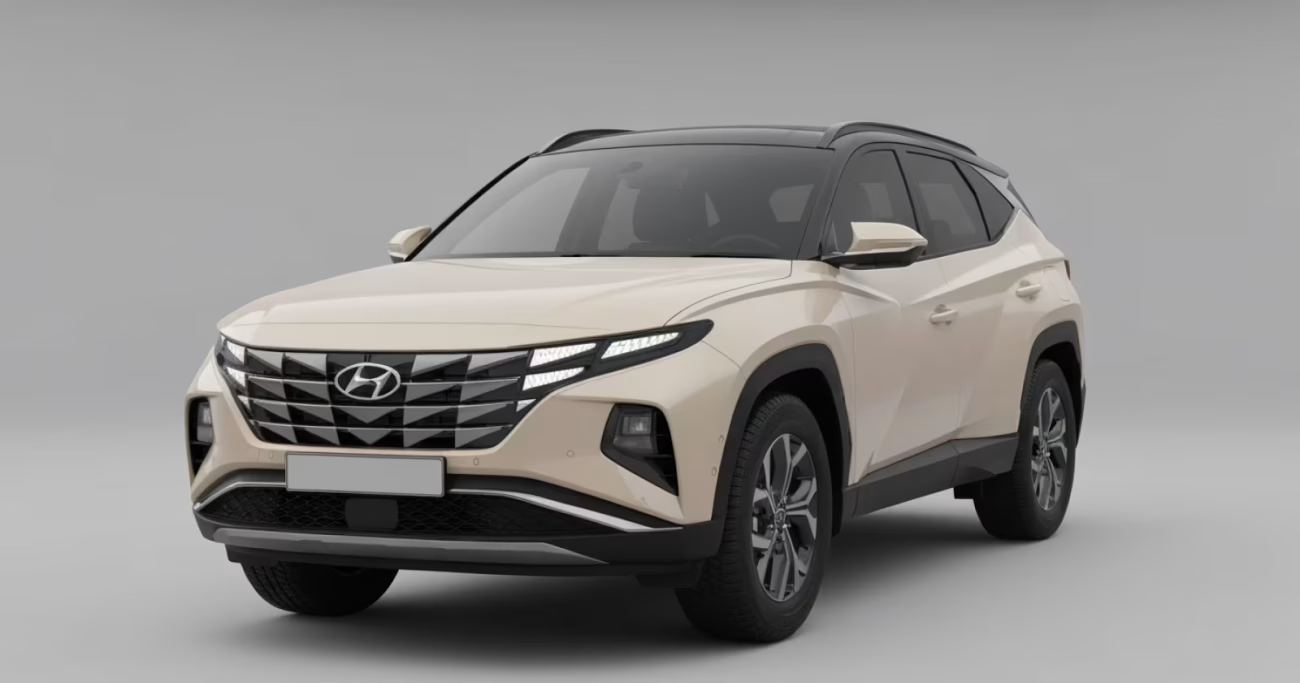
Hyundai has been quietly working on the next generation of one of its most important global SUVs, and a fresh set of digital renders just gave us the clearest look yet at what is coming. The new-gen Tucson appears to ditch the polarizing parametric design for something far more muscular, upright, and unapologetically boxy — and I think Indian buyers are going to love it.
These renders, based on spy shots and patent filings circulating online, suggest Hyundai is taking a dramatically different design direction. After years of flowing, futuristic lines, the brand seems ready to embrace a more rugged, squared-off aesthetic that could change how we think about the Tucson entirely.
A Boxier Stance That Means Business
The most obvious change in these renders is the overall silhouette. The current Tucson, with its swooping roofline and hidden lighting elements, always leaned toward the avant-garde. This new-gen model flips that script completely. The roofline is flatter and taller, the shoulder line is more pronounced, and the wheel arches look like they have been chiseled rather than sculpted.
I find this shift fascinating because it mirrors a broader industry trend. Buyers in India and globally are gravitating toward SUVs that actually look like SUVs — tall, commanding, and built to handle rough terrain even if most of them never leave city roads. Hyundai clearly got the memo.
The front fascia in the render features a completely redesigned grille. Gone is the parametric jewel pattern of the current model. In its place sits a wider, more upright grille with horizontal slats that give the face a sense of width and authority. It reminds me of what Hyundai did with the Santa Fe globally — that deliberate move toward a more utilitarian, Land Rover-inspired look.
New LED Signature Changes Everything
Perhaps the most striking detail in these renders is the new LED light signature. The current Tucson made headlines with its hidden daytime running lights integrated into the grille. The new-gen model takes a different approach with a distinct, separated LED strip that runs across the top of the front fascia, connecting both headlamp clusters.
The headlamps themselves appear sharper and more angular, sitting higher on the face than before. This gives the SUV a more alert, aggressive expression. At the rear, the connected LED taillight bar continues, but with a cleaner, less busy design. The overall effect is modern without being gimmicky — exactly the balance Hyundai needs to attract both younger buyers and families.
From the side profile, the render shows a more upright D-pillar, which should translate to better rear headroom and a more spacious cabin feel. The window line is straighter, and the overall greenhouse looks larger, which is always a welcome change for rear-seat passengers in Indian conditions where three adults often share the back bench.
What This Means For The Indian Market
The current Hyundai Tucson occupies an interesting space in India. It sits above the Creta in Hyundai’s lineup but competes in a segment where buyers cross-shop with everything from the Toyota Fortuner to the Jeep Meridian and even the MG Gloster. A boxier, more commanding design could help the Tucson compete more convincingly against these rugged-looking rivals.
In India, the Tucson has always been appreciated for its feature-loaded cabin, refined powertrains, and Hyundai’s strong after-sales network. But the current model’s design, while globally acclaimed, sometimes felt too avant-garde for the Indian premium SUV buyer who wants road presence above all else. This new design language could fix that perception gap entirely.
| Parameter | Current Tucson (2026) | New-Gen Tucson (Expected) |
|---|---|---|
| Design Language | Parametric, flowing lines | Boxier, upright stance |
| Front Grille | Parametric jewel hidden DRLs | Wide horizontal slat grille |
| LED Signature | Hidden in grille pattern | Separated connected LED strip |
| Roofline | Sloping, coupe-like | Flatter, taller profile |
| D-Pillar | Raked, sporty | Upright, more cabin space |
| Expected Engine (India) | 2.0L Diesel / 2.0L Petrol | 1.6T GDi Hybrid likely |
| Expected Price (India) | Rs 28-35 Lakh | Rs 30-38 Lakh (estimated) |
| Key Rivals | Jeep Meridian, MG Gloster | Toyota Fortuner, Meridian |
Powertrain Expectations For India
While these renders focus on design, the powertrain story is equally important. Globally, Hyundai has been pushing hard toward electrified options, and I expect the new-gen Tucson to arrive with a strong hybrid lineup. The 1.6-litre turbocharged GDi engine paired with a hybrid system is the most likely candidate for India, offering a good balance of performance and fuel efficiency.
The current 2.0-litre diesel and naturally aspirated petrol options may continue in some form, but Hyundai has been gradually shifting its global portfolio toward smaller, turbocharged, electrified units. For Indian highway driving, where the Tucson often serves as a long-distance cruiser, a hybrid powertrain with strong low-end torque would be a smart fit.
There is also the possibility of a plug-in hybrid variant, though that would depend heavily on pricing. At the current Tucson’s price point of Rs 28-35 lakh, Indian buyers already expect a lot. A PHEV pushing past Rs 40 lakh would need to justify itself with exceptional range and features.
Interior Could Get A Major Overhaul
If the exterior is getting this dramatic a redesign, the interior is almost certainly in for a complete rethink as well. Hyundai’s latest interiors across the Ioniq 5, Santa Fe, and even the updated Creta have shown a clear direction — dual curved screens, minimalist dashboards, and premium materials that punch above their price class.
I would expect the new Tucson to feature a large curved display setup combining the instrument cluster and infotainment screen, possibly stretching to 12.3 inches each. Hyundai’s connected car tech with BlueLink, over-the-air updates, and Level 2 ADAS should all be standard on higher trims. For India specifically, ventilated seats, a panoramic sunroof, and a powered tailgate are non-negotiable at this price point, and Hyundai knows it.
The boxier exterior should also translate to a more practical cabin. A flatter roofline and upright D-pillar typically mean more usable boot space and better rear headroom. The current Tucson already offers a decent 539 litres of boot space, and I would not be surprised if the new model pushes past 570 litres.
When Can We Expect It In India
Hyundai typically launches new-gen models in Korea first before bringing them to India within 12 to 18 months. If the global reveal happens in late 2026 or early 2027, an India launch sometime in the second half of 2027 seems realistic. Hyundai India has been on an aggressive product offensive, and the Tucson remains an important halo product for the brand’s premium positioning.
The timing could also work well strategically. By 2027, the competitive landscape will include updated versions of the Toyota Fortuner, a potentially new Jeep Meridian, and whatever MG has planned for its full-size SUV space. A fresh, boxier Tucson arriving with hybrid tech and a modern interior could carve out a strong niche.
If you are someone who has been eyeing the premium SUV space and waiting for something that combines Hyundai’s reliability with genuine road presence, this new-gen Tucson render should have your attention. Keep this one on your radar, bookmark this page, and stay tuned — because the moment official teasers or spy shots from India surface, we will break it down for you right here.
