
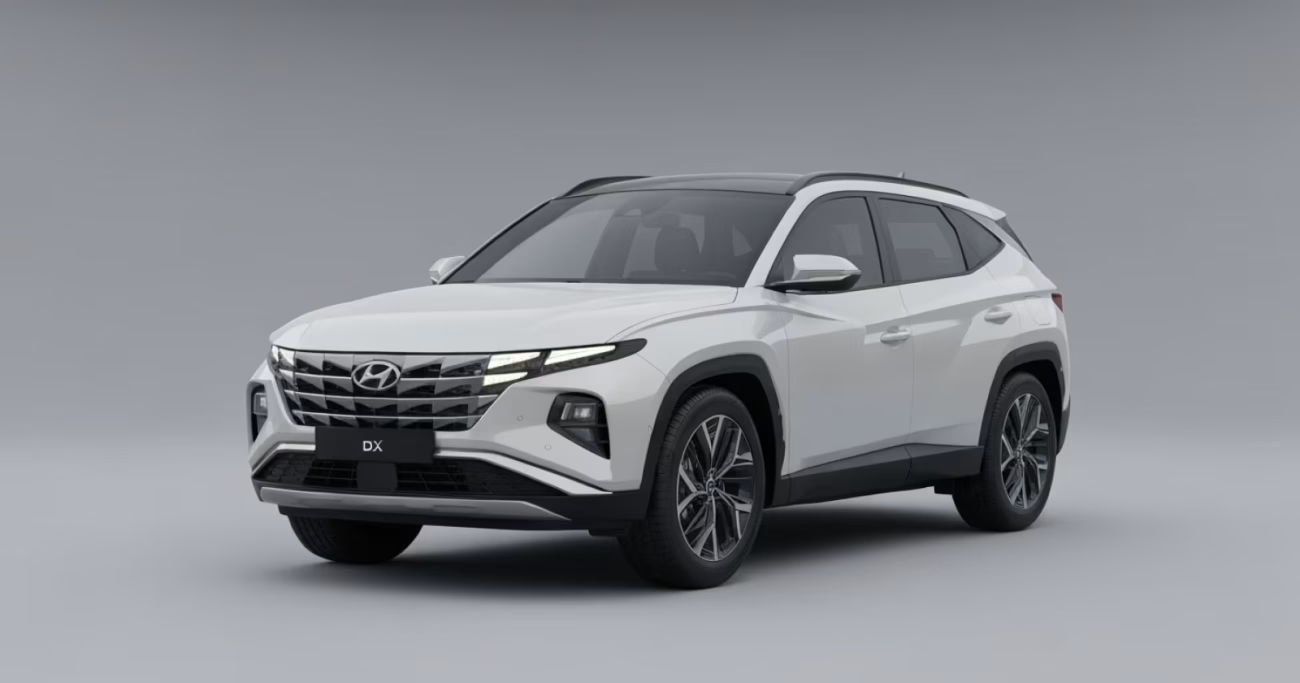
The Hyundai Tucson has been a quiet favourite among Indian buyers who want something that sits above the Creta but does not quite jump into Fortuner territory. Now, a fresh set of digital renders has surfaced showing what the next-generation model could look like, and honestly, the design direction is a serious departure from the current car’s flowing curves.
I have been tracking Hyundai’s global design shifts closely, and this rendered Tucson tells me the Korean brand is done playing it safe with this nameplate. Let me walk you through everything these renders reveal and what it could mean for the Indian market.
A Deliberately Boxier Stance
The most obvious change in these renders is the shift toward a boxier, more squared-off silhouette. The current Tucson, which launched in India back in 2022, brought Hyundai’s parametric jewel design language to the mid-size SUV segment. It was polarising. Some loved the hidden LED daytime running lamps tucked into the grille. Others felt it tried too hard to look futuristic.
This new-gen render flips the script entirely. The shoulder line is straighter and more pronounced. The roofline sits tall and flat, giving the Tucson a more commanding road presence. The wheel arches are squared off with visible muscular flaring, and the overall proportions look wider and more planted. Think less swoopy crossover, more proper SUV with genuine high ground clearance and a prominent upright grille.
For Indian roads, this kind of design language works. Buyers here associate boxiness with ruggedness and capability. It is the same reason the Mahindra Scorpio-N and Toyota Fortuner continue to command attention at traffic lights. Hyundai seems to have taken that feedback seriously.
New LED Signature Changes The Face Completely
The front fascia in these renders features a completely redesigned LED signature. Gone is the parametric hidden-lamp approach. In its place, we see a split-headlamp setup with a thin LED strip running across the top of the grille and the main headlamp units positioned lower in the bumper. The daytime running lamps appear sharper and more angular, giving the face an aggressive but clean look.
The grille itself is larger and more upright. It retains a geometric pattern but with bolder, more defined elements compared to the current model’s jewel-like texture. I think this is Hyundai responding to the global trend of SUVs needing a strong face. The new Tucson’s front end, based on these renders, looks like it could hold its own next to anything from Toyota or Kia in a showroom.
At the rear, the renders suggest a connected LED taillight bar stretching across the full width of the tailgate. The tail is flatter and more vertical, reinforcing that boxy theme. The bumper appears chunkier with what looks like a faux skid plate element at the bottom.
What We Expect Under The Skin
While these renders focus on exterior design, I can make some educated guesses about the mechanical package based on Hyundai’s current global strategy. The next-gen Tucson will almost certainly ride on an updated version of the N3 platform, which underpins the current model. This platform supports petrol, diesel, hybrid, and plug-in hybrid powertrains.
For India, the current Tucson offers a 2.0-litre petrol making 156 bhp and a 2.0-litre diesel producing 186 bhp, both paired with automatic transmissions. The next-gen model could introduce a 1.6-litre turbo-petrol with a 48V mild-hybrid system as the primary engine option globally. Whether India gets the strong hybrid variant remains to be seen, but given Hyundai’s push with the Ioniq 5 and the upcoming Creta EV, electrified options are very much on the table.
| Parameter | Current Tucson (India) | Next-Gen Tucson (Expected) |
|---|---|---|
| Design Language | Parametric Jewel / Curvy | Boxier / Squared-off |
| LED Signature | Hidden parametric DRLs | Split-lamp, full-width LED bar |
| Platform | N3 | Updated N3 |
| Petrol Engine | 2.0L NA (156 bhp) | 1.6L Turbo Hybrid (Expected) |
| Diesel Engine | 2.0L (186 bhp) | 2.0L Updated (Expected) |
| Transmission | 6-speed AT / 8-speed AT | 8-speed AT / DCT (Expected) |
| Ground Clearance | ~172 mm | Likely higher |
| ADAS | Level 2 | Level 2+ (Expected) |
| Expected India Launch | Available Now | Late 2026 or Early 2027 |
| Expected Price Range | ₹27.70 – ₹33.95 Lakh | ₹29 – ₹37 Lakh (Est.) |
Interior Could Get The Grandeur Treatment
Hyundai recently revealed the 2027 Grandeur facelift with a massive 17-inch Pleos screen. While the Tucson will not get something that extravagant, I fully expect the next-gen cabin to feature a dual-screen setup with larger displays than the current 10.25-inch units. A panoramic curved display stretching from the instrument cluster to the infotainment screen is very likely.
The current Tucson already offers a decent feature set in India with ventilated seats, a Bose sound system, wireless charging, and Level 2 ADAS. The next-gen model should build on this with a head-up display, a digital rear-view mirror, and more advanced driver assistance features. Hyundai has been steadily improving its connected car tech through the BlueLink platform, and the new Tucson should get an upgraded version with over-the-air updates.
Where It Fits In The Indian Market
The Tucson occupies a tricky space in India. It is priced above the Creta and Seltos but below the full-size ladder-frame SUVs like the Fortuner and Gloster. Its real competition comes from the Jeep Compass, Citroen C5 Aircross, and to some extent the Volkswagen Tiguan. With this boxier design direction, Hyundai might be trying to pull in buyers who currently look at the Fortuner or Scorpio-N but want a more premium, monocoque experience.
That is a smart play. Indian buyers increasingly want SUVs that look tough but drive like cars. The current Tucson delivers on the driving part but its design never quite screamed rugged. This new look could fix that perception gap entirely.
When Could It Arrive In India
Hyundai typically launches a new-gen Tucson globally first in Korea, followed by Europe and North America, with India getting it roughly 6 to 12 months later. If the global reveal happens in late 2026, we could see the new Tucson in Indian showrooms by mid-2027. Hyundai India has a packed 2026 lineup already with the Ioniq 5 refresh, the Creta EV, and potentially the updated Venue, so a 2027 timeline for the new Tucson makes sense.
Pricing will be key. The current Tucson starts at around ₹27.70 lakh ex-showroom, and I expect the next-gen model to command a premium of ₹1-3 lakh over that, putting it in the ₹29-37 lakh range depending on the variant and powertrain.
If you are someone who has been eyeing the Tucson but felt the current design was a bit too unconventional, these renders should give you reason to wait. The boxier look, the cleaner LED signature, and the promise of updated tech make this next-gen model worth holding out for. Keep this one on your radar, and I will bring you more details the moment Hyundai drops official teasers or spy shots surface on Indian roads.
