
The assembly lines in Pune are already rolling, and what is coming off them could shake up the mid-size SUV segment in a big way. Volkswagen has quietly started building the facelifted Taigun at its Chakan facility, and I think the competition needs to pay very close attention to what is about to hit showrooms.
Production Is Live And Launch Is Imminent
Skoda Auto Volkswagen India has officially kicked off production of the 2026 Volkswagen Taigun facelift at its Pune plant. The India debut is locked in for April 9, 2026, which means dealer dispatches are likely already being planned as I write this. The speed at which Volkswagen has moved from teasers to production tells me they are dead serious about reclaiming ground in this segment.
The Chakan facility is no small operation. It serves as both a domestic manufacturing hub and a global export base under the group’s “Make in India, for India and the world” strategy. Since the original Taigun launched back in 2021, over 1.43 lakh units have rolled out of this plant. Around 30 percent of those were shipped to international markets. That is a serious volume for a brand that many still consider a niche player in India.
With high localisation levels already baked in, I expect Volkswagen to price the facelift competitively. They have the cost structure to do it, and the market pressure from Hyundai Creta and Kia Seltos demands it.
Design Gets A Proper Refresh
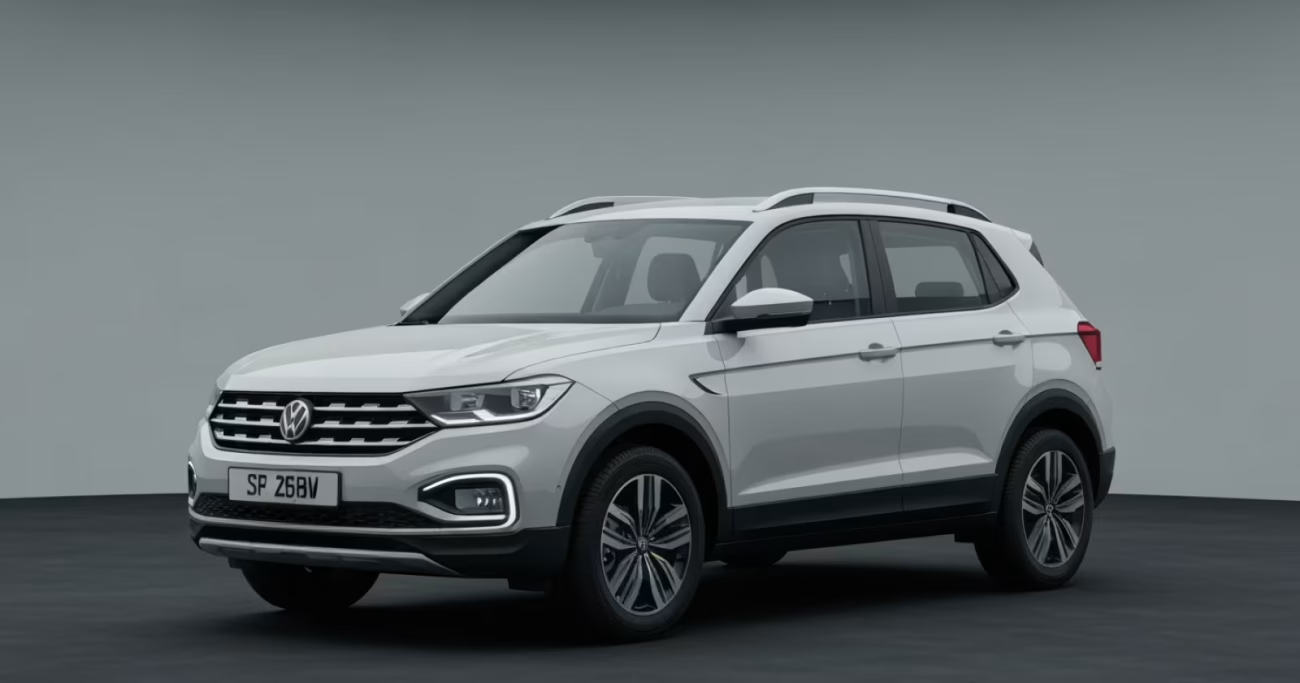
Volkswagen has confirmed that the facelifted Taigun will feature updated styling elements aimed at delivering a more modern and premium look. While official images are still under wraps at the time of writing, we know the SUV will get revised bumpers, new lighting elements, and a sharper overall design language. Think of it as the Taigun growing up — moving from a good-looking compact SUV to something that genuinely looks like it belongs a segment above.
The tall roof, high ground clearance, prominent grille, and that solid five-door SUV stance remain intact. This is still unmistakably a Taigun, but with enough visual changes to make it feel fresh on the road. I am particularly curious about the new front-end treatment. Volkswagen has been doing interesting things with its global design language, and even a hint of that filtering down to the Indian-spec Taigun would be welcome.
Interior And Features — This Is Where It Gets Interesting
The cabin is where I expect the biggest leap. The current Taigun interior is well-built but has started to feel a bit dated compared to what Hyundai and Kia offer. The facelift is expected to borrow heavily from the recently launched Skoda Kushaq facelift, which shares the same MQB-A0-IN platform.
That means we are likely looking at a larger touchscreen infotainment system, a fully digital instrument cluster, and a significantly upgraded tech package. Features like a panoramic sunroof, ventilated seats, and enhanced connectivity options are also on the cards. These are not luxury extras anymore — they are table stakes in this segment, and Volkswagen clearly knows that.
I have always appreciated the Taigun’s cabin for its build quality and the way everything feels solid to the touch. If Volkswagen can layer modern tech and convenience features on top of that foundation, they will have a genuinely compelling package. The focus on improving everyday usability based on actual customer feedback is a smart move. It tells me they are listening, not just engineering in isolation.
Engines Stay Proven, Gearbox Gets A Big Upgrade
Under the hood, the Taigun facelift sticks with what works. The two turbo petrol engine options carry over — the 1.0-litre TSI producing 115 PS and the larger 1.5-litre TSI delivering 150 PS. Both are well-known units that have proven themselves over lakhs of kilometres on Indian roads.
| Specification | 1.0-litre TSI | 1.5-litre TSI |
|---|---|---|
| Displacement | 999 cc | 1498 cc |
| Power Output | 115 PS | 150 PS |
| Manual Gearbox | 6-speed MT | 6-speed MT |
| Automatic Gearbox | 8-speed Torque Converter (New) | 7-speed DSG |
| Safety Rating | 5-star (Expected) | 5-star (Expected) |
| Drive Type | Front-wheel drive | Front-wheel drive |
| Platform | MQB-A0-IN | MQB-A0-IN |
The headline mechanical change is the expected introduction of an 8-speed torque converter automatic for the 1.0-litre engine. This replaces the current 6-speed automatic and is a significant upgrade. Torque converter units are smoother in city traffic, more predictable in stop-and-go conditions, and generally more durable than the automated manual alternatives some rivals offer. For the 1.5-litre engine, the 7-speed DSG continues — and honestly, that is one of the best dual-clutch units available in this price range.
I think this gearbox change alone could swing a lot of buyers who were on the fence. The 1.0 TSI with a proper torque converter automatic at a competitive price point is exactly what the urban Indian buyer wants — smooth, efficient, and hassle-free in bumper-to-bumper traffic.
Safety Remains A Core Strength
The current Taigun holds a 5-star safety rating, and Volkswagen has made it clear that similar standards will continue with the facelift. In a market where Bharat NCAP is pushing manufacturers to take crash safety seriously, having a proven 5-star platform is a massive advantage. You do not have to wonder or wait for test results — the Taigun’s structural integrity is already established.
Volkswagen has also emphasised that the new Taigun has been engineered specifically for Indian driving conditions while retaining its European driving dynamics. That combination of a comfortable ride quality with sharp handling is something I have always felt sets the Taigun apart from its Korean and Indian rivals. The Creta is comfortable but vague. The Seltos is feature-rich but not as engaging. The Taigun has always been the driver’s choice in this segment, and the facelift looks set to reinforce that identity.
Where Does This Leave The Competition
The mid-size SUV segment in India is brutal right now. Hyundai Creta dominates the sales charts. Kia Seltos offers tremendous value. Maruti Grand Vitara brings hybrid efficiency. Tata Curvv is pulling in younger buyers with its coupe styling. And the Skoda Kushaq, the Taigun’s own platform sibling, is fighting for the same customer.
What the Taigun facelift needs to do is simple — close the feature gap while doubling down on what already makes it special. Build quality, driving dynamics, safety, and that unmistakable German engineering feel. If Volkswagen prices it right, and I suspect they will given the localisation advantage, this facelift could push the Taigun from a respected alternative to a genuine first-choice contender.
The production numbers back up the potential. Over 1.43 lakh units built since 2021, with a healthy export ratio, means the manufacturing ecosystem is mature and efficient. That efficiency should translate into competitive pricing and better availability at dealerships.
My Take — Should You Wait For It
If you are currently shopping in the mid-size SUV space and have a shortlist that includes the Creta, Seltos, or Grand Vitara, I would strongly suggest waiting a few more days to see what the Taigun facelift brings to the table. The combination of an 8-speed torque converter, updated cabin tech, proven 5-star safety, and Volkswagen’s driving dynamics could make this the most well-rounded package in the segment.
Head to your nearest Volkswagen dealership, register your interest, and get yourself on the early booking list. First movers often get the best launch pricing and faster delivery slots. This one is worth the wait.
