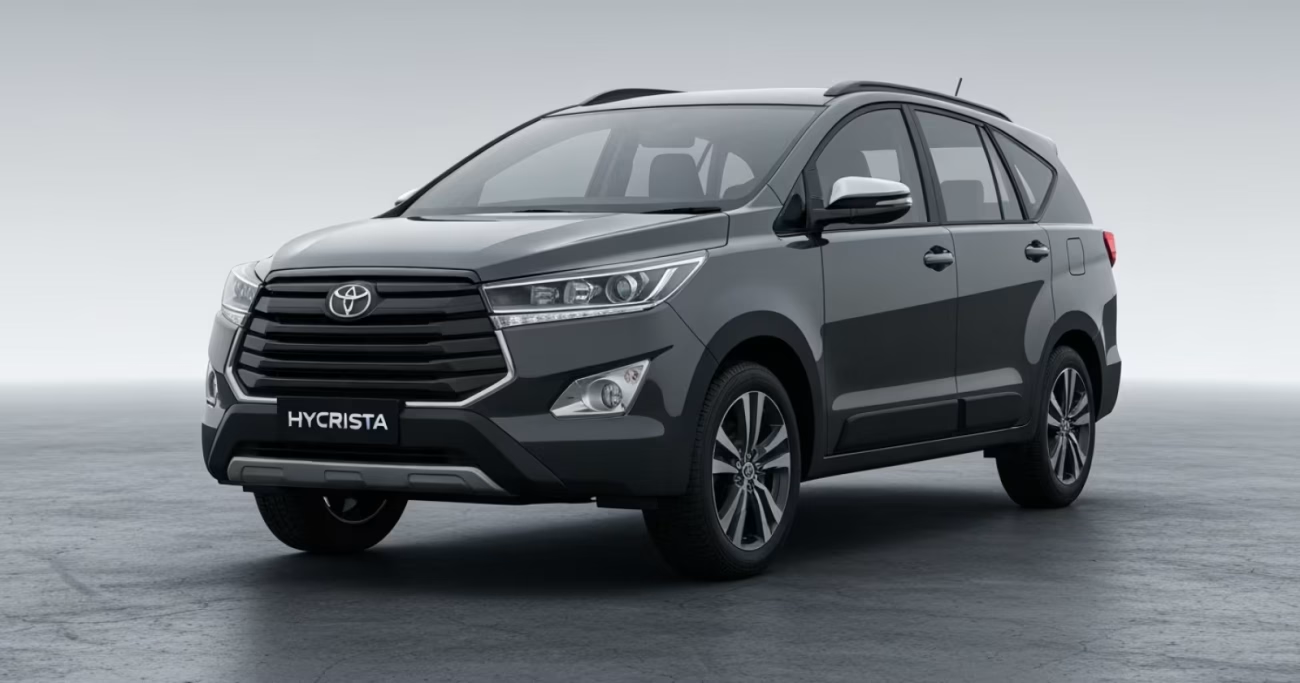
Two lakh units is not just a milestone — it is a declaration. Toyota‘s Innova HyCross has crossed this landmark in roughly three years, and the numbers quietly tell a story that the diesel loyalists in India did not see coming.
I have been tracking this segment closely, and what Toyota has done with HyCross is less about chasing sales and more about engineering a controlled revolution inside its own lineup. Let me break down exactly what is happening here — and why it matters for every MPV buyer in India right now.
From Zero to 2 Lakh — How HyCross Built Its Lead
Toyota Innova HyCross went on sale in January 2026 — wait, let me be accurate — it launched in January 2023, and by any reasonable measure, the ramp-up has been remarkable. In CY2023 alone, HyCross sold 45,916 units, already ahead of its diesel sibling Crysta’s 38,156 units in the same period. That gap has only widened since.
By the time cumulative sales crossed 2 lakh, it was clear this was not a fluke. HyCross is now a key volume contributor to Toyota’s India operations, and it did this while positioned squarely as a premium product — not a budget play.
The Hybrid Powertrain That Changed Everything
At the heart of this success is Toyota’s 5th-generation self-charging hybrid system paired with a 2.0-litre petrol engine. The combined output is 186 PS, which is respectable for a three-row MPV. But raw power is not what is selling this car — it is the EV-mode capability in city driving conditions.
India’s urban roads are a stop-start nightmare, and in those conditions, the HyCross hybrid shines. Fuel efficiency climbs, emissions drop, and the cabin stays whisper-quiet. For both private buyers doing school runs in Bengaluru and fleet operators running corporate shuttles in Mumbai, this combination is genuinely compelling.
The hybrid battery also comes with an 8-year warranty, which removes one of the biggest psychological barriers for Indian buyers who worry about long-term costs on electrified vehicles.
Why Crysta’s Sales Fell — And It Is Not Just Demand
Here is the part that does not always get reported clearly. Innova Crysta’s declining numbers are not purely a market rejection of diesel. Toyota made deliberate choices that curtailed the Crysta’s competitiveness. Back in 2022, production was temporarily halted due to regulatory shifts. When it returned, the automatic variant was gone — only manual remained.
That single decision changed everything. Urban buyers who wanted the comfort of an automatic transmission now had exactly one option within the Innova family — HyCross. Toyota essentially nudged its own audience upmarket without ever making a hard sell.
Smart? Absolutely. Aggressive? In the most polished way possible.
Sales Comparison — HyCross vs Crysta
| Year | Innova HyCross Sales | Innova Crysta Sales | Winner |
|---|---|---|---|
| CY2023 | 45,916 units | 38,156 units | HyCross |
| CY2024 | Higher (gap widened) | Lower (gap widened) | HyCross |
| Cumulative (2023–2026) | 2,00,000+ units | Declining trend | HyCross |
| Starting Price | ₹19.53 Lakh (ex-showroom) | Lower (manual only) | Depends on buyer |
Crysta Is Not Dead Yet — But Its Clock Is Ticking
Innova Crysta still has a strong following in the taxi and fleet segment, where diesel economics make hard financial sense. For operators running 300-plus kilometres a day, diesel’s per-kilometre cost advantage is real and meaningful. Toyota knows this, which is why Crysta has not been axed outright.
But stricter emission norms are closing in. The long-term regulatory environment in India is not friendly to diesel, and Toyota is reportedly planning a phased exit for Crysta. Once that happens, the plan appears to be introducing a more accessible hybrid variant of HyCross specifically designed to serve the fleet and taxi market. That would be a masterstroke — keeping Toyota dominant in a segment it has owned for decades, while transitioning entirely to cleaner powertrains.
Features and Safety — Why Buyers Are Paying the Premium
Let me be honest: ₹19.53 lakh is not cheap for an MPV. But HyCross makes a strong case for the money. It packs powered Ottoman seats in rear rows, ventilated front seats, dual-zone climate control, and Toyota Safety Sense ADAS — a suite that includes lane departure alert, pre-collision system, and adaptive cruise control.
It also earned a 5-star rating under Bharat NCAP, which in 2026’s safety-aware Indian market is not a minor footnote — it is a headline. Parents buying a family MPV are actively checking crash ratings now, and HyCross sits at the top of that conversation.
What This Means for the Indian MPV Segment
Toyota’s 2 lakh milestone with HyCross signals something bigger than one model’s success. It shows that Indian premium MPV buyers are ready to move beyond diesel — provided the alternative is genuinely better, not just greener on paper. The hybrid system delivers tangible daily benefits, the safety credentials are class-leading, and the brand trust Toyota commands in India closes the deal.
For rivals eyeing this space, the message is uncomfortable but clear: hybrid technology paired with three-row practicality and a trusted badge is a formula that works at scale in India.
If you are in the market for a premium family MPV right now, the HyCross deserves a test drive before you sign anything. I would especially encourage you to spend time in city traffic and experience the hybrid mode firsthand — that is where the magic truly reveals itself. Head to your nearest Toyota dealership, take a proper drive, and see if those 2 lakh buyers were onto something you have been missing.
