
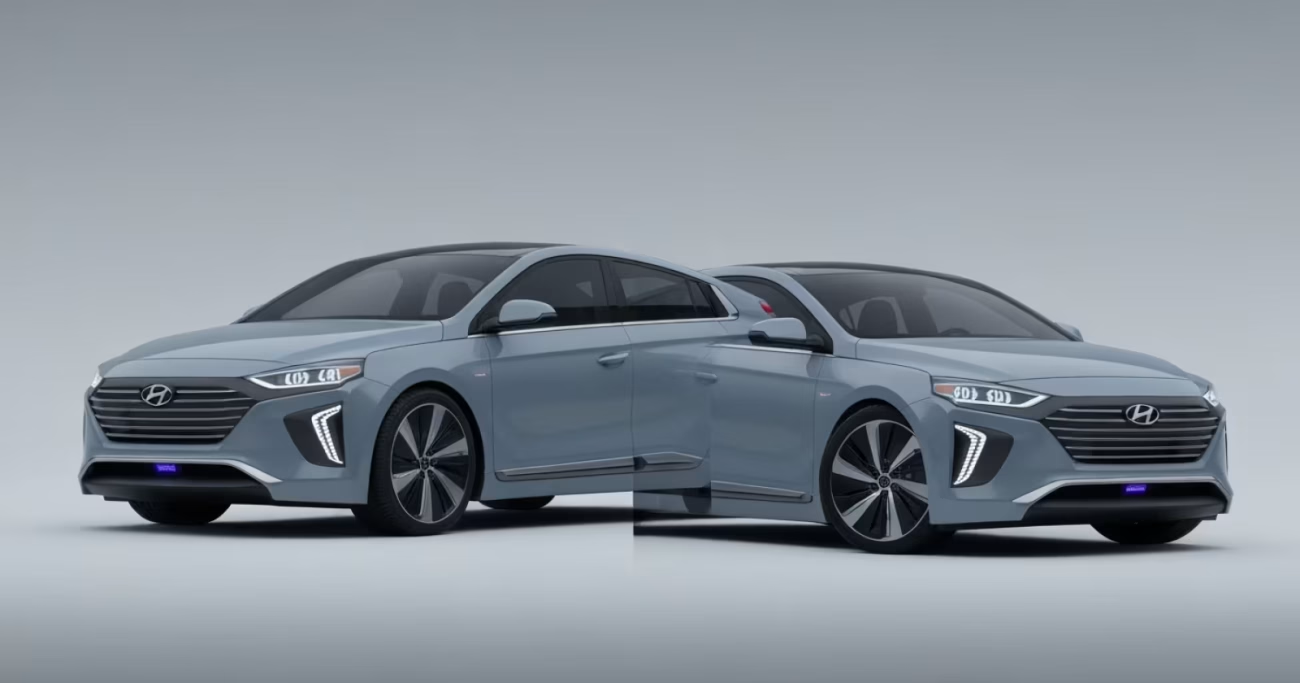
Two cryptic teasers landed on the internet this week, and honestly, I could not stop staring at them. Hyundai has just pulled back the curtain — barely — on two concepts called Earth and Venus, and they look unlike anything the Ioniq brand has shown us before.
These are not production cars yet. But every line, every surface detail in these teasers tells me that Hyundai is done playing it safe with EV design. What we are looking at could be the blueprint for the entire next generation of Ioniq vehicles — and the implications for the Indian EV market are genuinely exciting.
What Exactly Are the Earth and Venus Concepts?
Hyundai has confirmed that both concepts will be formally unveiled at its Ioniq Brand Launch event scheduled for 10th April 2026. There is also a strong possibility that the brand will showcase them at the Beijing Motor Show 2026 shortly after. So within weeks, we should have the full picture.
Right now, the teasers reveal just enough to get the imagination running. The Earth concept appears in a striking silver finish, and the moment I saw the flat body panels and sharply angled surfaces, the Cybertruck comparison was unavoidable — though Hyundai has added its own flair. Sharp LED light signatures, a steeply raked windshield, squared wheel arches with cladding, and what appears to be a gently sloping roofline all point toward a rugged yet aerodynamic crossover or SUV profile. I expect the raked windshield flows into a full glass roof, which would make the cabin feel genuinely spacious and futuristic.
The Venus concept, on the other hand, is a different kind of statement entirely. Presented in a rich golden colour — fitting, given that Venus is historically associated with luxury and elegance — this one shows off a fastback-style roofline, circular wheel arches, prominent rear bumper, and horizontally stacked sleek taillamps. It is clearly the halo concept of the two — low-slung, premium, and built to turn heads at every traffic light.
The Design Philosophy Split
What I find fascinating is how deliberately Hyundai has divided the two concepts across very different emotional territories. Earth is practical and bold — it speaks to families, adventurers, and buyers who want a tough daily driver that also happens to be electric. Venus is aspirational and expressive, aimed squarely at the segment where Hyundai wants to compete against the best luxury EVs in the world.
This dual approach makes complete strategic sense. Hyundai has set a target of selling 3.3 million electrified vehicles globally by 2030, covering BEVs, hybrids, and EREVs. To hit that number, you cannot have a one-size-fits-all design language. You need platforms that speak to different people — and that is exactly what Earth and Venus represent.
The IMA Platform and What It Means
Production models derived from both concepts are expected to ride on Hyundai’s new IMA — Integrated Modular Architecture — platform. This is Hyundai’s next-generation EV foundation, designed specifically for Software-Defined Vehicles (SDV). Think over-the-air updates, deeper software integration, and battery technology that goes well beyond what the current Ioniq 5 and Ioniq 6 offer.
The first IMA-based vehicles are expected to arrive in late 2027 or early 2028. That is a wait, yes — but it also means by the time these cars land in markets like India, the technology underneath will be genuinely cutting-edge.
Quick Comparison: Earth vs Venus Concept
| Feature | Earth Concept | Venus Concept |
|---|---|---|
| Colour Shown | Silver | Golden |
| Body Style | SUV / Crossover | Fastback / Halo EV |
| Design Character | Rugged, angular, practical | Elegant, premium, expressive |
| Roofline | Gently sloping, possible glass roof | Fastback, steeply raked rear |
| Wheel Arches | Squared with cladding | Circular, smooth |
| Target Buyer | Family / Adventure EV buyer | Luxury EV enthusiast |
| Platform | IMA + SDV | IMA + SDV |
| Expected Launch | Late 2027 / Early 2028 | Late 2027 / Early 2028 |
Why This Matters for India
India’s EV segment is heating up fast. Tata Motors has been dominant, but buyers are actively looking for more variety, more range, and more design ambition. The Earth concept in particular feels like it could directly speak to Indian SUV buyers — a segment that is already enormous and growing rapidly.
Hyundai India has been steadily building trust in the EV space with the Ioniq 5. A rugged, well-equipped Earth-derived model at a competitive price point could genuinely shake things up. And if Venus eventually makes it here as a premium offering, it would position Hyundai at the very top of the Indian EV market in a way no current Ioniq model does.
I will be watching the 10th April Ioniq Brand Launch event very closely, and I suggest you do the same. The full unveil of Earth and Venus concepts could be one of the most significant automotive moments of 2026 for EV fans in India. Keep this page bookmarked — the moment new details drop, you will find them right here first.
