
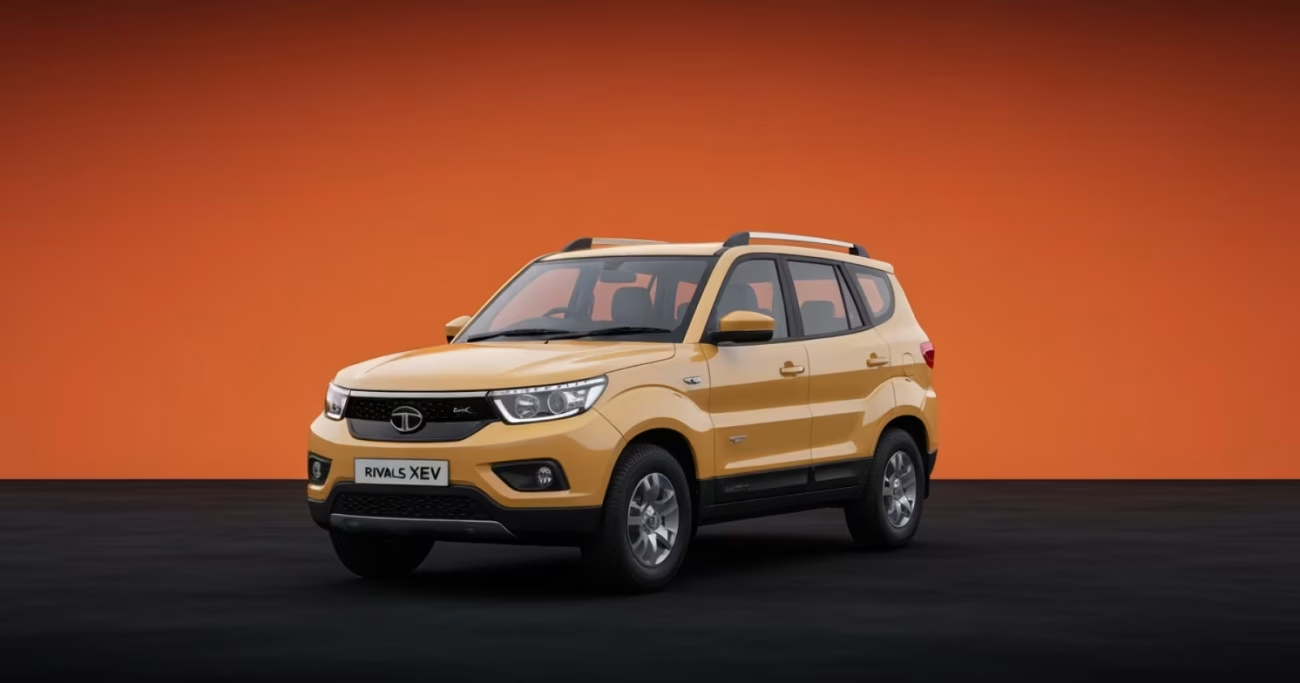
India’s EV calendar just got a whole lot more exciting, and if you’ve been waiting for a seven-seater electric SUV from a brand you can actually trust, your wait is almost over. Tata Motors is gearing up to do something it has never done before — put three rows of seats inside a fully electric SUV — and it could happen right around Diwali 2026.
I’ve been following the Safari EV story closely, and the details trickling out are genuinely impressive. This isn’t just a stretched Harrier EV with extra seats. The Safari EV represents a new chapter for Tata’s electric lineup, one that takes on the Mahindra XEV 9S directly and plants a flag in segment territory nobody else in India has occupied yet.
India’s First Three-Row Electric SUV Is Almost Here
To understand why the Safari EV matters so much, you need to look at how Tata has built its EV portfolio. From the Tiago EV at the entry end to the Harrier EV at the flagship end, the company has been methodical and precise. But there was always one glaring gap — the Safari, Tata’s beloved three-row family SUV, had no EV counterpart. That changes now.
Internally codenamed Tayrona, the Safari EV is expected to sit on the same acti.ev+ platform that underpins the Harrier EV. Production is reportedly scheduled to kick off around August 2026, setting up a festive-season launch timed perfectly for the Diwali buying rush. Tata knows Indian families make big purchase decisions during the festive window, and launching a seven-seater EV right then is smart commercial thinking.
Design: A Safari, But Electrified With Purpose
Don’t expect a radical design departure. Tata’s approach with the Harrier EV was to evolve, not reinvent — closed-off EV grille, refreshed bumper, new alloy wheel design — and the Safari EV will likely follow the same playbook. That means you’ll get the Safari’s tall, commanding road presence, its boxy confident stance, and that wide front face, but with the unmistakable closed grille that signals electric intent.
The interior is expected to carry over largely from the current Safari ICE, which is no bad thing considering the ICE Safari already has a premium, well-appointed cabin. What will be new and significant is the tech layer sitting beneath it all — TIDAL, or Tata Intelligent Digital Architecture Layer, borrowed directly from the Harrier EV.
Tech That Makes the XEV 9S Nervous
Here’s where things get seriously interesting. TIDAL brings a suite of features that put the Safari EV in a completely different conversation from any three-row SUV India has seen before. We’re talking about auto park assist, a 540-degree camera system, off-road assist modes, a summon feature that moves the car remotely, and advanced ADAS capabilities. For a family-focused three-row SUV, this tech stack is extraordinary.
When I compare this to what the Mahindra XEV 9S offers, the Safari EV looks like it could match or exceed it feature for feature — while also adding that third row that the XEV 9S doesn’t offer. That’s a meaningful advantage for families who need genuine seven-seat capacity without compromising on electric performance or modern tech.
Battery, Range, and Performance Breakdown
Based on what Tata has done with the Harrier EV, we can expect a similar battery strategy for the Safari EV. Here’s how it is likely to stack up:
| Specification | Expected Detail |
|---|---|
| Battery Options | 65 kWh and 75 kWh |
| Expected Range | Up to 627 km (ARAI, similar to Harrier EV) |
| Drivetrain (65 kWh) | Single motor, Rear-Wheel Drive |
| Drivetrain (75 kWh) | Dual motor, All-Wheel Drive (QWD) |
| Rear Motor Output | 238 PS |
| Front Motor Output | 158 PS |
| Peak System Torque | 504 Nm |
| Fast Charging | 100 kW DC fast charging expected |
| Platform | acti.ev+ |
| Launch Timeline | Diwali 2026 (festive season) |
Those numbers are lifted from the Harrier EV’s specification sheet and should translate closely to the Safari EV, potentially with minor adjustments to account for the extra weight of the third-row seating. The dual-motor AWD system in particular is something I find genuinely exciting — a seven-seat AWD electric SUV made in India, rivalling anything in its class globally.
Pricing: What to Expect Against Harrier EV and XEV 9S
Harrier EV currently ranges between Rs 21.49 lakh and Rs 28.99 lakh (ex-showroom). Given the additional seating row and updated tech, the Safari EV will almost certainly be priced a notch higher — I’d expect a starting price somewhere around Rs 24 lakh to Rs 25 lakh, with the range-topping AWD variant possibly touching or crossing Rs 32 lakh.
That puts it squarely against the Mahindra XEV 9S, which is targeting the premium electric SUV buyer. But here’s the thing — the Safari EV brings a third row to the fight, and for Indian families who routinely travel with parents, kids, and relatives in tow, that middle-row-plus-boot-row combination is often the deciding factor. The Vinfast VF MPV 7 (Limo Green) is also incoming, but Tata’s established sales network and after-sales support give it a structural advantage that a new entrant simply cannot match overnight.
What Tata Is Really Building Here
I think it’s worth stepping back and appreciating what Tata Motors has quietly built over the last few years. From being virtually absent in the EV space, the brand is now India’s number one electric car manufacturer — and the Safari EV is arguably the most important single product in its upcoming lineup. It completes the electric mirror of the Harrier-Safari ICE duo, giving Indian buyers a full-size electric family SUV with the kind of range, tech, and brand trust that makes the decision easy.
If you’re in the market for a seven-seater family vehicle and you’re even slightly considering going electric, I’d strongly suggest holding off your purchase decision until the Safari EV officially launches this Diwali. Test drive it, compare it against the XEV 9S, and make an informed call — because on paper, this could be the most complete electric SUV buy India has ever seen. Drop a comment below telling me which variant you’re most excited about — the long-range AWD is calling my name already.
