
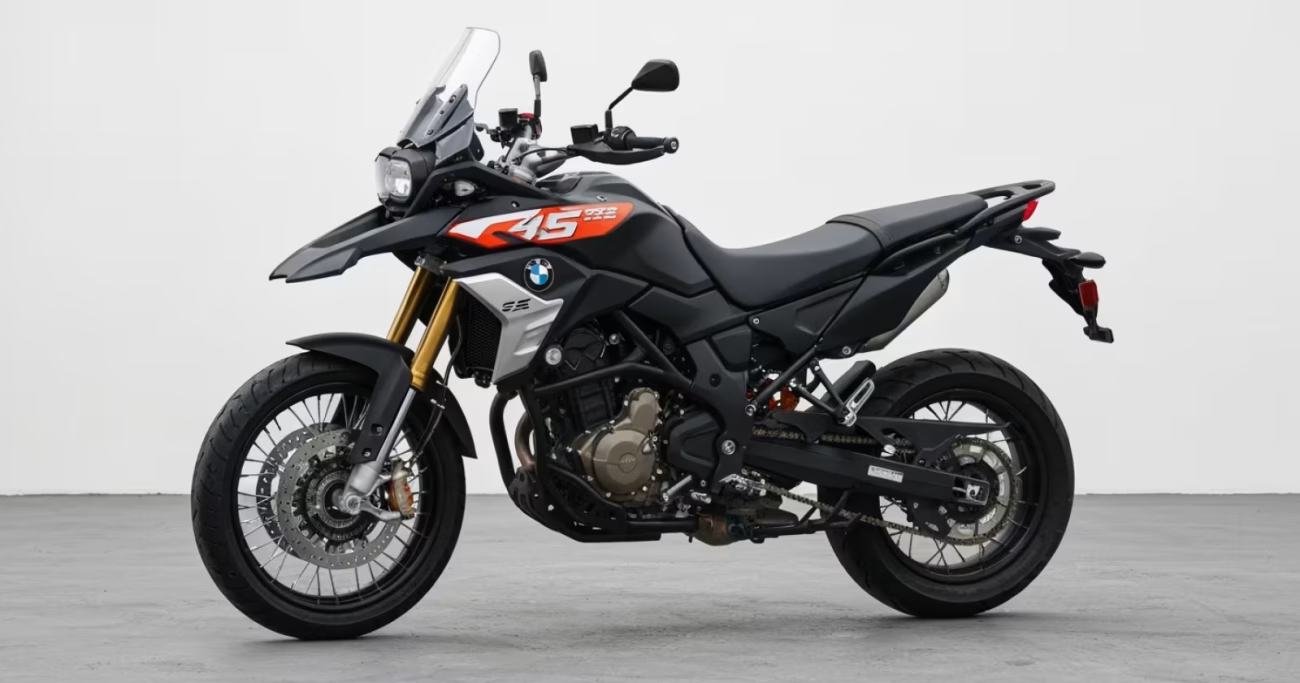
A twin-cylinder BMW GS for under ₹5 lakh felt like a pipe dream just two years ago. Yet here I am, fresh off the saddle from a media ride in Goa, and I can tell you this little Bavarian adventurer is very, very real.
BMW Motorrad and TVS Motor have cooked up something genuinely disruptive with this machine. It slots below every other GS in the lineup, yet carries enough DNA from the legendary R 1300 GS to make seasoned GS owners do a double take. I spent an entire day wringing it through Goan highways, coastal curves and stop-go town traffic. Here is everything I think you need to know before walking into a showroom.
Design That Punches Way Above Its Price
The moment you see the F 450 GS in person, the family resemblance is unmistakable. That X-shaped LED DRL flanking vertically stacked headlights is lifted straight from the R 1300 GS playbook. BMW calls it functional design. I call it the Predator face, and it looks absolutely menacing on a sub-5-lakh motorcycle.
The GS Trophy variant I rode came draped in Racing Blue Metallic with a white-painted mainframe and aluminium bash plate. Gold-finished USD forks and handlebars add a layer of premium feel that no rival in this segment currently matches. Silhouette-wise, it reads like a proper full-size adventure bike despite its compact dimensions. The only visual letdown is the single front brake disc. If Benelli can slap twin discs on the 302R, BMW certainly could have done the same here for that added visual drama.
India-spec models get alloy wheels across all three variants, skipping the wire-spoke option available internationally. There is no luggage rack either, which keeps the rear end clean but means you will be shopping for aftermarket accessories before that Ladakh trip.
The 420cc Twin That Feels Like A Bigger Bike
Despite the 450 badge, the actual displacement is 420cc. This parallel-twin, liquid-cooled engine uses a 135-degree crank angle and produces 48 bhp of peak power alongside 43 Nm of torque, fed through a 6-speed gearbox. On paper, those numbers compete directly with the KTM 390 Adventure and Royal Enfield Himalayan 450. On tarmac, the character is distinctly BMW.
Throttle response is refined and linear. There is no sudden spike in the powerband that catches you off guard. Instead, the power builds progressively and rewards you with a punchy surge every time you crack the throttle wide open. I clocked under 6 seconds for the 0-100 km/h sprint on the speedo, which is brisk for this class. The exhaust note deserves a special mention too. It carries a snarly, twin-cylinder bark that sounds far more expensive than the price tag suggests.
Easy Ride Clutch — Scooter Ease Meets Manual Control
This is the headline feature and the one that will split opinions right down the middle. ERC, or Easy Ride Clutch, is exclusive to the GS Trophy variant and makes the F 450 GS the most affordable motorcycle in India with an automatic clutch system.
Let me be clear about what it is and what it is not. It is not an automatic gearbox. You still shift gears manually. What it does is eliminate the need to pull the clutch lever after you start the bike. Think of it as a mechanically integrated centrifugal clutch inside the gearbox. Paired with the quickshifter on the GS Trophy, you can ride through an entire day without touching the clutch lever once after the initial start.
In Goa’s chaotic town traffic, ERC was a revelation. It brings genuine scooter-like convenience to stop-and-go riding. Pull up to a signal, slot into first, release the brake, and the bike creeps forward smoothly. On the highway, you retain full manual control for spirited riding. The transition between the two modes of riding is seamless once you trust the system.
There are caveats though. The bike can roll forward when slotted in first gear, which caught me off guard on a slight incline. The system engages only above roughly 2,500 rpm, so traditional half-clutch feathering at low speeds is not possible. The instrument cluster helpfully suggests the correct gear, which is a nice touch for newer riders adapting to the system. It takes about 30 minutes to rewire your muscle memory, but once it clicks, going back to a conventional clutch feels like extra work.
Ride Quality Built For Indian Roads
At 178 kg kerb weight, the F 450 GS is impressively light for a twin-cylinder adventure motorcycle. The seat height sits at 845 mm, which is on the taller side, but the slim saddle and manageable weight meant I could flat-foot comfortably at 6 feet tall. Riders around 5 feet 8 inches should be able to manage with some confidence.
The GS Trophy’s fully adjustable USD front forks let you fiddle with compression and rebound to suit your preference. Even in the default setting, the suspension handled Goa’s broken tarmac and speed breakers with composure. I would recommend dialling in slightly stiffer settings for sustained highway use, as there is noticeable vertical movement over undulating surfaces at speed. The bike tips into corners eagerly and holds its line with confidence. Braking is progressive with strong initial bite, though I maintain that a twin-disc front setup would have been the cherry on top.
Features That Embarrass The Competition
Even the base variant at ₹4.7 lakh gets a 6.5-inch TFT display, BMW’s signature rotary dial controller, heated grips, adjustable levers, 43 mm USD forks, all-LED lighting, dual-channel ABS and traction control. That is a staggering amount of kit for the entry price.
| Variant | Price (Ex-Showroom) | Key Additions |
|---|---|---|
| Base | ₹4.70 Lakh | TFT, Heated Grips, ABS, TC, Rotary Dial |
| Exclusive | ₹4.90 Lakh | Quickshifter, Riding Modes Pro, Belly Pan, Knuckle Guards |
| GS Trophy | ₹5.30 Lakh | ERC, Adjustable Suspension, Aluminium Bash Plate, Rally Windshield |
The TFT screen is crisp and legible even under Goa’s harsh midday sun. BMW’s rotary dial and switchgear are genuinely best-in-class and make navigating menus feel intuitive. Bluetooth connectivity via the BMW Motorrad Connect app works without needing a BMW account, which removes a friction point I have experienced with other brands. Navigation, audio integration for rider and pillion helmets, and a Type-C USB charging port round out a thoroughly modern cockpit.
Where It Sits In The Market
The F 450 GS does not just compete on spec sheets. It redefines what you can expect at this price point. The KTM 390 Adventure is a sharp rival but runs a single-cylinder motor and lacks the twin-cylinder refinement. The Royal Enfield Himalayan 450 offers adventure credibility and a loyal community but cannot match BMW’s electronics suite or the ERC party trick. The Triumph Speed 400 plays in a similar price bracket but targets a different riding style entirely.
Local manufacturing through the TVS partnership is the secret weapon here. It keeps pricing aggressive and ensures service accessibility across India, a concern that has historically kept buyers away from BMW two-wheelers.
Should You Book One
After a full day in the saddle, I walked away genuinely impressed. The F 450 GS delivers twin-cylinder refinement, adventure-ready capability and a feature list that makes rivals look underprepared. The ERC system on the GS Trophy is not a gimmick. It is a genuine quality-of-life upgrade for anyone who splits time between city commutes and weekend highway runs. At ₹4.7 lakh for the base and ₹5.3 lakh for the fully loaded GS Trophy, BMW has priced this to move fast.
If you have been eyeing the adventure segment and waiting for something that feels premium without the premium tax, walk into your nearest BMW Motorrad showroom and throw a leg over this one. The baby GS has arrived, and it means serious business.
