
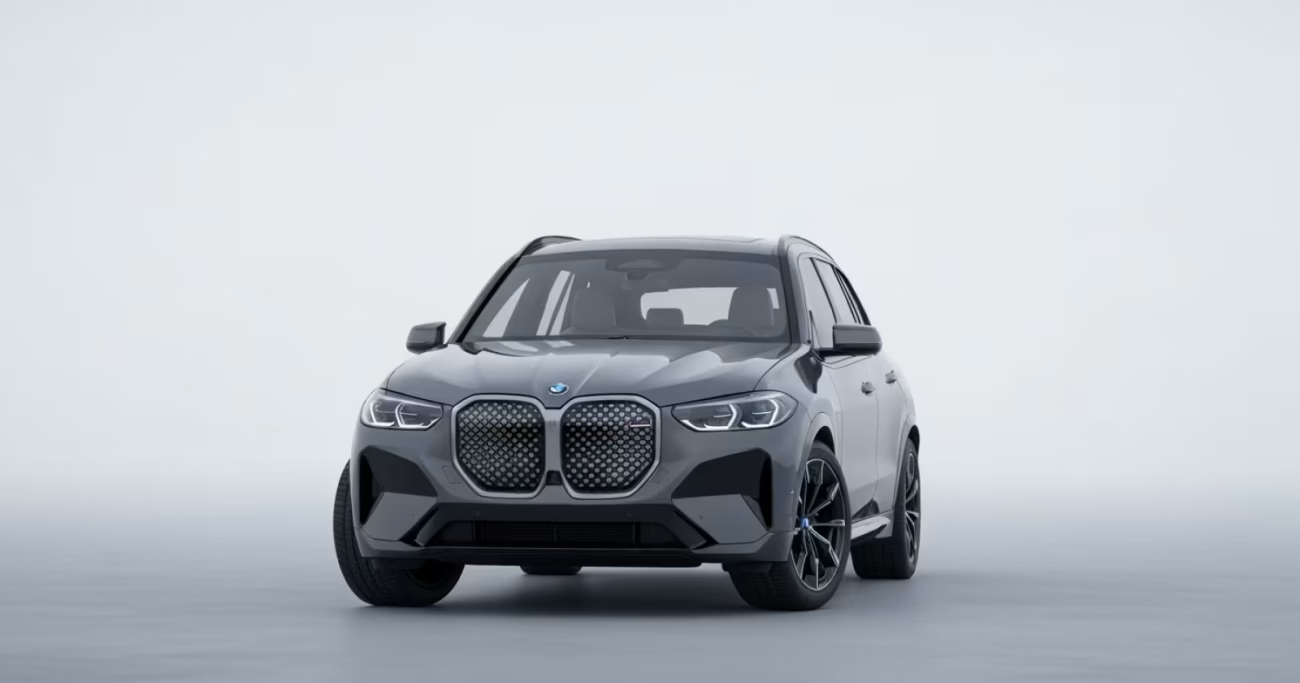
Hydrogen-powered family SUVs have always carried one fatal flaw — the range just wasn’t good enough to justify the switch. BMW may have just solved that problem in a way nobody expected.
The 2028 BMW iX5 Hydrogen has been teased with an EPA-estimated range of around 385 miles and a refueling time of under five minutes. Those aren’t concept-car numbers. Those are production-ready specs that put serious pressure on the broader EV market.
A flat tank system that changes the packaging game entirely
The engineering story here isn’t just the range figure — it’s how BMW achieved it. The iX5 Hydrogen uses a brand-new flat storage architecture, housing seven high-pressure tanks made from carbon-fiber reinforced composite material. Instead of stacking them vertically and eating into cargo or cabin space, BMW lays them side-by-side in a horizontal arrangement.
The result is a single enclosed unit — essentially seven tanks sandwiched between two sheets of metal — that stores at least 7 kg (15.4 lbs) of hydrogen. That’s the kind of space efficiency that turns a promising prototype into something a family can actually live with. And that refill window? Under five minutes, which is closer to a gas station stop than anything a battery-electric vehicle can currently claim.
Sharing a line with EVs is smarter than it sounds
Here’s where the strategy gets genuinely interesting. BMW engineered the flat hydrogen storage system to occupy the same physical footprint as its Gen6 high-voltage battery pack. That’s not an accident — it means the iX5 Hydrogen and its battery-electric sibling can roll off the same production line without major retooling.
For an automaker managing five separate powertrain variants on a single platform — electric, plug-in hybrid, diesel, gasoline, and now hydrogen — that kind of modularity isn’t just convenient, it’s financially critical. BMW described it plainly: models with fuel cell technology can be built alongside every other drive type. That’s a manufacturing flexibility most competitors simply don’t have right now.
At a glance
| Spec | Detail |
|---|---|
| EPA Range (estimated) | ~385 miles |
| WLTP Range | 750 km |
| Hydrogen Storage | 7 kg minimum (15.4 lbs) |
| Number of Tanks | 7 (carbon-fiber reinforced composite) |
| Refuel Time | Under 5 minutes |
| Fuel Cell Generation | Gen3 system |
| Production Start | 2028 |
| Platform | Neue Klasse (compatible with Gen6 battery) |
What BMW isn’t saying yet about the powertrain itself
BMW has confirmed the iX5 Hydrogen will carry a Gen3 fuel cell system paired with an innovative high-voltage buffer battery. Beyond that, the company is staying deliberately quiet. What it did drop, though, is significant — the crossover will feature Neue Klasse technology, specifically the “Heart of Joy” drivetrain and chassis control software.
That software suite is BMW’s next-generation vehicle dynamics brain, already earmarked for the upcoming electric lineup. Bringing it to a hydrogen platform signals this isn’t a science experiment or a low-volume halo vehicle. BMW appears to be treating the iX5 Hydrogen as a full member of the 2028 X5 family — not a footnote. Output figures and pricing haven’t landed yet, but the platform parity alone suggests BMW isn’t planning to underspec it.
Why showing up with 385 miles changes the hydrogen conversation
The Toyota Mirai has done admirable work keeping hydrogen on the radar, but it’s a sedan — and its real-world range has drawn consistent criticism from owners. The Honda CR-V e:FCEV exists, but it leans heavily on its plug-in backup battery to cover gaps. BMW’s iX5 Hydrogen is positioning itself as neither a stopgap nor a compromise. It’s a full-size crossover with SUV practicality and range that matches or beats most battery EVs without the charging wait.
The real story is infrastructure, and BMW knows it. A 385-mile hydrogen SUV means nothing if drivers can’t find a pump. But if you zoom out, that argument cuts both ways — the iX5 Hydrogen’s sub-5-minute refuel actually makes a stronger case for infrastructure investment than a mid-range EV ever could. Every automaker building hydrogen vehicles is simultaneously making the argument for more stations. BMW just made that argument louder.
Why this matters
- 385-mile hydrogen range directly challenges long-range battery EVs on their strongest stat
- Shared production line with EVs slashes manufacturing costs for both technologies
- Five powertrain options on one platform gives BMW unmatched market flexibility through 2030
The verdict
The 2028 BMW iX5 Hydrogen isn’t just a range milestone — it’s a statement about how seriously BMW is treating fuel cell technology as a production-ready option rather than a PR exercise. Enthusiasts who’ve written off hydrogen will want to revisit that position before this thing hits showrooms.
Families and commuters in hydrogen-accessible markets now have a genuine alternative that refuels faster than any EV can charge, with range that eliminates the anxiety entirely. The flat tank architecture and shared-platform manufacturing suggest BMW has done the hard engineering work upfront.
If the infrastructure catches up — and several major markets are actively investing in it — the iX5 Hydrogen could end up being the crossover that forces the EV-only narrative to finally share the spotlight. Watch the 2028 launch window closely, because this one lands with real weight behind it.
If hydrogen is on your radar for your next vehicle purchase, now is the time to start tracking BMW’s Neue Klasse rollout and watching for dealer announcements heading into late 2027. The specs are compelling enough that waiting lists may form faster than anyone anticipates.
