
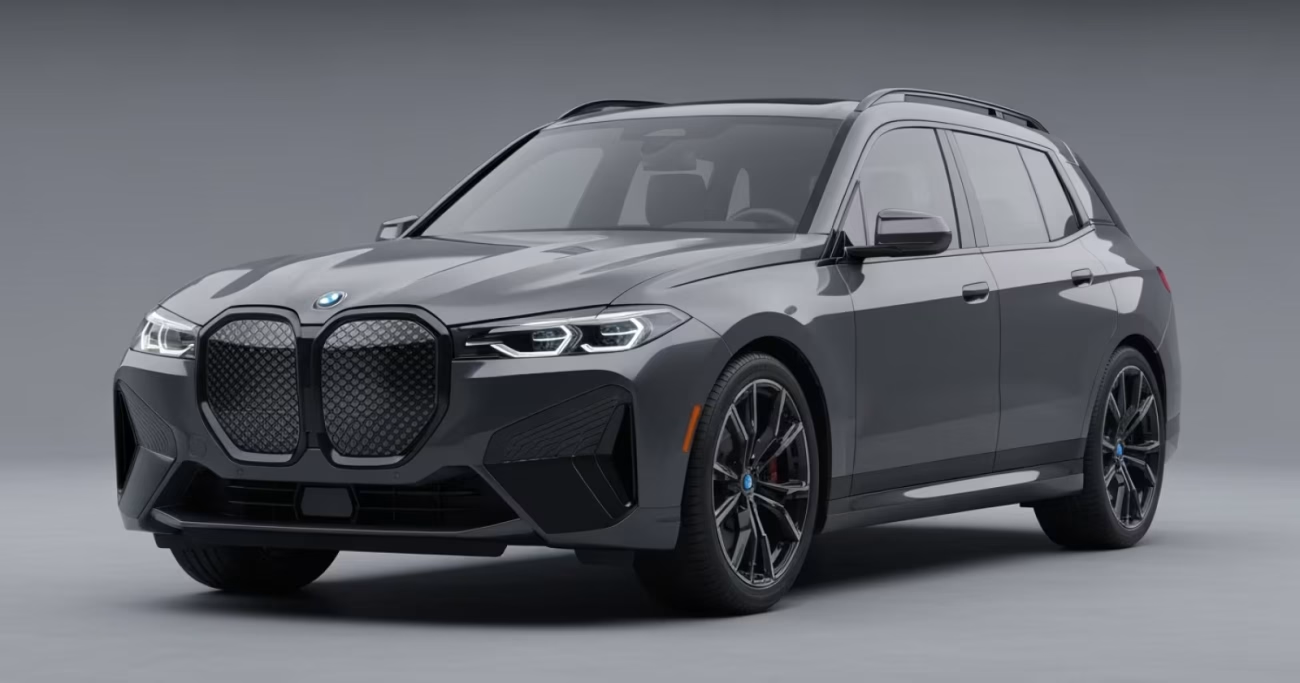
BMW is about to build one of the most technologically advanced electric SUVs on the planet — and then dress it up to look almost exactly like the car it replaces. Fresh spy shots of the upcoming iX7 confirm what many suspected: BMW’s biggest EV is getting all the power and range upgrades you’d want, but none of the bold styling that’s made its smaller siblings so polarizing and so talked-about.
That’s a deliberate choice, not an oversight. And depending on which kind of BMW buyer you are, it’s either the smartest move the brand has made in years — or a missed opportunity that’ll haunt the iX7’s legacy before it even lands in showrooms.
BMW is playing it safe where it matters most to buyers
The iX7 is targeting a very different buyer than the iX3. Where the smaller Neue Klasse EV chases a younger, design-forward audience with its visor-style nose and futuristic proportions, the iX7 is aimed squarely at established luxury SUV buyers — people spending six figures who don’t want to explain their car at the country club.
So instead of a radical redesign, BMW is giving the iX7 what it calls Neue Klasse “surfacing” — cleaner body lines, flush door handles, and updated kidney grille shapes. The split headlights stay. The familiar silhouette stays. The absence of tailpipes and a set of iX7 badges will be your only real tells that this isn’t a combustion X7. It’s the same strategy BMW used with the i5 and i7, and it worked well enough commercially to repeat at the top of the range.
The real story is what’s hiding under that familiar skin
Here’s where things get genuinely impressive. BMW’s 800-volt electrical architecture makes its iX7 debut here, enabling significantly faster DC charging than the outgoing iX platform could manage. The battery pack is expected to exceed 100 kWh, and with that capacity paired to the new energy-dense cells BMW has developed for its Neue Klasse generation, a real-world range figure north of 500 miles isn’t out of reach.
For context, the smaller iX3 is already projected to clear 500 miles on the WLTP cycle. The iX7, with a much larger pack, should match or beat that. Dual motors and all-wheel drive will be standard across the range, and a performance variant pushing beyond 800 hp is very much on the table — because even 800 hp is starting to look ordinary in the electric flagship SUV segment in 2026.
Sharing a platform has tradeoffs BMW is clearly willing to accept
The iX7 won’t ride on a ground-up EV platform. Like the i7 before it, it’ll share its bones with the combustion X7, running on an updated version of BMW’s existing large SUV architecture. That decision allows BMW to build both petrol and electric versions of the X7 on the same production line — a pragmatic manufacturing call that keeps costs manageable and investment risk lower.
The catch is that a shared platform limits how aggressively BMW can optimize the iX7 for its electric drivetrain. A purpose-built EV platform typically allows for a lower floor, better weight distribution, and a more spacious interior. The iX7 will have none of those inherent advantages. What it will have is BMW’s latest Panoramic iDrive setup, a full head-up display system, and a cabin loaded with the kind of tech that justified the seven-series price tag before it trickled down.
A 2027 launch means BMW is watching the competition carefully
Sales are expected to begin in 2027, with the iX7 likely arriving ahead of the updated combustion X7. That timeline puts BMW in direct conversation with whatever Mercedes-Benz, Audi, and Cadillac bring to the ultra-luxury EV SUV space over the next 18 months. The price of entry will almost certainly start above $100,000, and a fully loaded performance version could push well past $130,000.
What BMW is betting on is that its established X7 buyers want evolution, not revolution. The brand has enough data from i5 and i7 sales to know that conservative styling doesn’t kill demand in this segment — it actually protects it. Whether that’s the right long-term strategy in a world where Lucid and Genesis are moving upmarket fast is a question 2027 will answer.
| Spec | BMW iX7 (Expected) | BMW iX3 (Current) | Mercedes EQS SUV |
|---|---|---|---|
| Est. Range | 500+ miles (WLTP) | 500+ miles (WLTP) | ~350 miles (WLTP) |
| Battery | 100+ kWh (est.) | ~90 kWh | 108.4 kWh |
| Peak Power | 800+ hp (top trim) | ~480 hp (top trim) | 649 hp (AMG) |
| Charging Arch. | 800V | 800V | 400V |
| Est. Start Price | $100,000+ | ~$75,000 | $104,400 |
| Launch Year | 2027 | 2026 | On sale now |
If you’re in the market for a three-row electric SUV that doesn’t announce itself with polarizing styling, the iX7 is shaping up to be the most technically capable option in this segment — and probably the most range-competitive. Keep an eye on BMW’s reveal schedule as the 2027 launch window approaches, because the spec sheet alone is going to force some serious conversations among Mercedes and Audi loyalists who’ve been waiting for a reason to switch.
