
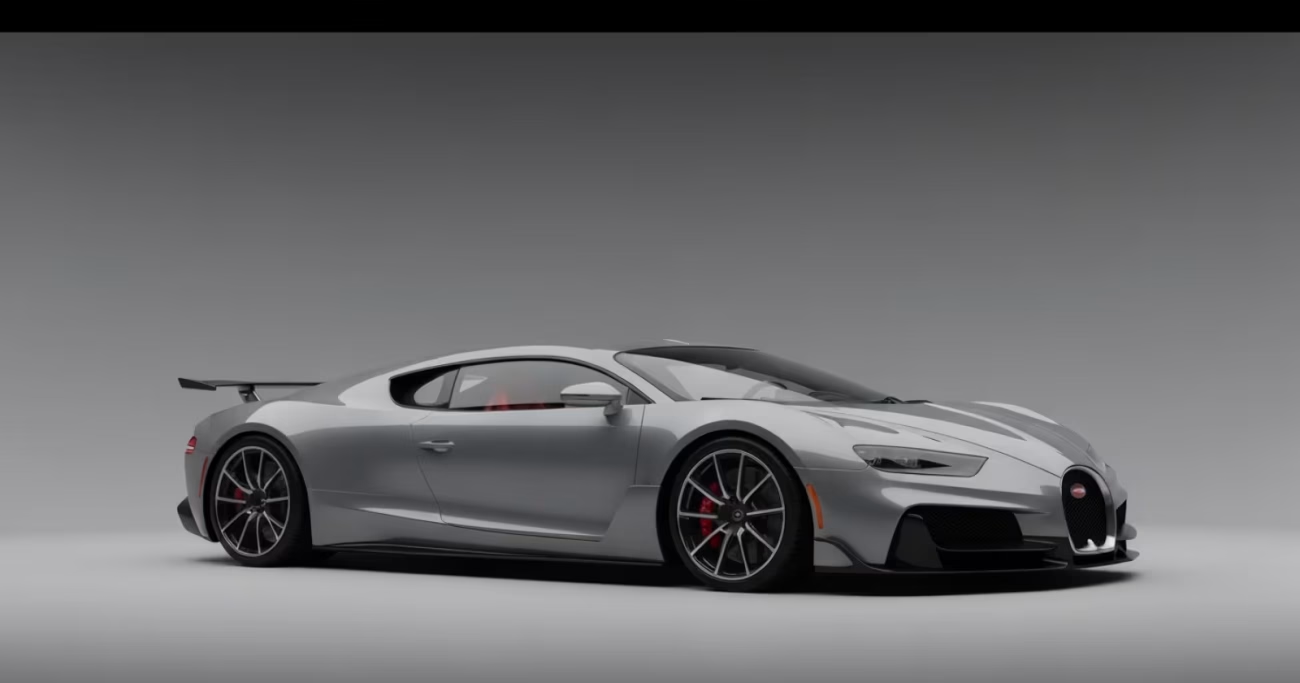
Only 3 of these cars exist on the entire planet, and one of them just became available for the first time in over a decade. What makes this even stranger is that it was never supposed to be finished at all.
The Bugatti EB112 is one of those automotive artifacts that collectors whisper about — a car that represents both the absolute peak of 1990s engineering ambition and the moment an iconic brand collapsed under its own weight. And right now, in 2026, one of the three known examples is heading to RM Sotheby’s with an estimate between $1.7 million and $2.2 million.
A Geneva Dream That Bankruptcy Nearly Killed Forever
When the EB112 debuted at the 1993 Geneva Motor Show, it arrived as something genuinely unprecedented. Designed by the legendary Giorgetto Giugiaro, it carried a 6.0-liter V12 with 5 valves per cylinder, a carbon fiber monocoque chassis, and an aluminum hood — in a full-size luxury sedan. Bugatti’s stated ambition was to build the fastest sedan in the world.
Then Bugatti went bankrupt in 1995. Only one car had been fully completed at the factory. Two additional chassis sat unfinished, and the whole project quietly died. I find it genuinely remarkable that these cars survived at all, let alone that one ended up being driven through Monaco decades later.
How Gildo Pallanca Pastor Saved the EB112 From Obscurity
Enter Gildo Pallanca Pastor — Monaco-born heir, real estate developer, and owner of electric car company Venturi. Pastor was already racing a Bugatti EB110 supercar with the Monaco Racing Team, and when Bugatti’s assets went up for sale, he moved fast. Among the assets he acquired were those 2 incomplete EB112 chassis.
Pastor completed both cars through Monaco Racing Team, which is how this particular example — documented as chassis #39003 and registered as a 1999 model — came to exist in finished form. The real story here isn’t just rarity; it’s that a private individual essentially rescued a piece of automotive history that a bankrupt factory abandoned. Chassis #39002 last appeared on the market in 2021, so these cars do occasionally surface, but not often.
| Specification | Detail |
|---|---|
| Engine | 6.0-liter V12, 5 valves per cylinder |
| Chassis | Carbon fiber monocoque |
| Total Built | 3 known examples worldwide |
| Odometer | 388 km (241 miles) |
| Chassis Number | #39003 |
| Designer | Giorgetto Giugiaro (Italdesign) |
| Estimate | $1.7 million – $2.2 million USD |
241 Miles on the Clock, Yet It Still Needed Serious Work
Here’s the catch that stops me every time I read the auction listing. This car has only 241 miles on the odometer — barely enough to cross a mid-sized city — and yet RM Sotheby’s documents repairs to the braking system, suspension, emissions control, catalytic converters, cosmetic restoration, and a full set of new Michelin tires. That’s a lot of remediation for a car that’s barely been driven.
What that tells you is that low mileage on a 1990s exotic means almost nothing without proper context. These cars sit. Materials degrade. Systems fail from disuse just as readily as from hard use. The current owner, who purchased the EB112 in 2015, loaned it to the prestigious Schlumpf Collection for display — which is genuinely a high honor — but static display and occasional drives around Monaco are no substitute for routine mechanical attention. Anyone bidding at $2 million should plan for ongoing maintenance costs that could be significant.
The One Debate That Has Followed This Car Since 1993
I have to address the elephant in the room. When the EB112 appeared, Automobile magazine called it the most beautiful car in the world. That is a genuinely held position that serious collectors still defend today. But there is another camp — and they are not entirely wrong — that sees a passing visual resemblance to the Chrysler PT Cruiser.
That comparison is brutal, and I understand why Bugatti purists hate it. But what I find more interesting is that it doesn’t seem to affect the car’s value or desirability among serious collectors at all. The EB112 is one of 3. It has a Giugiaro design pedigree, a V12 under the hood, and a direct connection to the EB110 supercar platform. Beauty is secondary when historical significance is this concentrated. The first completed EB112 — finished in burgundy by Italdesign — remains with the design house itself. That context alone tells you how significant this chassis is considered to be.
Why This Auction Is More Than Just a Big Number
Prices for unfinished-era Bugatti products have climbed steadily as the brand’s modern renaissance has reframed everything it once built. The EB110, once dismissed as a 1990s oddity, now commands millions. The EB112 benefits from that same reappraisal, but its extreme rarity — 3 cars, full stop — gives it a ceiling that most collector cars simply cannot match.
What Bugatti isn’t saying, and what the auction house is careful to frame diplomatically, is that this car exists entirely because of private initiative after corporate failure. It is not a factory product in the traditional sense. Pastor finished it. That distinction matters to some buyers and not at all to others, but it is a real part of the car’s provenance that any serious bidder should understand going in.
If you have any interest in where this auction lands — and I think anyone who follows collector car markets should — RM Sotheby’s is the place to watch in 2026. Whether it hammers at $1.7 million or pushes past $2.2 million will say something meaningful about how the market values incomplete-era exotics that were saved rather than factory-delivered. I’ll be watching the result closely, and I’d encourage you to do the same.
