
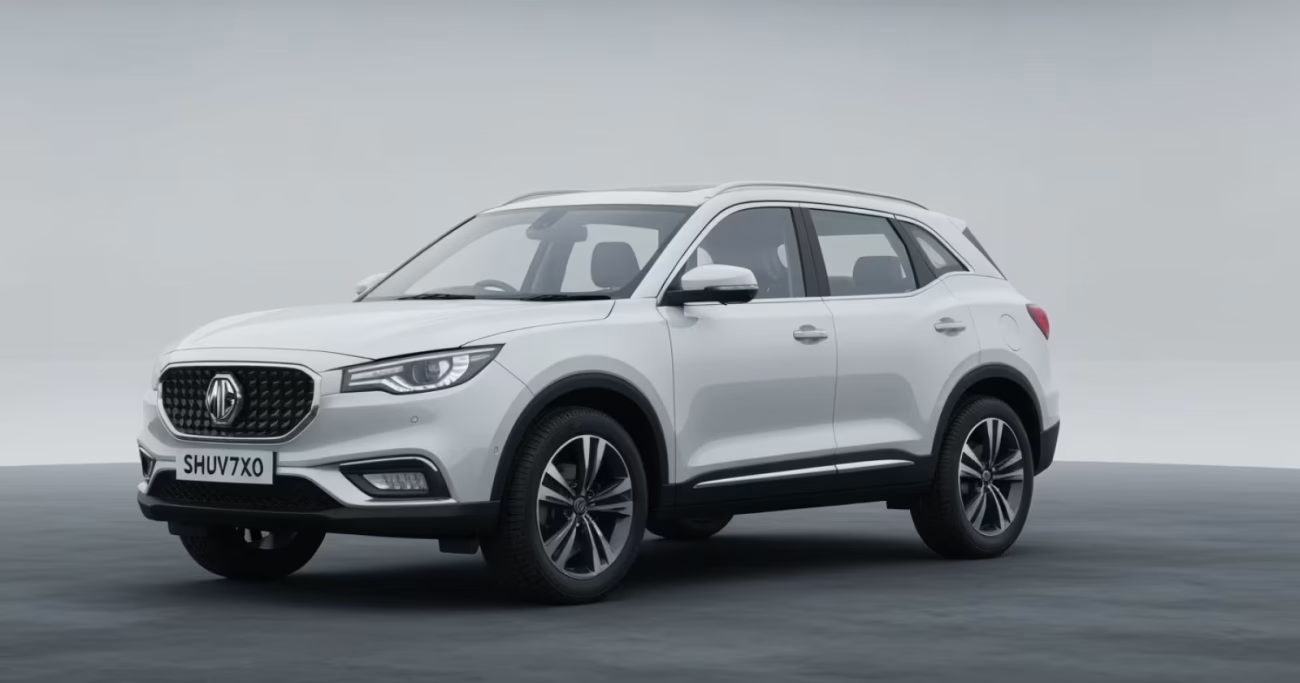
A patent filing can quietly signal everything — and MG Motor India just filed one that should have Tata and Mahindra paying close attention. The Wuling Starlight 560 is officially on its way to India, and the patent images confirm it is arriving with very little diluted from the international version.
I have been tracking MG India’s product roadmap closely this year, and the Starlight is shaping up to be one of the most strategically important launches of 2026. Here is everything the patent reveals — and why this SUV is a genuine threat to established names in the Rs 19–28 lakh segment.
What The Patent Images Actually Show
The design patent filed in India closely mirrors the global-spec Wuling Starlight 560 — and that is a good thing. The SUV carries a boxy, upright profile that feels purposeful rather than trying too hard. You get sharp LED lighting elements front and rear, a blacked-out mesh grille, and a rugged front bumper that gives it a serious road presence without being aggressive or flashy.
Along the sides, there are squared-off wheel arches with thick cladding, roof rails, body-coloured door handles, and dual-tone ORVMs. The A, B, and C pillars are blacked out, giving it that floating roof visual effect that is very much in vogue right now. At the rear, wraparound tail lamps and a chunky bumper round off a design that feels cohesive and family-friendly without being boring.
Dimensionally, this is a full-size SUV — 4,745 mm long, 1,850 mm wide, and 1,770 mm tall, with a 2,810 mm wheelbase. To put that in context, the Tata Harrier is 4,598 mm long. The MG Starlight is meaningfully bigger, which translates directly to rear-seat space and boot capacity.
Powertrain Options — India Gets The Good Stuff
Globally, the Wuling Starlight 560 is sold in three versions — petrol, PHEV, and pure electric. India is expected to skip the standard petrol variant and go straight for the PHEV and BEV options, which makes a lot of sense given where buyer sentiment is heading in 2026.
The PHEV variant uses a 1.5-litre naturally aspirated petrol engine (106 PS, 130 Nm) paired with an electric motor, delivering a combined system output of around 197–204 PS. What makes this genuinely compelling is the pure electric range of 125 km (CLTC) and a combined range of up to 1,100 km. For anyone who drives within city limits daily but takes highway trips on weekends, this is an almost perfect setup.
The pure EV variant is where things get exciting for me. It offers a 60 kWh or 69.2 kWh LFP battery pack with a CLTC range of 500–540 km. The single front motor puts out 136 PS and 200 Nm. Reports suggest MG India could use the battery technology already seen in the Windsor EV, which would help with localization and cost control. All variants are FWD — no AWD option, which is worth noting if you are a weekend off-roader.
Spec Sheet At A Glance
| Specification | PHEV Variant | BEV Variant |
|---|---|---|
| Engine | 1.5L NA Petrol + Electric Motor | Single Electric Motor |
| System Power | 197–204 PS (combined) | 136 PS |
| EV Range | 125 km (CLTC) | 500–540 km (CLTC) |
| Total Range | Up to 1,100 km (WLTC) | Up to 540 km |
| Battery Type | LFP | 60 kWh / 69.2 kWh LFP |
| Drivetrain | FWD | FWD |
| Expected Price | ~Rs 19 Lakh onwards | ~Rs 24–28 Lakh (estimated) |
Interior — More Space, Smarter Layout
The cabin design follows a clean, minimalist philosophy. The centrepiece is a 12.8-inch floating touchscreen with 4G connectivity, OTA update support, and full remote vehicle control via a smartphone app. Higher trims get a full-LCD instrument cluster, while lower variants use a 3.5-inch unit — not ideal, but a known cost-saving measure across this price bracket.
What I find genuinely thoughtful is the gear selector mounted on the steering column in PHEV and EV variants. This clears up the centre console completely, and MG has used that space smartly — dual wireless charging pads sit exactly where you would want them. Add a 180-degree seat recliner mode, panoramic sunroof, ambient lighting, leatherette upholstery, and automatic climate control, and this interior punches well above its expected price point.
How It Stacks Up Against Harrier and XUV7X0
The Tata Harrier and Mahindra XUV7X0 are both strong, well-established products. But neither currently offers a PHEV option in this price band. If MG India prices the Starlight PHEV at around Rs 19 lakh as rumoured, it would represent an extraordinary value proposition — a plug-in hybrid SUV at a price where rivals are still selling standard diesel or petrol engines.
The BEV Starlight will also go head-to-head with the Mahindra XEV 9S at the top end of the range. That is a very different fight — Mahindra has strong brand trust in the EV space right now — but MG’s pricing flexibility and feature loading have surprised us before. Remember how the Windsor disrupted the Rs 13–15 lakh EV space. The Starlight could do the same a segment above.
When Can We Expect It?
Heavily camouflaged test mules of the Starlight have already been spotted on Indian roads multiple times in recent months. The patent filing is the formal next step. MG India has confirmed multiple new product launches planned for 2026, and the Starlight is widely expected to be among the first half of the year. The PHEV version is likely to arrive before the full BEV variant.
If you are in the market for a full-size SUV in the Rs 19–28 lakh range and you have been sitting on the fence waiting for something truly different — I would say your wait is nearly over. Keep your eyes on MG India’s announcements over the next few months, and if you spot a camouflaged test mule on the road, get that photo out and share it. This one is worth watching very closely.
