
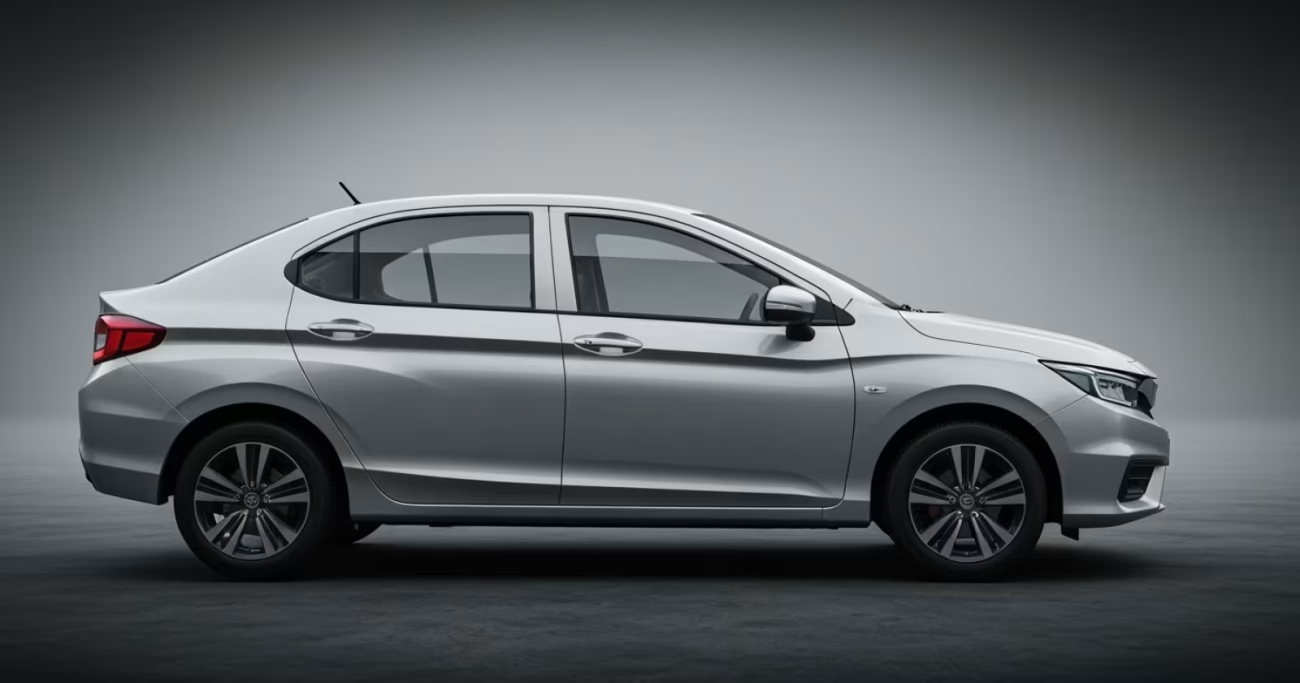
Fresh spy shots from Brazil have just surfaced, and they confirm what many of us have been waiting for — the Honda City is getting a proper makeover before its next-gen replacement arrives. With an India launch locked in for 22nd May 2026, this is shaping up to be one of the most important sedan updates of the year, and I think Hyundai Verna buyers need to pay close attention.
What The Brazil Spy Shots Reveal
I find it fascinating when spy shots from one continent give us clues about what we will get in India. The Brazilian test mule was caught with its front and side profile clearly visible, and the changes are unmistakable. New headlights with a sharper design language, a redesigned front bumper with sportier lines, and a grille that looks far more aggressive than the outgoing model.
The rear bumper has also been updated, giving the car a more cohesive and modern look from every angle. Now, Brazilian media has cautioned that the South American version may differ slightly from the Asian-spec model. That is fair — Honda has a history of tailoring regional variants. But the core philosophy behind this facelift appears consistent across both markets.
What caught my eye is that the India-spec test mules spotted earlier seem to retain the same headlamp shape as the current model. However, the grille is distinctly new, featuring slatted elements that give the front fascia a cleaner, more premium appearance. The bumper section has been refreshed too, moving towards a clutter-free design that feels more in line with what buyers in this segment expect in 2026.
Side Profile And Exterior Changes
If you are expecting a dramatic transformation from the side, I would temper those expectations. Both the Brazilian and Indian test mules show minimal changes to the side profile. The silhouette remains the classic three-box sedan shape that the City has always done well. Indian test mules were even spotted running the same alloy wheel design as the current model.
That said, I do not think this is necessarily a negative. The current City already has clean, well-proportioned lines. Honda seems to be focusing its efforts where they matter most — the front face and the cabin. Sometimes restraint is the smarter design choice, especially when you are working with a platform that already looks good on Indian roads.
Interior Updates Worth Watching
This is where things get interesting for prospective buyers. The dashboard layout and centre console are expected to carry over largely unchanged, which makes sense given that the current cabin is already well-designed. But Honda is reportedly adding some meaningful upgrades that could shift the value equation in this segment.
A 360-degree camera system is expected to make its way into the facelift. For anyone who has parked a sedan in a cramped Indian city parking lot, this is not a luxury — it is a necessity. This feature has become standard in SUVs priced above ₹12 lakh, and it is about time sedans in this bracket caught up.
Ventilated seats as standard across all variants is another rumoured addition that I am genuinely excited about. If Honda pulls this off, it would be a segment-first move that puts direct pressure on the Hyundai Verna and Skoda Slavia, neither of which offers ventilated seats across their full lineup. In Indian summers where cabin temperatures can cross 50 degrees Celsius when parked in the sun, this feature alone could sway buying decisions.
The existing feature set is already strong. You get an 8-inch infotainment touchscreen, wireless Android Auto and Apple CarPlay, an 8-speaker surround sound system, fully automatic climate control, PM 2.5 air filtration, ambient lighting, and a leather-wrapped shift knob. The facelift is expected to add new interior accents and refreshed upholstery to keep the cabin feeling fresh.
Same Proven Powertrain
Honda is not touching the engine, and honestly, I think that is the right call. The 1.5-litre naturally aspirated petrol unit producing 121 PS and 145 Nm has been a reliable and refined companion for City owners across generations. It is smooth, fuel-efficient, and perfectly suited for both city commutes and highway cruising.
Transmission options remain a 6-speed manual and a CVT. The CVT in particular has been one of the better units in this segment — responsive enough for daily driving and smooth enough for long road trips. I have driven the current City extensively, and the powertrain is genuinely one of its strongest selling points.
| Specification | 2026 Honda City Facelift (Expected) |
|---|---|
| Engine | 1.5L Naturally Aspirated Petrol |
| Power | 121 PS |
| Torque | 145 Nm |
| Transmission | 6-Speed MT / CVT |
| New Exterior | Updated grille, bumpers, sportier lines |
| Expected New Features | 360-degree camera, ventilated seats |
| ADAS | Honda SENSING Level 2 suite |
| India Launch Date | 22nd May 2026 |
| Expected Price Range | ₹12 – ₹16 Lakh (estimated) |
| Key Rivals | Hyundai Verna, Skoda Slavia, VW Virtus |
The Safety Advantage Honda Already Holds
One area where the City continues to stand apart from most of its competition is safety. The Honda SENSING suite offers a comprehensive Level 2 ADAS package that includes adaptive cruise control, lane keeping assist, collision mitigation braking, and road departure mitigation. In a segment where most manufacturers are still offering basic ADAS or none at all, Honda has been ahead of the curve.
I expect the facelift to retain this full suite, and it would not surprise me if Honda adds a feature or two to the safety roster. With Bharat NCAP ratings becoming increasingly important to Indian buyers, the City’s strong safety credentials give it a genuine edge over the Verna and Slavia in showroom conversations.
How It Stacks Up Against Rivals
The sedan segment in India has been under pressure from compact SUVs for years now, but the Honda City, Hyundai Verna, Skoda Slavia, and Volkswagen Virtus have managed to hold their ground with loyal buyer bases. The Verna got a full generation change in 2023 and still feels relatively fresh. The Slavia and Virtus offer a turbocharged petrol option that driving enthusiasts love.
Where the City facelift could gain ground is on the feature and safety front. If Honda prices the updated model competitively — and I expect them to keep the starting price close to the current range — the addition of ventilated seats and a 360-degree camera could make it the best-equipped option in the segment without asking for a premium.
It is also worth noting that Honda is launching the ZR-V SUV on the same day. That dual-launch strategy suggests Honda is making a big push in the Indian market, and competitive pricing for the City facelift would be a logical part of that broader plan.
The Last Major Update Before Next-Gen
Here is the bigger picture that makes this facelift significant. The next-generation Honda City is expected to arrive around 2028. That means this 2026 facelift is likely the last substantial update the current fifth-generation model will receive. Honda needs this refresh to keep the City competitive for at least two more years against rivals that are newer and constantly being updated.
From what I have seen in the spy shots and heard from industry sources, Honda seems to be making smart, targeted improvements rather than a half-hearted refresh. The cosmetic updates sharpen the design, the feature additions address genuine buyer demands, and the proven powertrain continues unchanged.
If you have been considering a sedan purchase in the ₹12-16 lakh range, I would strongly suggest waiting until 22nd May before making your decision. The Honda City facelift could reset expectations for what a mid-size sedan should offer in 2026. Head to your nearest Honda dealership, register your interest, and be among the first to see it in person — this one is worth the wait.
