
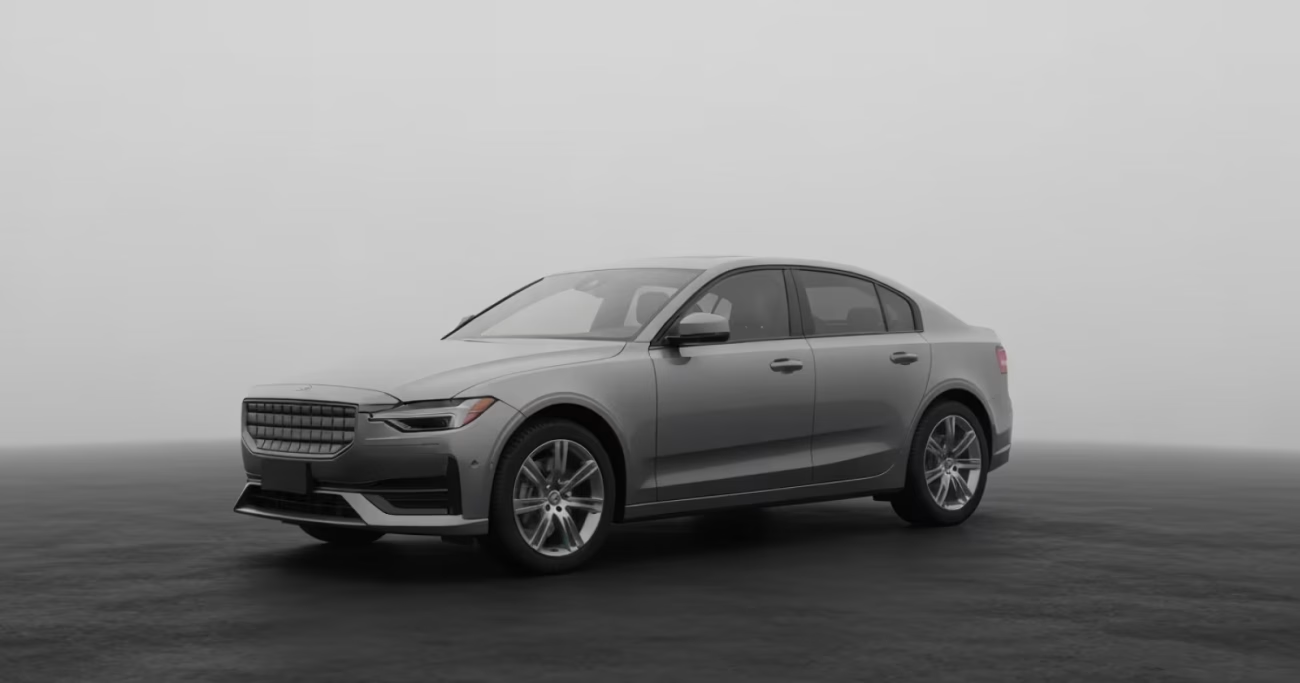
A 7% sales increase sounds like progress until you realize it amounts to just 13,126 vehicles sold across the entire planet. That single number tells you almost everything you need to know about where Polestar stands heading into the second half of 2026.
I’ve been watching EV startups fight for survival for years now, and Polestar’s situation feels like one of the most precarious in the industry. The Swedish-born, Chinese-controlled brand is burning cash, leaning on heavy discounts, and banking on future models that may arrive too late to matter.
At a glance
| Spec | Detail |
|---|---|
| Q1 2026 global sales | 13,126 EVs (up 7% YoY) |
| 2026 full-year global sales | 60,119 units (up 34% vs 2024) |
| Net loss (first 3 quarters 2024) | $323 million |
| Ownership | Geely (controlling), Volvo Cars (19.9%) |
| US-built model | Polestar 3, Charleston, SC |
| Global sales points (2026 target) | ~250, up from 154 |
| Current US discount offers | Up to $21,000 off 2026 models |
Those 13,126 sales are a global number, not a US one
Let that sink in for a moment. When Polestar CEO Michael Lohscheller celebrated the brand’s “highest ever” first-quarter result, he was talking about a figure that many single US dealership groups move in a quarter across their lots. For a company with ambitions to compete alongside Tesla, BMW, and Mercedes in the premium EV space, 13,126 units worldwide is not a foundation you can build a profitable business on.
The real story here is that Polestar posted nearly identical volume back in Q2 2024. So despite a full year of new model launches, network expansion, and aggressive marketing, the brand is essentially treading water. Lohscheller pointed to strength in Australia, Germany, Sweden, South Korea, and the UK, but those are relatively small markets that can only carry a brand so far.
What Polestar isn’t saying about those $21,000 discounts
Right now, you can walk into a Polestar showroom in the US and negotiate up to $21,000 off a 2026 model. That kind of discount moves metal, sure, but it absolutely destroys margins. For a company that lost $323 million through just the first 3 quarters of 2024, every deeply discounted sale digs the financial hole a little deeper. I find it hard to see how this strategy is sustainable beyond the short term.
The brand has survived through a series of debt-to-equity conversions and fresh equity injections from parent Geely. That lifeline keeps the lights on, but it also means Polestar is essentially operating at the pleasure of its Chinese parent company. If Geely decides the returns aren’t worth the investment, the math changes overnight. And with larger, established automakers reporting billions in EV-related losses even while selling combustion vehicles too, Polestar’s pure-EV model looks increasingly fragile.
The US market was supposed to save Polestar, and it hasn’t
Polestar had grand plans for America. The Polestar 3 SUV is built right in Charleston, South Carolina, which smartly sidesteps tariff issues. But the disappearance of federal EV tax credits has hammered demand for brands like Polestar that were already fighting for consumer awareness. The US market is brutal for smaller EV players right now, and Polestar’s thin dealer network makes it even harder to compete against brands with hundreds of touchpoints.
China isn’t helping either. The world’s largest EV market is flooded with domestic competitors offering comparable or better vehicles at lower prices. Polestar simply cannot compete on cost in China, and brand cachet only goes so far when BYD and dozens of others are offering compelling alternatives. That leaves Europe as the brand’s strongest region, but even there, 60,119 units for all of 2026 is a rounding error compared to what the major players move.
The product pipeline is promising but the timing is tight
I’ll give Polestar credit where it’s due. The upcoming lineup looks genuinely interesting. The Polestar 4 wagon variant arrives in US showrooms late this year, sourced from South Korea. The Polestar 5 grand tourer hits other markets this summer. And the Polestar 7, a smaller and more affordable alternative to the Polestar 3, is confirmed for the US in 2028 and will be built in Europe.
But here’s the catch. A 2028 US launch for the Polestar 7 means the brand needs to survive at least 2 more years of cash burn before its most accessible model reaches its most important growth market. A next-generation Polestar 3 is also in the works, and manufacturing is consolidating to the Charleston plant. These are smart moves on paper, but they require money the brand may not have. The April 17 financial report for 2026 will reveal just how deep the losses run, and I expect the numbers to be sobering.
How it stacks up
| Brand | Q1 2026 US sales (est.) | Global volume (2026) | US manufacturing | Edge |
|---|---|---|---|---|
| Polestar | ~2,500 | 60,119 | Yes (Charleston, SC) | Tariff-free US build |
| Tesla | ~337,000 | ~1.79 million | Yes (Fremont, Austin) | Scale and Supercharger network |
| BMW (EVs) | ~21,000 | ~370,000 | Yes (Spartanburg) | Brand loyalty and dealer reach |
| Rivian | ~13,000 | ~50,000 | Yes (Normal, IL) | Adventure brand identity |
Why this matters
- Small pure-EV brands face extinction without massive parent company support
- Heavy discounting signals desperation, not demand growth
- US tariff and credit policy is reshaping which EV brands survive
The verdict
Polestar is not dead yet, but the vital signs are concerning. A 7% sales bump on a base of 13,126 global units does not constitute a turnaround story. The brand’s survival hinges entirely on Geely’s willingness to keep funding losses while the product pipeline matures, and on whether markets like Europe and Australia can compensate for stalled growth in the US and China. If the April 17 financial report shows losses accelerating beyond the $323 million pace set in 2024, the conversation will shift from “can Polestar grow” to “can Polestar survive.” The next 18 months will determine whether this brand becomes a legitimate premium EV contender or a cautionary tale about ambition outpacing reality.
If you’re in the market for a premium EV and have been eyeing a Polestar, now might actually be the best time to act on those massive incentives. Just go in with your eyes open about the brand’s long-term trajectory, and make sure you understand the warranty and service implications before signing. Keep watching this space because the April 17 earnings call could change everything.
