
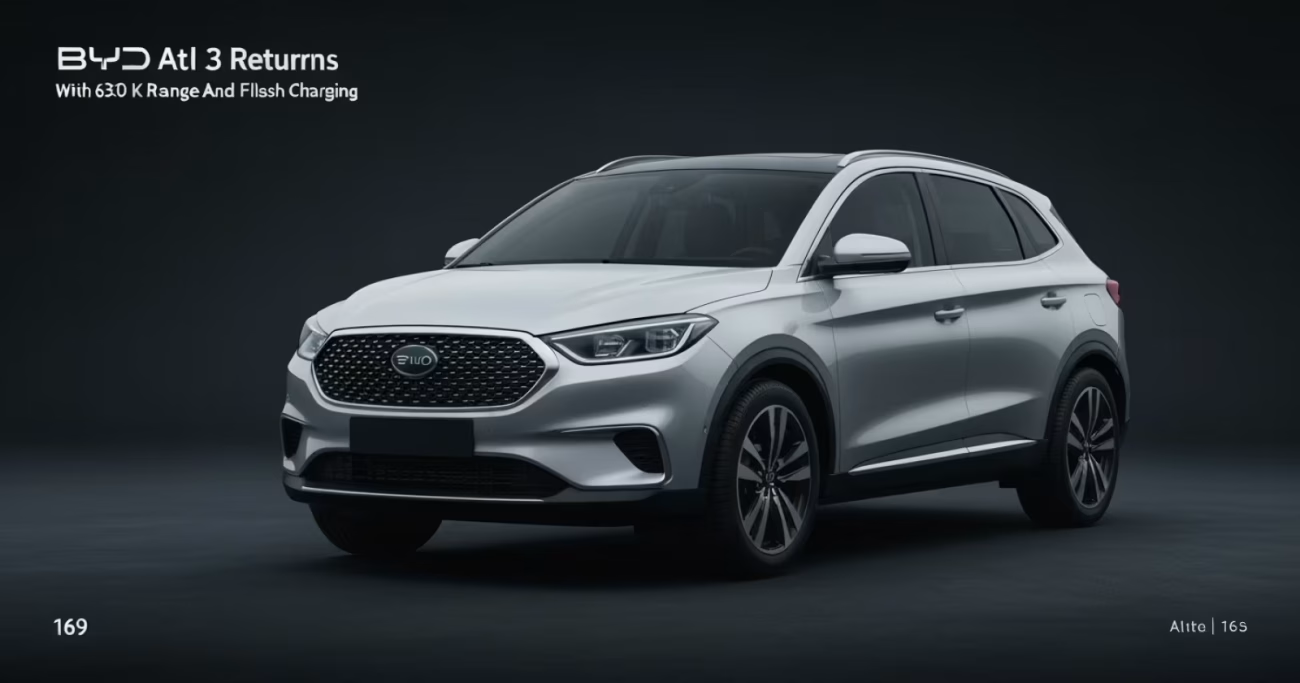
Imagine plugging in your electric SUV, grabbing a cup of chai, and coming back to find the battery nearly full. That is no longer a fantasy — BYD just made it real with a charging system that fills the battery from 10% to 97% in nine minutes flat.
At the Beijing Auto Show 2026, BYD pulled the covers off the next-generation Atto 3, known as the Yuan Plus in China. I have been tracking this model closely because the current Atto 3 is already one of the more interesting electric SUVs available in India. What the new version brings to the table, though, is a generational leap that could genuinely shake up the compact EV segment here.
A Design That Finally Feels Premium
The outgoing Atto 3 had a quirky, playful design that divided opinions. The 2026 model takes a more mature route. BYD has applied its latest design language to the front fascia, giving it sharper LED headlamps, a more sculpted bumper and a cleaner overall look. The result is an SUV that looks more confident on the road without losing its identity.
Around the sides, you will notice semi-flush door handles — a small detail that adds a touch of sophistication and helps with aerodynamics. New alloy wheel designs go up to 19 inches, filling out the wheel arches nicely. At the rear, an illuminated BYD logo ties the look together. It is still recognisably an Atto 3, but it feels like it has grown up.
Bigger In Every Direction
This is not just a facelift. BYD has stretched the Atto 3 in every dimension, and the numbers tell the story clearly.
| Specification | 2026 BYD Atto 3 | Current India-Spec Atto 3 |
|---|---|---|
| Length | 4,665 mm | 4,455 mm |
| Width | 1,895 mm | 1,875 mm |
| Height | 1,675 mm | 1,615 mm |
| Wheelbase | 2,770 mm | 2,720 mm |
| Boot Capacity | ~750 litres | 440 litres |
| Battery Options | 57.54 kWh / 68.54 kWh | 60.48 kWh |
| Range (CLTC) | 540 km / 630 km | 480 km |
| Power | ~326 hp (240 kW) | 201 hp (150 kW) |
| Charging (10-97%) | 9 minutes (Flash Charging) | ~50 minutes (DC fast) |
That 210 mm increase in length is substantial. Combined with a 50 mm longer wheelbase, rear-seat passengers should notice a meaningful improvement in legroom. The boot has nearly doubled in capacity to around 750 litres, and there is even a frunk for additional storage. For Indian families who need space for weekend trips or airport runs, this is a welcome change.
The Cabin Gets A Serious Upgrade
Step inside and the changes are just as significant. BYD has redesigned the dashboard layout and introduced a new two-spoke steering wheel that gives the cabin a more contemporary feel. The large touchscreen infotainment system remains the centrepiece, paired with a digital instrument cluster that provides all the essential driving data.
What caught my attention is the feature list. A 16-speaker audio system is a serious setup for this segment. The panoramic glass roof, ambient lighting, wireless charging and USB Type-C ports are all present. BYD has also added a heated and cooled storage box — a thoughtful touch for Indian summers when you want to keep a water bottle cold without reaching for the rear AC vents.
The front passenger seat now gets a reclining function, which is something I wish more manufacturers would offer. On long highway drives from Delhi to Jaipur or Mumbai to Pune, that kind of comfort makes a real difference for the co-passenger.
Flash Charging Changes The Game
Let me be honest — range anxiety is still the biggest barrier to EV adoption in India. And the single most effective way to address it is not just a bigger battery but faster charging. BYD seems to understand this perfectly.
The new Flash Charging technology is the headline feature here. Charging from 10% to 97% in just nine minutes is not an incremental improvement. It is a fundamental shift. To put that in perspective, the current Atto 3 takes roughly 50 minutes on a DC fast charger for a similar charge. Nine minutes is closer to the time you spend at a fuel pump filling petrol.
Now, I should note that this figure is based on BYD’s proprietary Flash Charging infrastructure. In India, the actual charging speed will depend on the availability of compatible chargers. But even if real-world times are somewhat longer, the underlying battery architecture that enables this speed is a massive step forward. Both the 57.54 kWh and 68.54 kWh battery packs use BYD’s updated Blade Battery technology, which has already proven its safety credentials globally.
Performance That Punches Above Its Weight
The power output has jumped dramatically. The new Atto 3 produces around 326 hp from its rear-mounted electric motor, up from 201 hp in the current model. That is a 62% increase in power, which should make highway overtakes and merging into fast-moving traffic feel effortless.
The rear-wheel-drive layout continues, which keeps things simple and efficient. For Indian driving conditions — primarily urban commutes and highway cruising — RWD with this level of power is more than adequate. The 630 km CLTC range on the larger battery translates to roughly 480-500 km in real-world Indian conditions, accounting for AC usage, traffic and driving style. That is comfortably enough for most inter-city trips without a charging stop.
LiDAR-Based ADAS Raises The Safety Bar
In China, BYD is offering the new Atto 3 with a LiDAR-based advanced driver assistance system. This is a significant addition because LiDAR provides far more accurate depth perception and object detection than camera-only systems, especially in challenging conditions like heavy rain or low light.
Whether this feature makes it to the Indian variant remains to be seen. BYD may choose to offer it as a higher trim option or reserve it for a later update. But the fact that the hardware architecture supports LiDAR means the platform is future-ready. With Bharat NCAP now actively rating cars sold in India, safety features like these could become a strong selling point.
Where Does It Stand Against Indian Rivals
The compact electric SUV segment in India is heating up. The MG ZS EV has been the most direct rival to the Atto 3, and several new entrants are expected over the coming months. Tata is expanding its EV lineup aggressively, and Hyundai and Kia are both preparing electric crossovers for the Indian market.
What gives the new Atto 3 an edge is the combination of range, charging speed and power. No other electric SUV in this segment currently offers 630 km of claimed range or anything close to nine-minute charging. If BYD prices it competitively — the current model sits around ₹24-34 lakh — the new version could carve out a strong position for itself.
The bigger dimensions also push it closer to the mid-size SUV territory, which means it could attract buyers who were considering larger vehicles but wanted the efficiency of a compact EV platform.
India Launch — When Can We Expect It
BYD has not confirmed an India launch timeline for the new-generation Atto 3. The global rollout is expected in phases, with China getting it first. Based on previous patterns, I would estimate the Indian launch could happen in late 2026 or early 2027, depending on homologation and charging infrastructure readiness.
BYD has been steadily expanding its presence in India with new dealerships and service centres. The brand clearly sees India as a priority market, and the Atto 3 remains its most accessible model here. A refreshed version with these upgrades would strengthen that position considerably.
If you are in the market for an electric SUV and can wait a few months, the new Atto 3 deserves a spot on your shortlist. Keep an eye on BYD India’s official channels for launch updates, and if you get a chance to test drive the current model in the meantime, do it — it will give you a solid baseline for what the next generation improves upon. This is shaping up to be one of the most compelling electric SUVs headed our way.
