
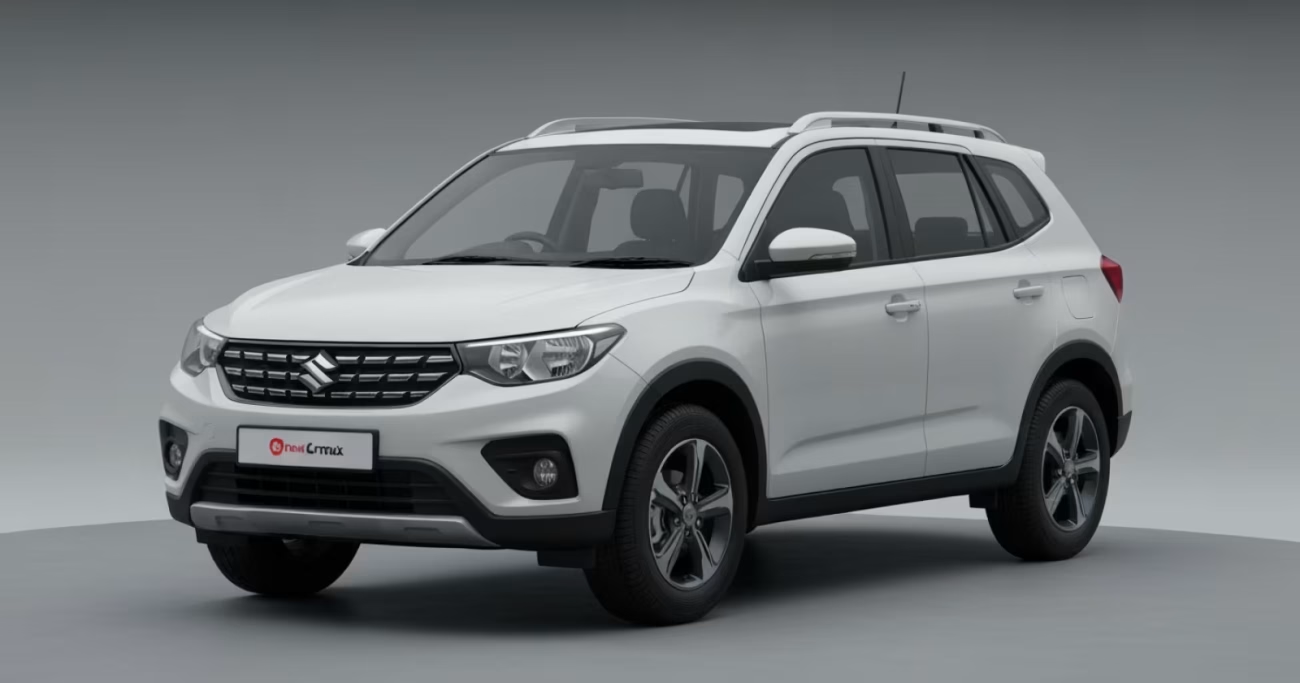
I’m looking at May 2026 sales numbers, and the biggest surprise is not where I expected it. The SUV chart has become so strong that it is now rewriting the pecking order across India’s passenger vehicle market.
What stands out to me is how Maruti Suzuki, Tata Motors, Hyundai, Mahindra and Kia all managed to land multiple models in the spotlight. The momentum is real, the competition is tight, and the gap between cars and SUVs is getting thinner in a way buyers will definitely notice.
Maruti still sets the pace
Maruti Dzire stayed on top of the car charts in May 2026 with 24,546 units, and I think that matters more than most people realize. A compact sedan leading a market that is obsessed with SUVs says a lot about value, trust and everyday usability.
Maruti Fronx followed with 20,686 units, and that result is exactly why I keep calling it one of the most important nameplates in the current market. It is not just selling well; it is selling like a segment disruptor, and its 52.28% year-on-year jump makes that even clearer.
Maruti Ertiga stayed right in the hunt with 20,350 units, proving that family buyers still care about space, practicality and predictable ownership costs. In my view, this is where Maruti’s breadth of products becomes a real weapon rather than just a portfolio talking point.
Tata keeps the pressure on
Tata Punch and Nexon continue to be the backbone of the SUV story, and the numbers back that up. Punch, including EV variants, recorded 20,208 units, while Nexon and Nexon EV combined reached 19,100 units, with both lines growing by over 45% year on year.
That is the sort of consistency I pay attention to because it shows demand is not being driven by one-off excitement. Tata is clearly holding its ground with products that buyers understand, trust and actively compare against the segment leaders.
In a market where small SUVs are often measured against each other on price, safety and features, Tata has built a strong identity. I can see why buyers keep returning to Punch and Nexon when they want a practical urban SUV with a tough reputation.
The SUV race keeps getting tighter
The SUV segment has become the real engine of growth in 2026, and May proved it again. The top 15 SUVs clocked 1,94,225 units, which is higher than the top 10 cars list at 1,89,908 units, even though the SUV chart includes five more models.
That shift tells me the market preference is no longer subtle. Indian buyers are choosing the higher stance, road presence and perceived versatility of SUVs in huge numbers, and every brand wants a bigger slice of that story.
| Model | May 2026 Sales | YoY Growth | Segment Takeaway |
|---|---|---|---|
| Maruti Dzire | 24,546 | 35.73% | Best-selling passenger vehicle |
| Maruti Fronx | 20,686 | 52.28% | Highest-selling SUV |
| Maruti Ertiga | 20,350 | 26.08% | Strong family mover |
| Tata Punch | 20,208 | 45%+ | Urban SUV momentum |
| Tata Nexon | 19,100 | 45%+ | High-volume Tata core |
| Mahindra Scorpio | 15,774 | Strong demand | Rugged SUV appeal |
| Hyundai Creta | 15,253 | Stable demand | Premium compact SUV benchmark |
| Kia Seltos | 10,597 | 74.24% | Big recovery month |
Creta and Seltos keep the premium fight alive
Hyundai Creta finished with 15,253 units, and even when it is not the headline winner, it still feels like a market reference point. Buyers shopping in this space almost always end up comparing it with rivals, which is why its presence in the top ranks remains so important.
Kia Seltos also deserves attention because it crossed 10,000 units again, landing at 10,597 units with a massive 74.24% year-on-year increase. That is the kind of rebound that tells me the brand still has strong recall and a clearly defined audience.
What I find especially interesting is that this segment is no longer about one dominant hero. It is now a layered battle where Fronx, Punch, Nexon, Creta and Seltos each play a different role in the minds of Indian buyers.
Why Brezza’s dip matters
Maruti Brezza fell to 13,245 units, down 14.91% year on year, and that makes it the standout decline in an otherwise strong month for SUVs. I see this as a reminder that even established nameplates can lose momentum when fresh updates are expected.
The upcoming facelift likely adds to the wait-and-watch mood, and that can temporarily slow showroom traffic. In India, buyers often pause when they sense a model refresh is near, especially in crowded SUV segments where timing matters as much as product strength.
Other names like Hyundai Venue, Maruti Grand Vitara, Toyota Urban Cruiser Hyryder, Mahindra Thar and Roxx, and Mahindra XUV 7XO also kept the chart lively. Together, they reinforce how broad the SUV boom has become across city-focused crossovers, family SUVs and rugged lifestyle vehicles.
What I take away from May 2026
When I put the whole picture together, the message is simple: India’s car market is growing, but SUVs are growing faster. Maruti Suzuki remains incredibly strong, Tata keeps building volume with Punch and Nexon, and Hyundai, Kia and Mahindra continue to fight hard for relevance in a crowded field.
I also think the rise of SUVs at the top of the charts reflects a buyer mindset that is changing for good. Indian customers want road presence, flexible space, better visibility and a sense of value that feels more substantial every year.
If you follow the auto market closely, this is the month to watch. I’d keep an eye on Brezza’s facelift, the next moves from Hyundai and Kia, and whether Fronx can keep its lead when the competition responds.
From my side, I’d say the best move now is to track these models before the next sales update shifts the order again. If you are shopping for a new car or SUV in 2026, this is exactly the kind of ranking that helps you compare what is truly winning with Indian buyers right now.
