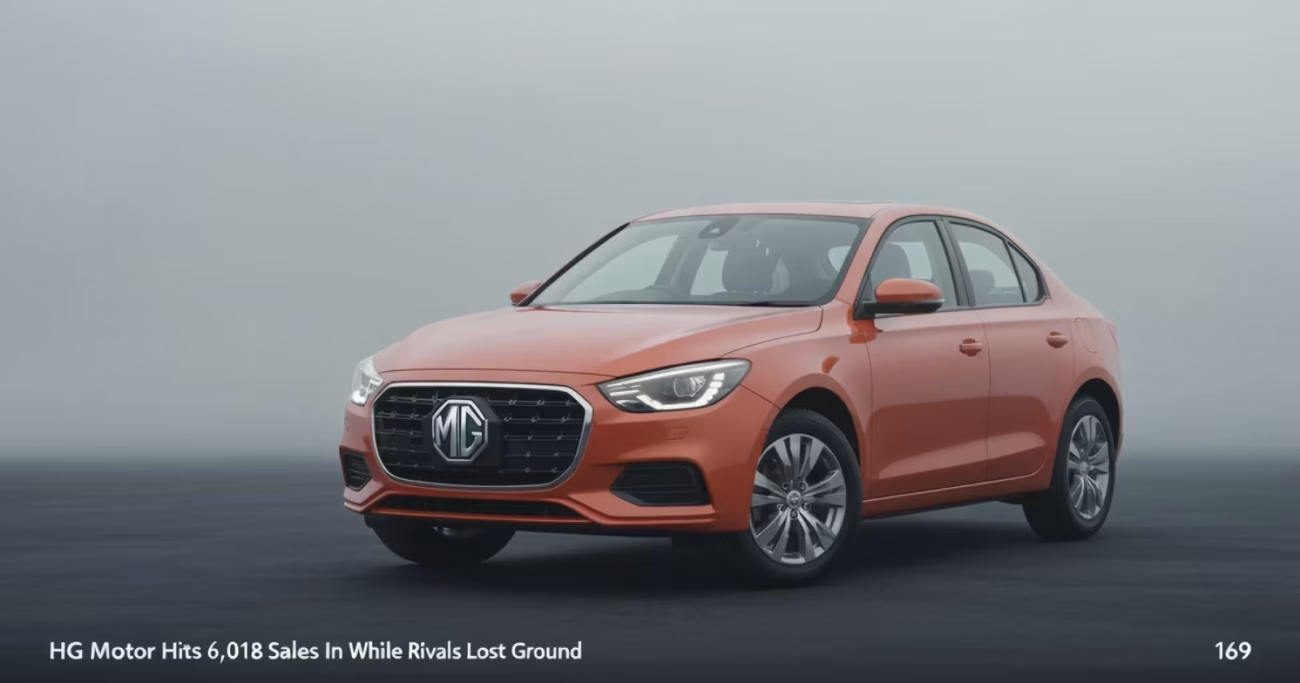
A supply chain crisis is rattling the global auto industry, and yet one brand in India just posted positive numbers for the month. JSW MG Motor India closed April 2026 with 6,018 wholesale units, quietly proving that its mix of ICE SUVs and affordable EVs is resonating with Indian buyers even when the broader market is under pressure.
I have been tracking MG Motor’s trajectory closely, and this month’s result tells a more nuanced story than the headline number suggests. There is year-on-year growth, yes, but there is also a month-on-month dip that deserves attention. Let me break it all down for you.
The April 2026 Numbers In Context
MG Motor India recorded wholesale dispatches of 6,018 units in April 2026. Compare that to the 5,829 units the company shipped in April 2026, and you get a year-on-year growth of 3.24 percent. In absolute terms, that is a volume gain of 189 units. Not explosive, but solidly positive in a month where many manufacturers struggled with demand softness.
The picture shifts when you look at the month-on-month trend. March 2026 saw MG dispatch 6,528 units, which means April came in 510 units lower — a 7.81 percent MoM decline. That sequential drop is not unusual for the industry. March typically benefits from year-end push and registration deadlines, so a correction in April is expected. Still, the West Asia crisis has added a layer of uncertainty that makes every dip worth watching.
The ongoing geopolitical disruption in West Asia has created ripple effects across global supply chains. Component shortages, shipping delays, and rising input costs have dampened consumer sentiment across the Indian automotive market. MG Motor managing to post positive YoY growth despite these headwinds is a credible result.
What Is Selling For MG Motor India
I find MG’s current portfolio interesting because it straddles two worlds effectively. On the ICE side, the company relies on three SUVs — the Hector, Astor, and Gloster. The Hector remains the volume driver here, competing in the crowded mid-size SUV space against the Tata Harrier, Hyundai Creta, and Kia Seltos. The Astor holds its own in the compact SUV segment, while the Gloster serves a smaller but loyal full-size SUV audience.
On the electric side, MG has arguably the most diverse EV lineup of any brand in India right now. The Windsor EV has established itself as the country’s best-selling electric car, and that is no small achievement in a market where EV adoption is still climbing. The Comet EV serves the micro-EV city car niche, while the ZS EV continues to attract buyers looking for a more premium electric crossover experience.
This dual ICE-EV strategy gives MG a hedge that many competitors lack. When fuel prices spike due to geopolitical tensions, the EV portfolio picks up interest. When EV infrastructure concerns hold some buyers back, the ICE SUVs keep the numbers ticking.
April 2026 Sales Breakdown At A Glance
| Parameter | Value |
|---|---|
| April 2026 Wholesale Units | 6,018 |
| April 2026 Wholesale Units | 5,829 |
| YoY Growth | 3.24% |
| YoY Volume Gain | +189 units |
| March 2026 Wholesale Units | 6,528 |
| MoM Change | -7.81% |
| MoM Volume Decline | -510 units |
| ICE Models | Hector, Astor, Gloster |
| EV Models | Windsor EV, Comet EV, ZS EV |
The Majestor Factor — A Big Launch Delayed
One thing that could have made April even stronger for MG is the Majestor SUV. Originally unveiled at the Bharat Mobility Expo back in January 2026, this D-plus segment SUV has been generating serious anticipation. It is positioned as a direct challenger to the Toyota Fortuner, which has dominated the large SUV space in India for years with very little credible competition.
The Majestor was initially scheduled to launch on April 20, then pushed to April 27, and has now been confirmed for a May 2026 launch with no specific date disclosed. I know delays can be frustrating for buyers who have been waiting, but MG seems to be taking its time to get this one right. Media drives have already commenced, and early impressions suggest the Majestor could genuinely shake up the segment.
If MG prices the Majestor aggressively — and their track record with the Hector and Windsor suggests they will — it could become a significant volume contributor from the second half of 2026. The Fortuner has had a relatively free run in its segment, and a well-priced, feature-loaded alternative from MG could change the dynamics considerably.
What Is Coming Next In The Pipeline
Beyond the Majestor, MG Motor India has two more products that I am keeping a close eye on. The first is the IM6, a premium electric SUV that would slot above the ZS EV and give MG a presence in the growing premium EV space. This segment is heating up with offerings from Hyundai, Tata, and BMW, so timing and pricing will be critical.
The second is a plug-in hybrid electric vehicle based on the Starlight 580 platform. PHEVs are an interesting proposition for India — they offer the electric driving experience for daily commutes while eliminating range anxiety for longer trips. With the government still working out a clear PHEV policy framework, MG is betting early on this technology finding its audience here.
Together, the Majestor, IM6, and Starlight 580 PHEV represent a significant expansion of MG’s India portfolio. If all three launch within 2026, the brand could look very different by the end of the year in terms of both volume and market positioning.
The West Asia Crisis And Its Shadow Over Indian Auto Sales
I want to spend a moment on the broader context because it matters. The West Asia crisis is not just a headline — it is actively affecting how cars get built and sold in India. Disrupted shipping routes have increased logistics costs. Component supply from affected regions has become unpredictable. And the general uncertainty has made some buyers postpone big purchases.
In this environment, a 3.24 percent YoY growth is a decent result. It tells me that MG’s product lineup is strong enough to pull buyers even when sentiment is weak. The Windsor EV in particular seems to be doing heavy lifting, and the Hector continues to be a reliable performer in showrooms across the country.
That said, the MoM decline is a reminder that the market is not on autopilot. Every unit sold right now is being earned in a tougher environment than what we saw in early 2026. Brands that can maintain supply consistency and keep their dealer networks motivated will come out ahead when conditions normalize.
Where MG Stands In The Bigger Picture
MG Motor India is not the largest volume player in the market — that distinction belongs to Maruti Suzuki, Hyundai, and Tata. But what MG has done effectively is carve out a niche as the brand that offers more features, more technology, and more EV options per rupee spent than most competitors. The Windsor EV being India’s top-selling electric car is proof that this strategy works.
With the Majestor about to enter the large SUV fight and two more electrified products in the pipeline, MG is clearly not content with holding steady. The JSW partnership has given the brand the manufacturing and distribution backbone it needed, and the product roadmap suggests ambition that goes well beyond 6,000 units a month.
If you have been considering an MG vehicle — whether it is the Windsor EV for your daily city commute or the Hector for family road trips — this is a good time to visit your nearest dealership and check out the latest offers. With the Majestor launch around the corner, dealers may have attractive deals on existing inventory. And if you are in the market for a large SUV, I would suggest waiting just a few more weeks for the Majestor pricing to drop. It could redefine what you get for your money in that segment.
