
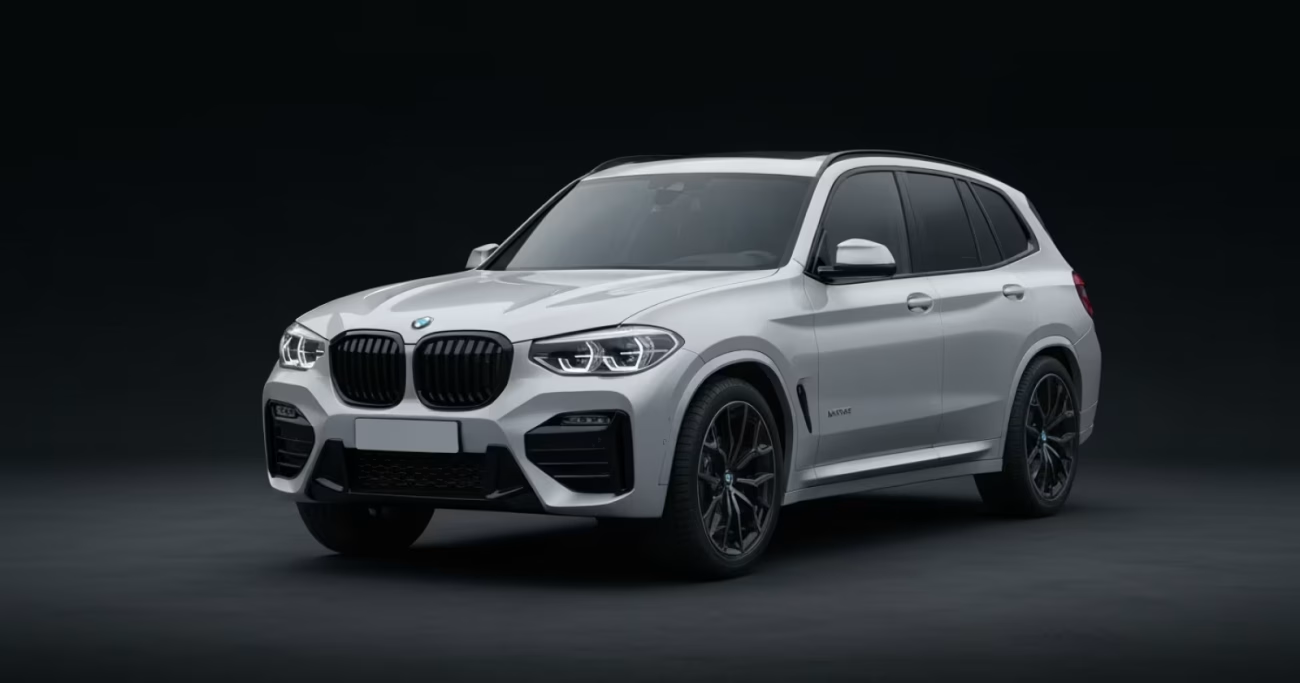
The gas-powered X3 is suddenly in trouble. BMW has priced the new iX3 below the hotter X3 M50 while giving it 434 miles of range and 469 hp.
That combination is rare in luxury SUVs. It turns a traditional nameplate into one of the sharpest EV value plays in the market.
Price parity is the headline BMW wanted
BMW has set the 2027 iX3 50 xDrive at $61,500 before destination, and that number matters more than the badge on the tailgate. The real story is that it undercuts the X3 M50 by $5,000 while delivering more power and far better efficiency.
Here’s the catch: the cheaper gas X3 still exists, but the 30 xDrive is not the fair comparison many shoppers will make. Once the iX3 is cross-shopped against the performance gas model, the old argument starts to look weak very quickly.
The iX3 also lands in a sweet spot for buyers who want speed without sacrificing comfort or daily usability. A 0-60 mph time of 4.7 seconds is quick enough to satisfy enthusiasts, while the all-wheel-drive setup keeps it broad in appeal.
What BMW isn’t saying loudly enough is that this pricing is a statement. The company is not trying to make an EV look competitive on paper; it is trying to make the gas version feel overpriced.
Range is the number that changes the conversation
The 108.7-kWh battery gives the iX3 its biggest advantage. BMW says the SUV can travel 434 miles on a charge with 20-inch summer tires, and that pushes it into territory most premium EV rivals still cannot touch.
That range matters because it removes the old EV compromise from the shopping equation. For many buyers, this is the first time an electric luxury SUV can go the distance without forcing a mental calculation every morning.
Here’s the catch: wheel and tire choice still changes the story. Move to all-seasons or larger 21-inch and 22-inch setups, and the official range drops, which means the headline figure is real but not universal.
The real story is that BMW has still beaten its own earlier estimate of around 400 miles. In a market where brands often promise big and deliver less, overachieving on range is a powerful trust signal.
| Spec | 2027 BMW iX3 50 xDrive | X3 M50 | Tesla Model Y AWD |
|---|---|---|---|
| Starting price | $61,500 | Higher by $5,000 | $41,990 |
| Horsepower | 469 hp | 393 hp | Not stated in source |
| EPA range | 434 miles | Far lower on fuel | 294 miles |
| 0-60 mph | 4.7 seconds | Slower | Not stated in source |
| Fast-charge claim | 10% to 80% in 21 minutes | Gas refill is faster | Slower overall range value |
| Special detail | Standard NACS port and bi-directional charging | Conventional fueling | Lower range |
Charging and tech make the gas argument weaker
The iX3 is built on 800V architecture and can charge at up to 400 kW through a standard NACS port. BMW says drivers can recover 185 miles in about 10 minutes, and that is the kind of number that changes how people think about road trips.
Yes, pumping gas is still faster in a pure stop-and-go sense. But the gap is no longer big enough to save the old powertrain argument from scrutiny, especially when the EV starts with more range than many combustion rivals can match on a full tank.
BMW also loaded the SUV with the kind of tech shoppers now expect in this class. Panoramic Vision, the latest iDrive, digital key, wireless phone charging, active blind spot detection, and lane keeping are all part of the package.
What BMW isn’t saying is that this car is also a preview of the brand’s next era. Neue Klasse is not just a product line; it is a reset of how BMW wants its electric vehicles to look, feel, and compete.
The real rival is the whole luxury field
The comparison with Tesla is obvious, but the iX3 is not playing the same game. It offers far more range than the Model Y AWD cited here, and it does so with a more premium price point and a much more traditional luxury-SUV identity.
That puts pressure on Mercedes, too. The EQE 320+ is more expensive and still trails badly on both horsepower and range, which is exactly the kind of mismatch that can reshape buyer expectations in this segment.
Here’s the catch: the iX3 does not win by being the cheapest. It wins by making its price look reasonable next to stronger specs, better charging, and a more advanced platform.
The launch timing also helps build momentum. Reservations are open with a $1,000 deposit, and deliveries are set to begin shortly after the September 25 market launch. For BMW, that means the conversation starts now and the competitive damage starts later.
The verdict BMW has built the kind of electric SUV that can embarrass its own gas sibling without feeling like a compromise. That matters for enthusiasts who want performance, for luxury buyers who care about range, and for industry watchers tracking where premium EV pricing is headed. The iX3 looks like the moment BMW stopped treating EVs as alternatives and started treating them as the future. That is the real disruption.
For anyone shopping a premium SUV in 2026, this is worth watching closely and comparing against the usual gasoline and electric suspects before the first test-drive is even booked.
