
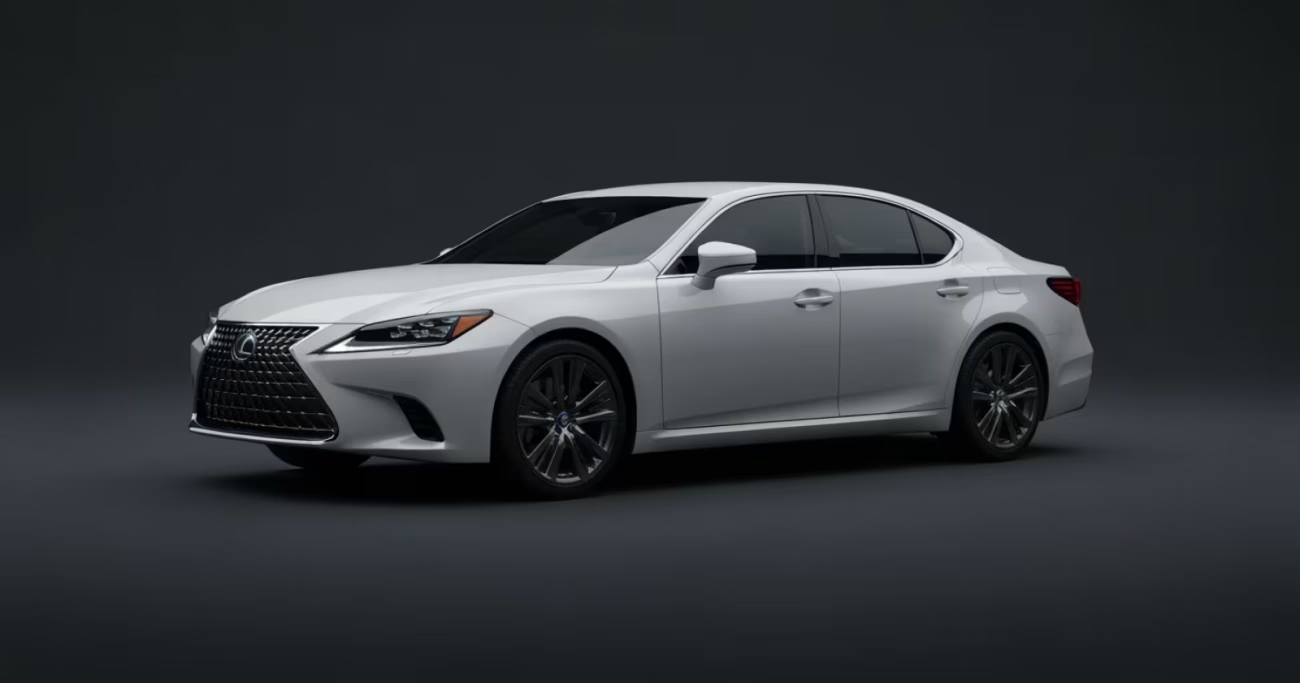
Lexus has put its next compact sedan on ice before it ever reached showrooms. The planned electric successor to the IS is now being shelved as EV demand cools, especially in the U.S. market.
That leaves the current IS aging into another year, with no clear replacement in sight. For compact luxury buyers, the real story is not just cancellation — it is how quickly Lexus is changing course.
The electric IS never got its shot
I see this as more than one dead product plan. Lexus was developing a next-generation IS around an all-electric layout tied to the LF-ZC concept, and that direction is now being delayed by market reality rather than engineering limits.
Here’s the catch: the IS was supposed to be the sharper, more emotional answer inside Lexus’ sedan lineup. Instead, Lexus is choosing caution, and that says a lot about how fragile small luxury EV demand still is.
BMW and Mercedes just gained breathing room
The real story is what happens in the compact luxury fight next. With no electric IS on the immediate horizon, BMW and Mercedes-Benz get more room to own the segment when their next-generation electric sedans arrive.
I think that matters because Lexus has not been building around the idea of a pure image play. Its rivals are pushing forward with EV sedans as a statement of intent, while Lexus is leaning back toward products that already have clearer demand.
| Model | Power | Starting Price | Drivetrain | Edge |
|---|---|---|---|---|
| Lexus IS | 311 hp | $45,500 | RWD | Lowest price, proven V6 |
| BMW i3 sedan | Expected EV output | Not announced | EV | Fresh arrival, next-gen tech |
| Mercedes-Benz electric C-Class | Expected EV output | Not announced | EV | Direct rival, stronger momentum |
| Lexus ES | Hybrid or EV | Not announced | FWD/AWD | Becomes Lexus’ main sedan focus |
What Lexus isn’t saying about the shift
Lexus says it is constantly reviewing product plans, which is true but carefully worded. The brand is not promising a canceled sedan will return, and it is not committing to a timeline for any replacement.
What Lexus isn’t saying is just as important as the cancellation itself. If the company believes the U.S. market can’t support another compact EV sedan right now, then this is not a pause for styling tweaks — it is a strategic retreat.
The aging IS suddenly carries the burden
I find the current IS more interesting now because it may be asked to do more work than planned. Its platform dates back to 2014, even though Lexus refreshed it in 2021 and again this year to keep it alive.
Here’s the catch: the car is still attractive on paper, but it is no longer a clean match for the newest German rivals. Without an EV variant to widen the lineup, the IS has to survive on loyalty, pricing, and Lexus durability alone.
Why this matters beyond one sedan
Automakers are watching EV demand normalize after the early surge. Incentives have faded, the easy buyers have already shown up, and premium brands now have to win over shoppers who compare range, price, and usability more carefully.
I think Lexus is signaling that it would rather protect its balance sheet than chase a weak niche. That makes the ES, RZ, and future TZ more important, while the compact sedan class becomes a tougher battlefield for everyone else.
The verdict is simple: Lexus is not abandoning sedans, but it is clearly reordering priorities around demand instead of ambition. That makes sense in 2026, yet it also risks leaving the IS behind just as rivals sharpen their electric attack. If compact luxury sedans still matter, the next move from Lexus will define whether this nameplate survives as a legacy model or disappears for good. I would watch the IS closely, because this pause feels bigger than one canceled project.
If this shift matters to your view of Lexus, the IS, or the future of luxury sedans, keep tracking how the brand reallocates its EV plans from here.
