
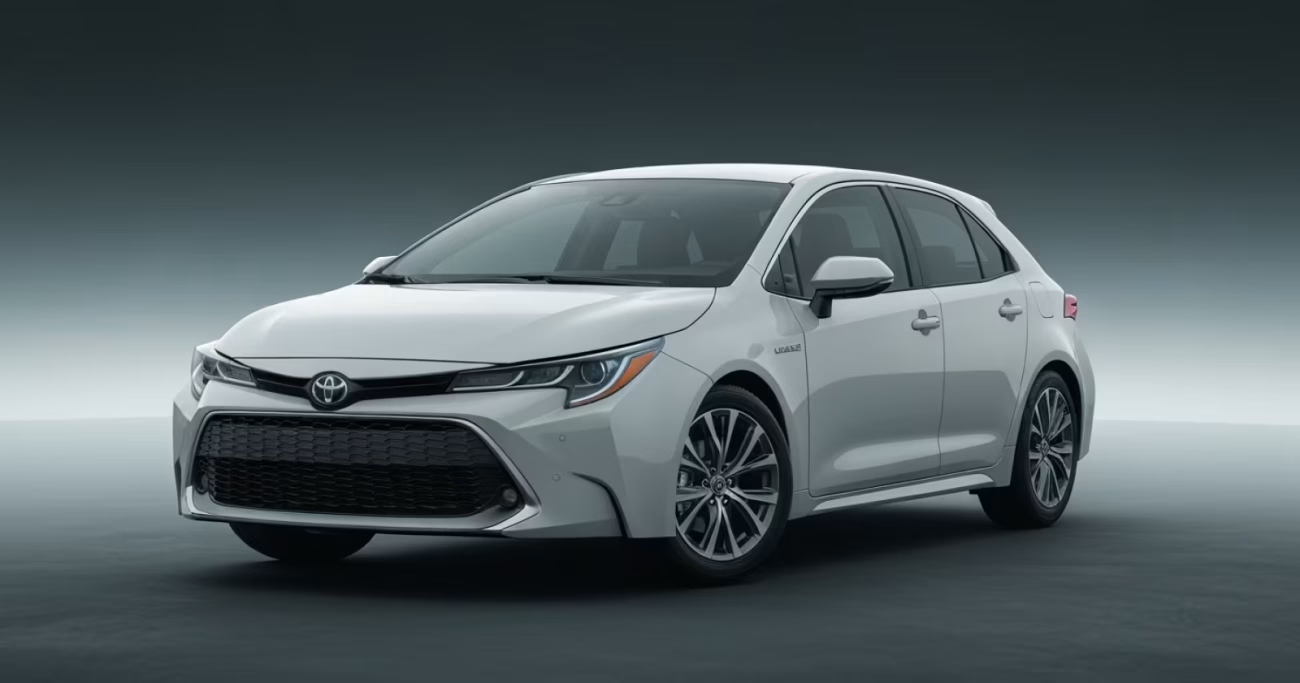
The Prius is still a landmark car, but its sales are falling fast in 2026. The bigger shock is that Toyota’s own Corolla Hybrid is now moving more units with less drama.
Why Toyota’s own sibling is stealing the spotlight
Here’s the catch: the Prius name still carries huge cultural weight, but the market is behaving differently. Toyota has sold 15,489 Priuses so far in 2026, down from 30,161 at this point in 2026.
That kind of drop is not a gentle fade. It is a hard reset in demand, and it is happening while the Corolla Hybrid keeps pulling buyers into the showroom for a more familiar package.
| Spec | Detail |
|---|---|
| Prius base price | $28,550 |
| Prius power | 150 hp |
| Prius fuel economy | 57 mpg combined |
| Prius 2026 sales | 15,489 units |
| Prius 2026 same-period sales | 30,161 units |
| Corolla Hybrid 2026 sales | 20,574 units |
| Dealer supply clue | About 23 days |
The real story is not that the Prius became bad. It is that Toyota made hybrids normal everywhere else. When the brand spreads hybrid tech across its lineup, the original icon stops feeling special to everyday buyers.
What Toyota isn’t saying about demand
Toyota says Prius stock is low and cars are moving quickly when dealers get them. That is a real signal, and it suggests demand still exists even if the sales chart looks ugly.
But low inventory also means volume can look weak for reasons beyond shopper interest. The automaker is clearly prioritizing production where the returns are strongest, and that points straight at higher-volume hybrid nameplates like the Camry and RAV4.
The Camry went hybrid-only in 2026, and the RAV4 followed as hybrid-only more recently. That matters because it changes the buyer funnel. A shopper who once needed a Prius to get Toyota efficiency can now get similar fuel savings in cars they already wanted.
The one catch nobody is talking about
The Prius still gets 57 mpg combined, which is outstanding by any standard. It also remains one of the most recognizable hybrids ever sold, and that legacy still carries value.
Yet legacy does not always equal relevance. Toyota built the Prius to prove hybrid technology could work, and then the rest of the lineup learned the lesson so well that the pioneer now looks redundant in comparison.
That is the real story behind these numbers. The Prius did not fail because hybrids failed. It is losing ground because Toyota won the argument everywhere else.
Why this shift changes the hybrid market
When a brand’s own mainstream models undercut its halo car, the halo car becomes harder to justify. The Corolla Hybrid offers a more conventional shape, strong efficiency, and less of the “look at me” factor that once defined the Prius.
That makes it easier for cautious buyers to choose. It also shows how hybrid technology has moved from niche statement to default purchase behavior, which is a major shift for the industry.
The future implication is simple. Toyota may keep the Prius alive as a technology showcase, especially if solid-state batteries arrive first through that nameplate. But in everyday sales terms, the Corolla Hybrid now looks like the volume answer.
The verdict The Prius is still important, but it is no longer the center of Toyota’s hybrid strategy. I see this as proof that mainstream buyers now want efficiency without the badge-specific story. Toyota’s hybrid empire is stronger than ever, but its original icon is becoming a supporting act. The Corolla Hybrid is the one that now defines the moment.
If hybrid buyers are shopping today, this is the signal to pay attention to. The Prius still matters for history, but the Corolla Hybrid is where Toyota’s momentum is heading next.
