
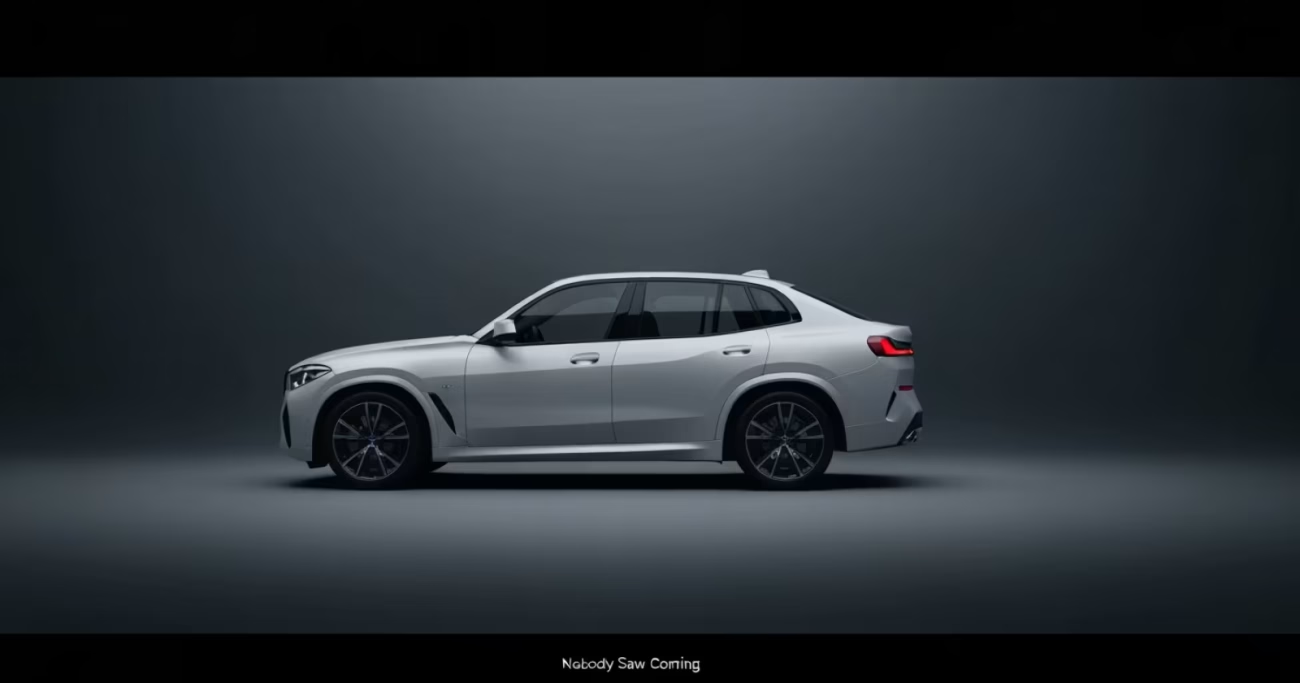
BMW filed the patent drawings for this hydrogen storage system four years ago, and almost nobody was paying attention. Now those same drawings have become the engineering backbone of what could be the most practical hydrogen vehicle ever built.
The iX5 Hydrogen is not a concept. It is a production-bound SUV scheduled to roll off assembly lines in 2028, and the way BMW solved its biggest technical problem is genuinely worth understanding.
Seven slim tanks just changed hydrogen storage forever
The fundamental problem with hydrogen vehicles has always been the tanks. High-pressure storage requires thick, rounded vessels that eat into cargo space, complicate assembly, and add serious weight in awkward places. Every automaker trying to crack hydrogen has wrestled with this for decades.
BMW’s answer is elegant in a way that feels almost obvious in hindsight. Instead of 1 or 2 large cylindrical tanks shoved into a tunnel or behind the rear seats, the iX5 uses 7 slim, interconnected carbon fiber tanks arranged inside a steel housing. That housing slots directly into the floor — the same space that holds battery packs in the electric iX5. The result is a hydrogen vehicle with interior dimensions identical to its fully electric sibling. No compromises, no shrunken trunk, no awkward intrusions into the cabin.
385 miles of range and a 5-minute refuel — think about that
The combined tank system holds approximately 7 kilograms of hydrogen, and BMW estimates a WLTP range of up to 385 miles on a full fill. Real-world EPA numbers will likely be lower, as they always are, but even a conservative estimate puts this SUV firmly in long-distance territory. Here’s the part that matters most: refueling takes around 5 minutes.
That comparison with battery-electric charging times is uncomfortable for the EV industry to sit with. A 385-mile range battery SUV can take 20 to 45 minutes to charge to 80 percent on a fast charger, on a good day. BMW is not shouting about that contrast in its press materials, but the engineering does the talking. Fuel-cell vehicles operate as series hybrids — the fuel cell generates electricity rather than a combustion engine doing it — so a small battery buffer still remains onboard for peak power demands.
The same assembly line producing electric and hydrogen versions is no accident
One detail buried in BMW’s production plans reveals exactly how calculated this floor-mounted tank strategy is. Because the hydrogen tanks drop into the same structural opening as battery packs, BMW can build both the iX5 electric and iX5 Hydrogen on the same factory line without retooling. That is a manufacturing cost advantage that almost no other hydrogen program in the world can currently claim.
The steel housing around those carbon fiber tanks also serves a second purpose that BMW is not advertising loudly. The tank assembly sits between the vehicle’s structural members — the same load-bearing framework that protects battery packs in a collision. Safety engineering for hydrogen storage has always been a public perception problem, and BMW appears to have addressed it by making the hydrogen system structurally equivalent to what drivers already accept in electric vehicles.
| Specification | Detail |
|---|---|
| Tank configuration | 7 slim carbon fiber tanks in parallel |
| Total hydrogen capacity | ~7 kg (15.4 lbs) |
| Estimated range (WLTP) | Up to 385 miles |
| Refuel time | ~5 minutes |
| Platform | BMW Neue Klasse |
| Production start | 2028 |
| Interior vs electric iX5 | Identical — no cargo penalty |
What the iX5 will actually look like when it arrives in 2028
The next-generation X5 family — covering combustion, electric, and hydrogen variants — is expected to begin arriving around 2027 for the conventional models, with the hydrogen version confirmed for 2028 production. Spy photos of heavily camouflaged prototypes show a design direction closely aligned with BMW’s Neue Klasse vehicles, the iX3 and i3. The upright nose carries a short, narrow kidney grille with headlights integrated into thin openings, a cleaner look than the controversial oversized grilles BMW has been running.
Inside, the real story is the Neue Klasse interior language — one large central display, with instrumentation and navigation data projected onto a head-up display at the windshield base. Powertrain options across the X5 range will span gasoline, diesel, hybrid, multiple battery-electric configurations, high-output M-badged variants, and the hydrogen fuel-cell version. For buyers who want the largest, most capable X5 without the charging wait, the hydrogen model may end up being the most interesting option on the entire order sheet.
Why this matters
- Modular tank design could enable hydrogen across BMW’s entire SUV lineup
- Shared assembly with electric models dramatically lowers production costs
- 5-minute refueling directly challenges electric vehicle convenience arguments
The verdict
BMW has spent four years quietly engineering a solution to the problem that has kept hydrogen vehicles from becoming practical, and the iX5 is the proof of concept made real. The floor-mounted tank system is not a workaround — it is a genuine architectural advancement that makes hydrogen and electric versions of the same SUV genuinely equal in usability. Infrastructure remains the hard wall hydrogen must still break through, but BMW’s engineering argument is now impossible to dismiss. If you have been watching the hydrogen space and wondering when a major automaker would stop treating it as a science project, 2028 is your answer.
If you are following the future of zero-emission vehicles beyond the battery-electric mainstream, the iX5 Hydrogen deserves serious attention right now — well before the press drives begin. Share this with anyone still convinced hydrogen never had a real future.
