
PERSON: Gernot Döllner
BRAND: Audi
BRAND: Porsche
BRAND: Volkswagen Group
BRAND: Lamborghini
BRAND: Bentley
MODEL: Audi Concept C
MODEL: Porsche 718 Boxster
MODEL: Porsche Cayman EV
MODEL: Audi R8
<p>Audi is planning more of its future sports cars around Porsche hardware, and that changes the story around Ingolstadt in a big way. The surprise is not that the brands share parts, but that Audi now sounds ready to lean on Porsche for its most emotional models.</p>
<p>The real story is bigger than one concept car. I’m looking at a brand that wants volume where it can get it, then borrowed performance credibility where it matters most.</p>
<h3>Why Porsche bones now matter for Audi</h3>
<p>Audi has never been shy about sharing platforms inside Volkswagen Group, but this next phase feels more deliberate. Gernot Döllner says that gives Audi a major advantage, and he is signaling that the brand will keep using Porsche’s sportiest underpinnings for future halo cars.</p>
<p>That matters because Audi is trying to balance two very different jobs at once. It needs high-volume luxury SUVs and EVs to keep profits flowing, while still building cars that make enthusiasts pay attention again.</p>
<table>
<tr><th>Spec</th><th>Detail</th></tr>
<tr><td>Subject brand</td><td>Audi</td></tr>
<tr><td>Biggest hook</td><td>Porsche platform borrowing for future sports cars</td></tr>
<tr><td>Key concept</td><td>Concept C, Audi’s TT-style successor</td></tr>
<tr><td>Likely Porsche donor</td><td>Next-gen 718 Boxster and Cayman EV architecture</td></tr>
<tr><td>Possible flagship path</td><td>R8 successor tied to MMB architecture</td></tr>
<tr><td>Primary rival pressure</td><td>BMW M and Mercedes-AMG performance models</td></tr>
<tr><td>Unexpected detail</td><td>Audi wants Porsche help even on high-floor cars</td></tr>
</table>
<h3>The Concept C is the first big clue</h3>
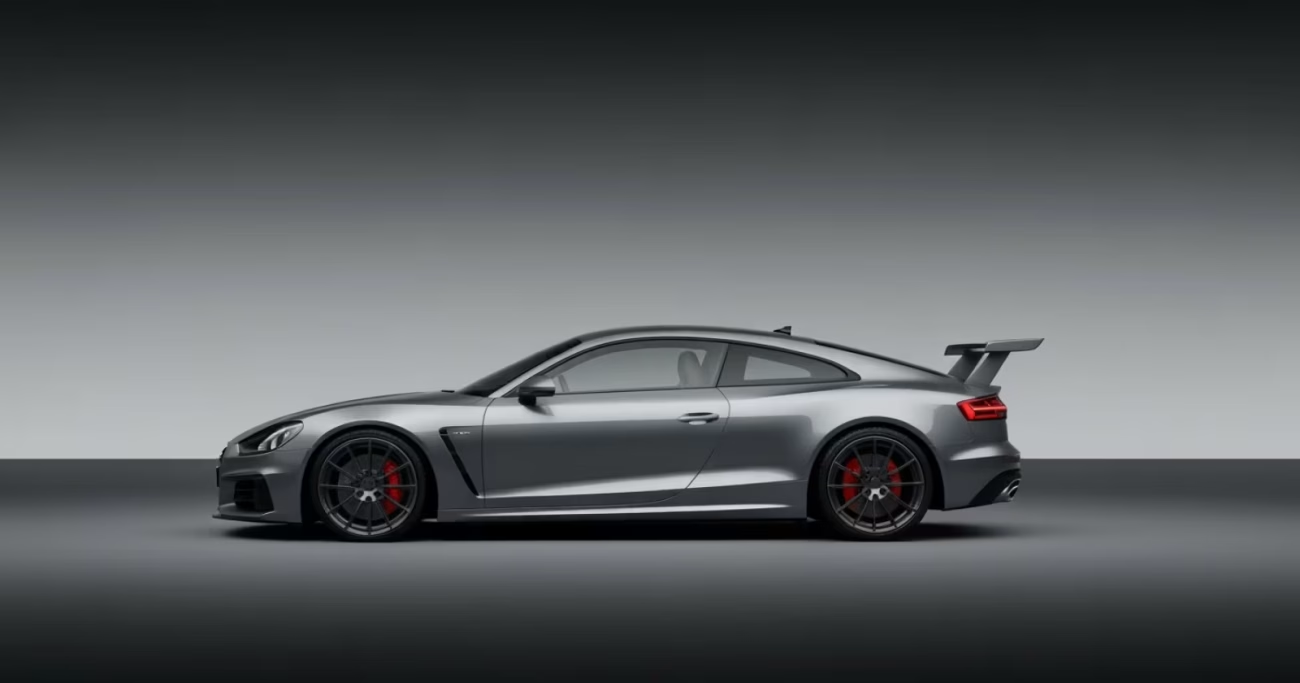
<p>The first visible proof is the Concept C, which Audi internally calls the C Sport. It is a retro two-seater, and it will reportedly use the same mid-engined-style platform planned for the next Porsche 718 Boxster and Cayman EVs.</p>
<p>Here’s the catch: this is not just badge engineering. Audi wants the battery stack mounted behind the front seats so the car can sit low, look exotic, and deliver the kind of proportions that made the TT memorable in the first place.</p>
<p>That layout tells me Audi is chasing emotion as much as efficiency. The brand knows that a sports car with the wrong stance can feel dead before it ever reaches a showroom.</p>
<h3>The R8 successor rumor is the real story</h3>
<p>What Audi isn’t saying outright is even more interesting. There is growing room for a wild successor to the R8, and one possibility points to the Modular Mid-Engine platform found under the current 911.</p>
<p>If that happens, Audi could stretch the wheelbase and package a more central engine position for a serious performance car. That opens the door to something dramatic, including the Lamborghini Temerario’s V8 or even an Audi-flavored twin-turbo V8 approach.</p>
<p>For me, this is where the plot gets serious. Audi does not sound interested in a soft replacement or a styling exercise; it sounds interested in a real flagship that can stand next to Porsche and Lamborghini without embarrassment.</p>
<h3>Mass-market models may benefit too</h3>
<p>There is another layer here that gets overlooked. Audi’s platform sharing may not stop with halo cars, because Porsche could also feed engineering help into future Audi volume models.</p>
<p>That means better brakes, suspension tuning, and hardware know-how could show up in tougher RS versions, including a potential RS 5 GT or Performance trim aimed squarely at the BMW M3 CS and CSL. The real story is that Audi wants its faster cars to feel more expensive, sharper, and more credible than the badge alone suggests.</p>
<p>And that is exactly why this strategy matters beyond the enthusiast crowd. If Audi can use Porsche engineering without losing its own identity, it can raise the ceiling on every sporty model it sells.</p>
<h3>How it stacks up against the rivals</h3>
<table>
<tr>
<th>Model</th>
<th>Power</th>
<th>Layout</th>
<th>Likely Edge</th>
</tr>
<tr>
<td>Audi Concept C</td>
<td>Expected EV performance focus</td>
<td>Low two-seat sports car</td>
<td>Porsche-derived packaging and proportions</td>
</tr>
<tr>
<td>Porsche 718 Cayman EV</td>
<td>Expected high output</td>
<td>Mid-engine-style EV</td>
<td>Benchmark hardware and tuning</td>
</tr>
<tr>
<td>BMW M3 CS</td>
<td>523 hp</td>
<td>Performance sedan</td>
<td>Proven track credibility</td>
</tr>
<tr>
<td>Mercedes-AMG C63 S E Performance</td>
<td>671 hp</td>
<td>Performance sedan</td>
<td>Brute-force hybrid punch</td>
</tr>
</table>
<p>For me, the comparison is simple. Audi is not trying to outmuscle every rival with brute force alone; it is trying to make its future performance cars feel more authentic than the market expects.</p>
<p>The advantage is subtle but powerful. Porsche brings the platform credibility, Audi brings the design, and together they can make a more convincing sports car than either company might build alone.</p>
<p>What I see next is a sharper Audi lineup with fewer compromises at the top end and better hardware trickle-down below it. If the brand follows through, BMW and Mercedes-AMG will have to respond with more than straight-line numbers.</p>
<p><strong>The verdict</strong><br>
Audi borrowing Porsche platforms is not a compromise story anymore. It is a strategy for building desirable cars in a market where emotional design, credible hardware, and brand trust all matter at once. Enthusiasts should care because this could bring back an Audi sports car with real depth, while industry watchers should see a wider Volkswagen Group playbook taking shape. If Audi executes this well, its future performance cars could become the most interesting thing wearing four rings in years.</p>
<p>If this direction matters to you, keep watching Audi’s next sports car moves closely. The brand is clearly preparing something far more ambitious than a simple revival.</p>
</BODY>
