
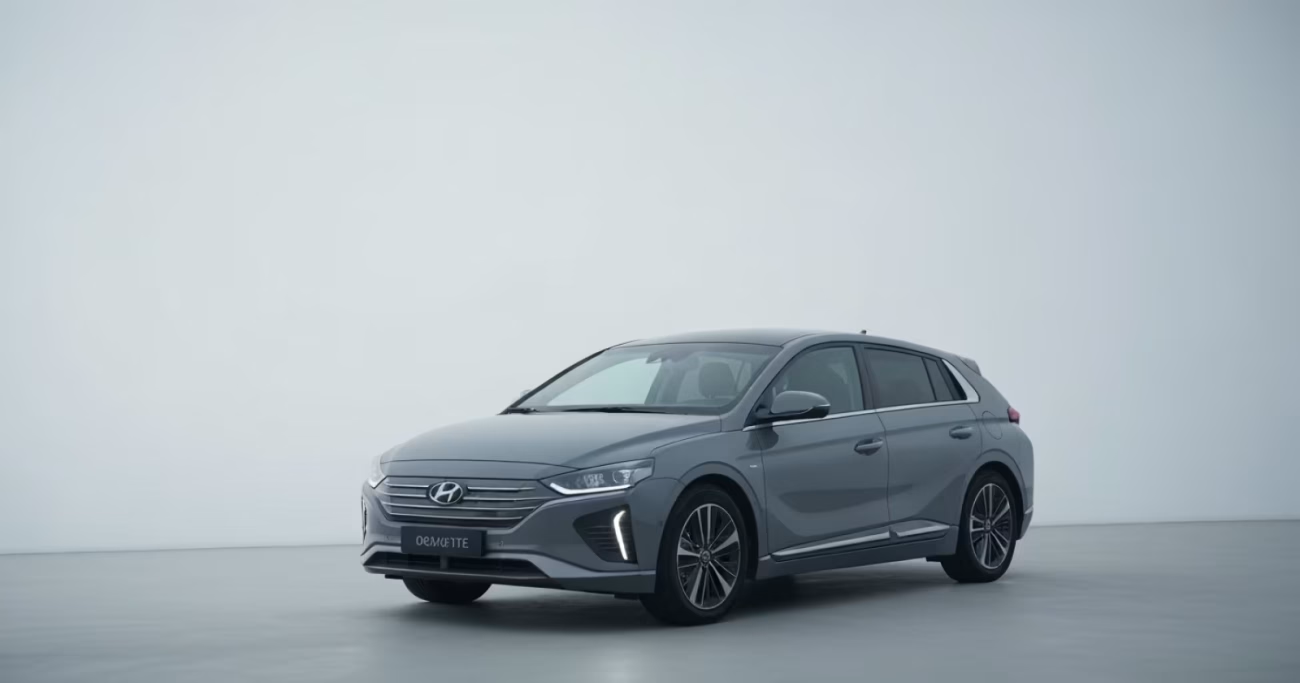
Two weeks. That is all it took Hyundai to go from wild concept to production-ready electric sedan. The result looks so much like a certain Toyota that the internet is already losing its mind.
The Ioniq V just rolled onto the stage at Auto China 2026 in Beijing, and I had to do a double take. This thing is essentially the Venus concept with license plates, and it carries a silhouette that will immediately remind you of one of the best-selling hybrids on the planet.
Why this Hyundai looks like a Prius and why that matters
I am not going to dance around it. The Ioniq V shares a striking resemblance to the Toyota Prius. Low nose, wedge-shaped hood flowing into a steeply raked windshield, squinting running lights connected by a thin black bar, and a long tapering fastback roofline. Swap the badges and most people on the street would hesitate before picking a side.
Hyundai would probably point to aerodynamics. Physics does not care about brand loyalty, and the most slippery shapes tend to converge. The Prius is famously efficient through the air, and the Ioniq V is clearly chasing the same drag numbers. But where Toyota went curvy and organic, Hyundai went sharp and angular. Think of it as a Prius rendered on a PlayStation 1. Fewer polygons, more attitude.
Toyota charges more for less space — think about that
Here is where the Ioniq V starts to pull away from the comparison. At 192.9 inches long, it stretches nearly a full foot beyond the Prius. The wheelbase is 5.9 inches longer, and it is 4.2 inches wider. That translates to meaningfully more cabin and cargo room, which matters when you are cross-shopping sedans for daily use.
The Prius is a hybrid. The Ioniq V is fully electric with a claimed 373 miles of range on the CLTC cycle. That Chinese test standard is generous, so real-world numbers will likely land lower, but even a 20 percent haircut still puts this car above 290 miles. For a vehicle this size, that is competitive against anything in the segment.
| Spec | Hyundai Ioniq V | Toyota Prius (2026) |
|---|---|---|
| Length | 192.9 in. | 181.1 in. |
| Width difference | +4.2 in. over Prius | Baseline |
| Wheelbase difference | +5.9 in. over Prius | Baseline |
| Powertrain | Fully electric | Hybrid |
| Range (claimed) | 373 mi (CLTC) | ~57 mi EV / 600+ total |
| Main display | 27-in. 4K panel | 12.3-in. touchscreen |
| Audio | 8-speaker Dolby Atmos | 8-speaker JBL (optional) |
A 27-inch screen and no instrument cluster — bold or reckless
Step inside and the Prius comparison evaporates. The Ioniq V carries a single 27-inch 4K display that stretches across the dash, handling both the driver’s infotainment and a dedicated passenger entertainment zone. I have seen wide screens before, but this one is closer to mounting a small television above the glovebox. Hyundai also mentions a super wide head-up display, and from the interior shots, it looks like that HUD replaces a traditional instrument cluster entirely. There is no visible screen behind the steering wheel.
The rest of the cabin is clean and minimal. Sharp creases mirror the exterior’s angular philosophy, with contrasting color panels adding visual depth. An 8-speaker Dolby Atmos sound system comes standard, and Hyundai has baked in a large language model AI voice assistant. Whether that assistant is genuinely useful or just a party trick remains to be seen, but the hardware commitment is real.
What Hyundai is not saying about availability
Here is the catch that tempers all the excitement. The Ioniq V is launching exclusively in China. It is the first Ioniq model built specifically for that market, produced through Hyundai’s joint venture with BAIC, the Beijing Automotive Group. There has been zero confirmation of a North American, European, or Korean launch.
Hyundai has not disclosed pricing, battery capacity, battery chemistry, or detailed power figures. The company also has not locked down a sale date, though expectations point to late 2026 or early 2027. What we do know is that this is just the beginning. Hyundai and BAIC have 20 additional models planned over the next 5 years, with a new SUV slated for the first half of 2027. The Ioniq V is a statement of intent for a market where local Chinese brands have been eating Hyundai’s lunch.
How it stacks up
| Model | Range | Length | Display | Edge |
|---|---|---|---|---|
| Hyundai Ioniq V | 373 mi (CLTC) | 192.9 in. | 27-in. 4K | Tech + space |
| Toyota Prius Prime | ~57 mi EV | 181.1 in. | 12.3 in. | Proven efficiency |
| BYD Seal | ~390 mi (CLTC) | 189.8 in. | 15.6 in. | Price in China |
| Tesla Model 3 | ~390 mi (CLTC) | 184.8 in. | 15.4 in. | Supercharger network |
Why this matters
- Hyundai is finally fighting Chinese EV brands on their home turf.
- The Prius shape is now fair game for electric reinterpretation.
- 20 new models signal a massive China investment through 2031.
The verdict
The Ioniq V is Hyundai throwing a sharp-edged gauntlet at both Toyota’s design language and China’s domestic EV giants. Buyers in Beijing and Shanghai should pay close attention once pricing drops. If Hyundai eventually brings this platform outside China, the mid-size electric sedan segment gets a lot more interesting overnight. For now, the Ioniq V proves that Hyundai is done playing it safe in the world’s largest EV market.
If you are shopping electric sedans or just tracking where the industry is headed, keep the Ioniq V on your radar. Bookmark this page, because I will be updating it the moment Hyundai releases pricing and full powertrain specs. This is one launch worth following closely.
