
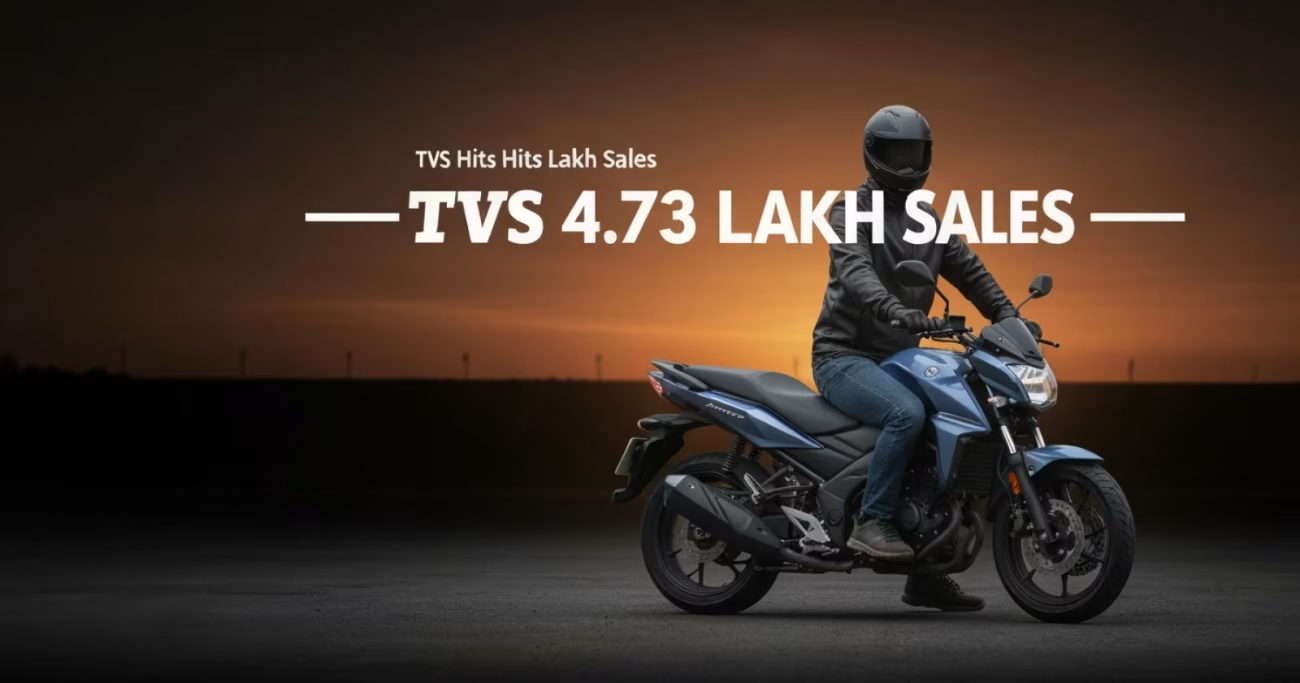
Something quietly historic just happened in TVS Motor’s sales ledger — and if you ride a two-wheeler in India, it affects you more than you think. For the first time, scooters have dethroned motorcycles as the company’s biggest volume contributor, and the numbers from April 2026 tell a story that goes well beyond one brand.
I have been tracking TVS Motor’s monthly dispatches for years now, and this April report genuinely caught my attention. The company closed the month at 4,73,970 total units, a healthy 6.82% year-on-year jump from 4,43,716 units in April last year. But the real headline is buried inside the segment-wise split. Let me walk you through what is actually going on.
Scooters Now Run The Show
TVS dispatched 2,11,158 scooters in April 2026, a massive 24% YoY growth. That is not a small bump — that is a full-blown demand wave. The Jupiter continues to be a volume monster in the 110cc family scooter space, and the NTorq keeps pulling younger buyers who want something sportier without stepping up to a motorcycle.
What makes this significant is context. For decades, motorcycles were the backbone of every Indian two-wheeler maker’s portfolio. TVS was no different. But urban India is changing. Shorter commutes, worsening traffic, and the sheer convenience of a scooter in city riding are pushing buyers away from bikes. I see it in the registration data, I see it in showroom footfalls, and now I see it clearly in TVS’ own dispatch numbers.
If you are cross-shopping a Honda Activa or a Suzuki Access against a Jupiter or NTorq today, TVS is clearly winning a larger share of that consideration set than it did a year ago.
Electric Scooters Keep Climbing
The EV story within TVS deserves its own spotlight. The company sold 37,771 electric scooters in April, up a sharp 36% YoY. That is not a token number anymore — it represents nearly 8% of TVS’ total volumes. The iQube range has found its footing in metro and tier-1 cities, and the charging infrastructure expansion across India is clearly helping conversion rates.
I will be honest — a year ago, I was skeptical about whether EV scooters could sustain double-digit growth month after month without heavy subsidies. TVS is proving that product quality and network reach can do the heavy lifting once the early-adopter phase passes. Ola Electric and Ather Energy are still in the conversation, but TVS has the dealership muscle that pure-EV startups simply cannot match yet.
Motorcycles Hit A Rough Patch
Here is the less cheerful part. TVS motorcycle sales dropped to 2,00,039 units in April, a 9% YoY decline. That is a meaningful fall, and it points to pressure in both the commuter and premium segments. The Apache range still has loyal fans, but the 125cc-150cc commuter space is brutally competitive with Hero and Bajaj fighting hard on price and fuel efficiency.
I think part of this decline is structural. Buyers who would have picked a 100cc-110cc commuter bike five years ago are now choosing scooters instead. The riding comfort, storage, and ease of use in stop-and-go traffic simply make more sense for daily urban commuting. TVS will need fresh product action in the motorcycle space — possibly a new Apache variant or an aggressive commuter refresh — to arrest this slide.
The Full April 2026 Breakdown
| Segment | April 2026 Units | YoY Growth | Share of Total |
|---|---|---|---|
| Scooters | 2,11,158 | +24% | 44.5% |
| Motorcycles | 2,00,039 | -9% | 42.2% |
| Electric Vehicles | 37,771 | +36% | 8.0% |
| Three-Wheelers | 18,637 | +37% | 3.9% |
| Total Domestic | 3,53,962 | +8% | 74.7% |
| Total Exports | 1,20,008 | +2.8% | 25.3% |
| Grand Total | 4,73,970 | +6.82% | 100% |
Three-Wheelers Are The Dark Horse
One segment that rarely gets attention but deserves it — TVS’ three-wheeler business surged 37% YoY to 18,637 units. Both domestic and export markets contributed to this jump. Last-mile delivery and passenger transport in smaller towns are driving this demand, and TVS has been quietly building its three-wheeler portfolio while everyone focuses on the two-wheeler wars.
This is a smart diversification play. The three-wheeler market in India is expected to grow significantly through FY2027 as e-commerce logistics expand and urban cargo demand rises. TVS getting in early with volume gives them a cost and network advantage that will compound over time.
Domestic Holds Steady, Exports Struggle
The domestic market delivered 3,53,962 units at an 8% YoY growth rate, which is solid. Scooters and EVs did the heavy lifting here, compensating for the motorcycle dip. The Indian market remains TVS’ stronghold, and urban demand shows no signs of cooling off heading into the monsoon months.
Exports, however, painted a less rosy picture. At 1,20,008 units, the growth was a tepid 2.8% YoY. On a month-on-month basis, the dip was sharper. Global logistics challenges, container shortages, and softening demand in key African and Latin American markets are all contributing factors. TVS acknowledged this in their official communication, noting that supply chain disruptions impacted dispatches even when retail demand was strong.
Supply Chain Still A Bottleneck
TVS made an interesting disclosure this month — retail demand actually outpaced dispatches. Raw material shortages, workforce constraints, and container availability issues held back production and shipments. This means the real demand picture is even stronger than what the dispatch numbers suggest.
The company expects these bottlenecks to ease from May 2026 onward. If that happens, we could see a catch-up effect in the coming months where pent-up demand translates into higher dispatches. I will be watching the May numbers closely to see if that materialisation happens.
What This Means For Buyers
If you are in the market for a TVS product right now, here is my read. Scooter availability should be decent given the high production focus, but specific variants of the Jupiter and NTorq may have waiting periods in high-demand cities. EV buyers should check iQube stock at their local dealer — the 36% growth suggests TVS is pushing inventory, but popular colour and variant combinations can still be tight.
For motorcycle buyers, this might actually work in your favour. A declining segment often means better dealer-level discounts and faster delivery. If you have been eyeing an Apache RTR 160 or the Raider 125, April and May could be a good window to negotiate.
I would love to hear what you are seeing at your local TVS showroom. Are scooters really dominating the floor traffic? Drop your observations — and if you are planning a TVS purchase this quarter, do your homework on variant-level pricing because dealer offers can vary significantly city to city.
