
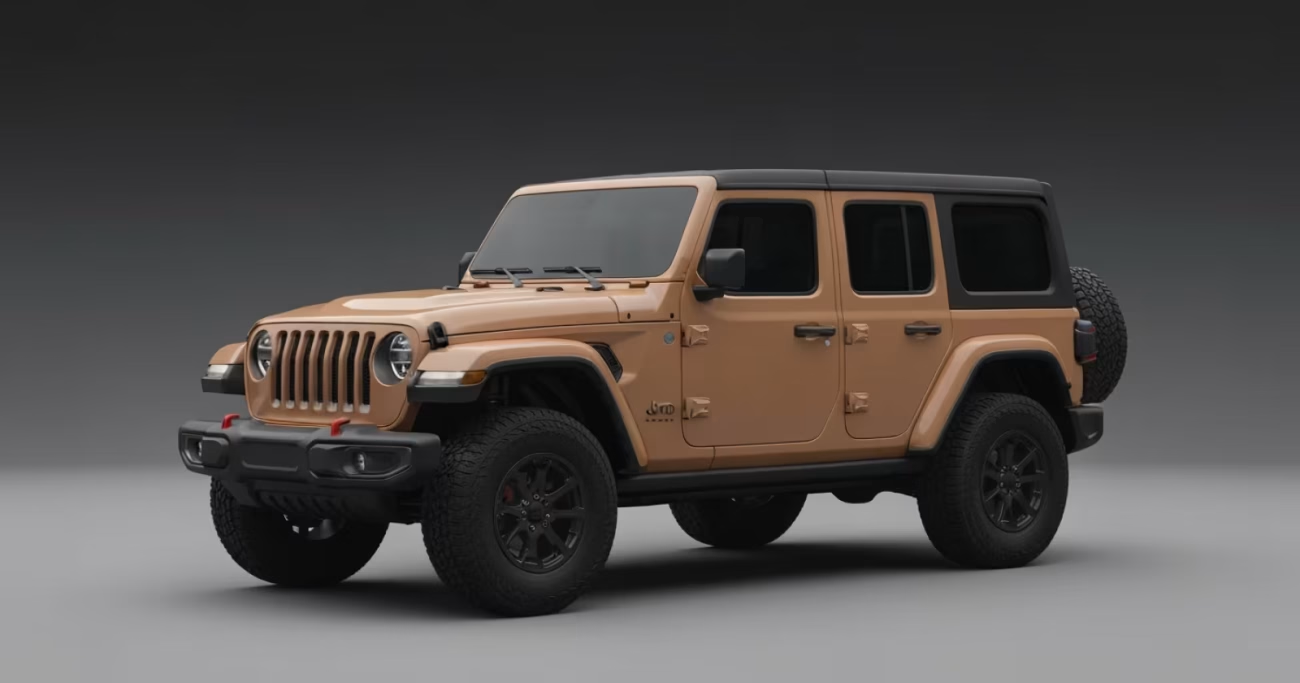
Every automaker on the planet is chasing the same formula right now — bigger screens, more automation, softer ride, and a badge that says “EV” somewhere on the tailgate. Jeep looked at all of that and built something that almost feels like a protest vehicle.
The 2026 Wrangler Rubicon two-door doesn’t care what the competition is doing. It still has solid axles, removable doors, and a transfer case you operate with your hands. What’s new is the engine — and that swap tells a bigger story than Jeep is letting on.
Jeep quietly killed the V6 and nobody should be upset about it
The 3.6-liter Pentastar V6 has been in Wranglers since 2011. That’s not a legacy engine — that’s a relic. For the 2026 model year in Australia, Jeep replaced it entirely with a 2.0-liter turbocharged four-cylinder, and the numbers tell a complicated story.
Power drops slightly, from 280 hp down to 268 hp. But torque climbs from 271 lb-ft to 295 lb-ft, and that’s the number that actually matters when you’re crawling over rocks at low speed. The turbo fills in where the old naturally aspirated V6 went flat, and on the move, it delivers a noticeably smoother, quieter experience than the gruff six ever did.
Here’s the catch — fuel economy barely improves. Jeep claims 24.2 mpg combined, but real-world driving returned closer to 18.6 mpg during a week of mixed use. Some off-roading inflated that average, but even on highway runs the four-cylinder wasn’t performing the efficiency miracles the spec sheet implied.
At a glance
| Spec | Detail |
|---|---|
| Engine | 2.0L turbocharged four-cylinder |
| Power | 268 hp / 295 lb-ft torque |
| Transmission | 8-speed automatic with 4WD |
| US Price (2-door Rubicon) | $48,660 |
| Australia Price | AU$81,990 (~$56,000 USD) |
| Cargo space (seats up) | 12.8 cubic feet |
| Claimed combined fuel economy | 24.2 mpg (real-world: ~18.6 mpg) |
| Off-road hardware | Locking diffs, Dana axles, disconnecting sway bar |
The cabin still works — and that itself is remarkable
I went into this review expecting the interior to feel dated. The current-generation Wrangler has been in production since 2017, and most cabins that old feel like visiting a museum. This one genuinely surprised me.
The 12.3-inch Uconnect 5 display is responsive, well-organized, and handles wireless Apple CarPlay and Android Auto without drama. The part-digital, part-analog gauge cluster is one of the smarter design decisions Jeep has made in years — it feels intentional rather than budget-conscious, unlike the full digital clusters that look cheap in vehicles costing twice as much.
What the cabin doesn’t do well is comfort at this price point. Front seats offer almost no lateral support or lumbar adjustment — they feel flat and generic for a vehicle commanding over $55,000 in Australian spec. There’s also no wireless charging pad, which is an inexcusable omission in 2026. The window switches sitting in the center console instead of the door cards is a quirky reminder that those doors were designed to come off entirely.
Two doors sounds like a compromise — it’s actually the right choice
Most buyers default to the four-door Wrangler for practicality, and I understand why. But the two-door Rubicon makes a compelling argument for itself the moment you take it anywhere that isn’t a shopping center parking lot.
The shorter 96.8-inch wheelbase gives it a turning circle that makes trail navigation dramatically easier. Getting into the rear seats requires some athleticism, but once you’re in, headroom and legroom are better than expected. The real sacrifice is cargo space — just 12.8 cubic feet with the seats up. Most two-door owners fold or remove the rear seats entirely, which turns this into a proper two-person adventure rig with a usable bed.
On public roads, the Wrangler drives like what it is: a body-on-frame off-roader wearing mud-terrain tires. The recirculating ball steering feels vague in the first few degrees, which takes adjustment if you’re coming from anything modern. But the flip side of that setup is a vehicle that goes places other SUVs won’t even attempt.
How it stacks up
| Model | Power | Base Price (USD) | Off-Road Hardware | Edge |
|---|---|---|---|---|
| 2026 Jeep Wrangler Rubicon | 268 hp | $48,660 | Locking diffs, Dana axles, sway bar disconnect | Best stock trail capability |
| 2026 Ford Bronco Badlands | 315 hp | $51,000 | Locking rear diff, trail control | More power, better on-road feel |
| 2026 Toyota 4Runner TRD Pro | 278 hp | $57,000 | KDSS, locking rear diff, crawl control | Four-door practicality, reliability reputation |
| 2026 Land Rover Defender 90 | 296 hp | $56,100 | Terrain Response, air suspension | Luxury finish, advanced terrain tech |
Why this matters
- Wrangler proves analog-first design still sells 167,000 units annually
- The turbo-four swap signals Jeep is preparing for stricter global emissions rules
- Body-on-frame off-road SUVs are a shrinking category — Wrangler owns it
The verdict
The 2026 Jeep Wrangler Rubicon is a vehicle that has no business being as relevant as it is. It’s expensive, thirstier than advertised, and asks you to adapt to it rather than the other way around. And yet, it remains the most capable stock off-roader you can buy at this price, in a segment where the Wrangler’s rivals are getting softer and more road-focused with every generation.
Off-road enthusiasts who want genuine trail hardware without a six-figure outlay still have exactly one answer. The turbo-four is a smarter engine than many will give it credit for, and the cabin upgrade cycle has quietly kept this aging platform from feeling embarrassing.
If Jeep can sort the seat comfort and add wireless charging before the next full redesign, there’s no reason this formula stops working. For now, the Wrangler Rubicon remains the benchmark not because it does everything well — but because it does the one thing that matters most, better than everyone else.
If you’ve been sitting on the fence about a Wrangler, the 2026 Rubicon two-door is the most focused version of this icon yet — and the configuration most likely to make you forget every other SUV you’ve ever driven. Get to a dealership and drive one before you convince yourself you need four doors.
