
Some cars do not need a complete reinvention to stay relevant, but they still need one solid reason to pull buyers back into showrooms. After driving the updated City in Bengaluru, I felt Honda has tried exactly that: make the familiar sedan look sharper without disturbing the formula people already trust.
This update is not about a new engine or a dramatic platform change. It is about design, equipment, comfort, hybrid efficiency and whether the City still feels like the safest sedan recommendation in a market where SUVs are stealing all the attention.
Sharper face, sportier attitude
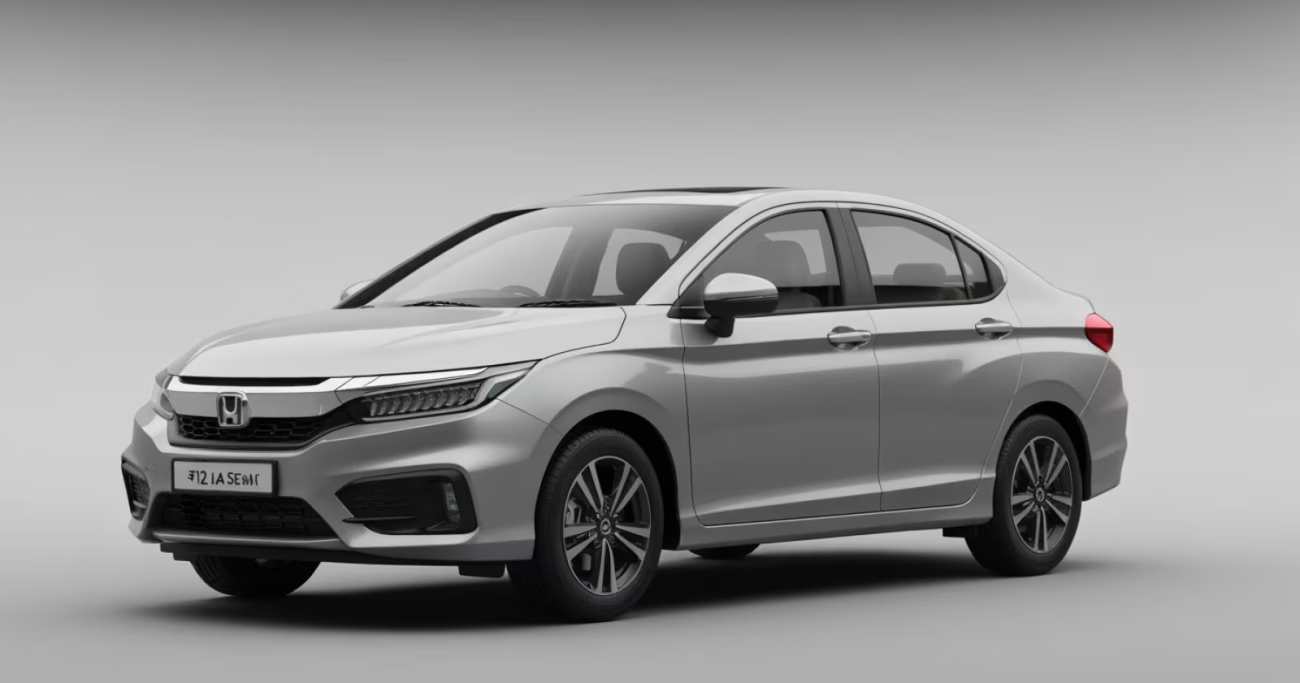
The biggest talking point is the new front design. Honda has moved away from the older calm and conservative look, giving the City a much more aggressive face with sleeker bi-LED projector headlamps and a sharper DRL signature.
The connected LED DRL strip above the grille gives it a more modern identity, especially in darker colours. I drove the Crystal Black Pearl shade, and in person it adds a stealthy premium vibe that suits the facelift surprisingly well.
The Honda badge has also shifted from the grille area to a bumper section below the bonnet. It is a small change, but it makes the front look very different from the earlier car.
There are no fog lamps now. Instead, Honda has added air-channel-style elements that make the bumper appear sportier. The side profile remains largely the same, except for the new 16-inch dual-tone alloy wheels, while the rear gets smoked-effect tail-lamps, a subtle spoiler and a faux diffuser.
The cabin feels familiar, but not fully fresh
Inside, Honda has introduced a Black and Ivory dual-tone theme. It looks cleaner than before and gives the cabin a lighter, more premium feel, especially on the seats, dashboard trims and armrests.
The most obvious addition is the new 10.1-inch infotainment touchscreen with wireless Android Auto and Apple CarPlay. It works quickly, but I did not find it as polished as what some rivals offer.
The screen placement also creates glare under bright conditions. In harsh Indian daylight, the display could have been brighter, and the interface still feels more aftermarket than factory-integrated.
The audio system is acceptable for daily use, but it lacks the fuller sound that buyers now expect in this price range. The semi-digital instrument cluster continues from before and shows enough information, including ADAS-related alerts, but it does not feel as modern as the displays in some newer sedans.
Ventilated seats are a big India-friendly addition
One feature I genuinely liked is the addition of ventilated front seats. This is a very useful feature for Indian summers, and Honda has given it three blower speeds.
The system is quiet, which is nice, but I felt the cooling performance could have been stronger. A slightly noisier but more powerful blower would have made it even better for peak summer traffic.
There is also a wireless charger, paddle shifters, auto headlights, rain-sensing wipers and a 360-degree camera. The camera is useful in tight urban parking spots, but the resolution and execution do not feel premium enough for a sedan that can go up to ₹21 lakh ex-showroom.
Rear seat comfort remains a City strength
The rear seat experience is still one of the main reasons buyers look at this sedan. The space, seat comfort and airy feel make it suitable for both family use and chauffeur-driven buyers.
However, the same old misses remain. The rear headrests are not adjustable, and the centre armrest still does not feel as supportive as it should.
Honda has added two Type-C charging ports for rear passengers, which is a practical touch. The 506-litre boot on the petrol version is also generous, with a wide loading opening and a low lip that makes luggage loading easier.
The e:HEV hybrid version has a smaller boot because of the hybrid components. Buyers planning airport runs with multiple suitcases should check this properly during a showroom visit.
Engine options and key specs
| Item | Details |
|---|---|
| Price range | ₹12 lakh to ₹21 lakh ex-showroom |
| Petrol engine | 1.5-litre i-VTEC, around 119 bhp and 145 Nm |
| Gearbox options | 6-speed manual and 7-step CVT |
| Hybrid setup | 1.5-litre engine with electric motor assist |
| Claimed hybrid mileage | Up to 27.26 km/l |
| Main rivals | Volkswagen Virtus, Skoda Slavia, Hyundai Verna |
| Boot space | 506 litres on petrol variant |
Still smooth, still easy to drive
Mechanically, Honda has not changed the City. The regular petrol version continues with the 1.5-litre i-VTEC engine, known for its refinement, smoothness and free-revving nature.
It produces around 119 bhp and 145 Nm, paired with either a 6-speed manual or a CVT. This engine is not about outright punch, but it remains one of the most refined naturally aspirated petrol engines in its segment.
The e:HEV hybrid is the more interesting option. Its petrol engine works with electric motors, allowing short low-speed electric driving and additional assistance when required.
Honda claims up to 27.26 km/l for the hybrid, and in gentle city use, the system can be impressively efficient. In real-world mixed driving, especially with higher speeds and quicker throttle inputs, the engine runs more often and the mileage naturally drops.
Ride quality feels mature
The City still rides in a calm and sorted manner. Bump absorption is good, and the suspension tuning works well for typical Indian roads with uneven patches, expansion joints and rough city sections.
It does not have the high ground clearance appeal of an SUV, and Honda does not officially highlight the number. Compared to some European rivals, it sits lower, so sharp speed breakers still need care.
The hybrid version I drove also gets all-wheel disc brakes, and braking performance felt reassuring. The non-hybrid versions continue with rear drum brakes.
ADAS is useful, but needs more testing
Honda deserves credit for offering Level-2 ADAS through Honda Sensing from the V variant onward. In a market where safety tech is becoming a major buying trigger, this gives the City a strong advantage.
During my Bengaluru drive, the lane keep assist did not always intervene consistently, even on reasonably marked roads. I would want to test it for a longer duration across highways and city stretches before calling it flawless.
Still, the fact that Honda is offering this suite in the mainstream variant range is important. Buyers who value safety and driver assistance will appreciate its presence.
Where it beats rivals, and where it trails
The City still feels like the calmest choice among C-segment sedans. The Virtus and Slavia feel more European and fun to drive, while the Verna brings more features and a futuristic cabin experience.
Honda’s strength is balance. It offers comfort, refinement, reliability, hybrid efficiency and a premium sedan image that still carries weight among Indian families.
Where it falls behind is cabin tech polish. The infotainment, 360-degree camera quality and overall digital experience do not feel as cutting-edge as the competition.
The facelift also has a sportier design now, and that may split opinions. Some buyers will love the sharper look, while others may miss the older City’s cleaner, more elegant face.
My verdict
I think this update works best for buyers who already liked the City but wanted it to look more modern. Honda has not tried to turn it into something completely different, and that is both its strength and its limitation.
At ₹12 lakh to ₹21 lakh ex-showroom, it remains a premium sedan choice in a market obsessed with compact SUVs. The hybrid makes the most sense for buyers who drive a lot in the city and want strong fuel efficiency with refinement.
If you want the most tech-loaded cabin, you may find stronger rivals. But if you want a comfortable, refined, efficient and dependable sedan with a sharper face and useful feature additions, the City still deserves a serious showroom visit.
If you are planning to buy a sedan in 2026, I would suggest taking back-to-back test drives of the City, Verna, Virtus and Slavia before booking. Pay close attention to rear-seat comfort, infotainment usability and real-world driving feel, because that is where your final decision will become much clearer.
