
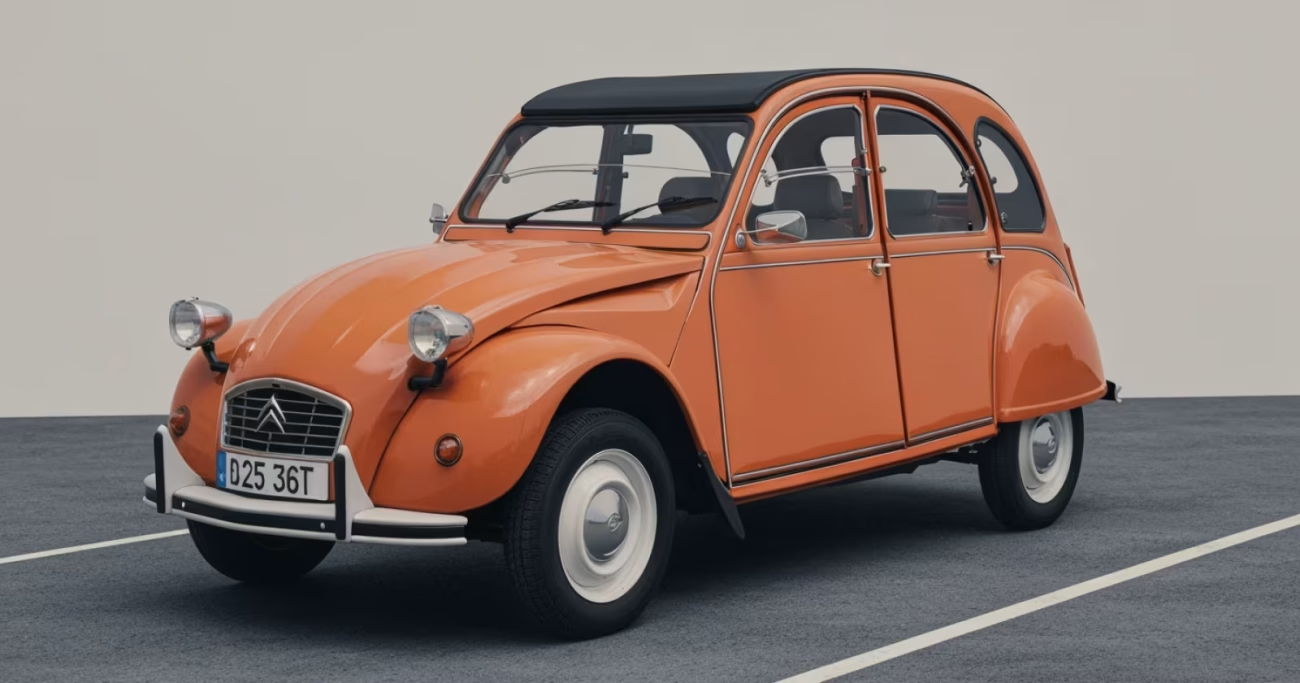
Citroën is bringing back one of the most recognizable small cars ever built, and the target price is below €15,000.
That makes the new electric 2CV less of a nostalgia project and more of a direct shot at the future of cheap urban EVs.
The comeback is bigger than retro styling
I see plenty of automakers revive old badges because the name still has emotional value. This one feels different because the original 2CV was not a luxury toy, a collector fantasy, or a weekend accessory.
It was transportation for normal people. Citroën built more than 9.2 million examples from 1948 to 1990, and the car became a symbol of low-cost mobility across Europe.
The new version is expected to keep that spirit but swap the old two-cylinder simplicity for a fully electric layout. Citroën CEO Xavier Chardon framed it as a modern people’s car, built in Europe and designed to democratize electric mobility.
That word matters. EVs have become faster, heavier, and more expensive, but the 2CV name only works if the car feels accessible. If Citroën gets this right, it could make affordability feel fashionable again.
| Spec | Detail |
|---|---|
| Model | Citroën 2CV electric hatchback |
| Target price | Below €15,000, about $17,438 |
| Powertrain | 100% electric |
| Production plan | Pomigliano d’Arco, Italy |
| Launch timing | E-car project begins in 2028 |
| Original production | More than 9.2 million built |
| Unexpected detail | Old-school twist handle for the rear hatch |
Fiat should be watching this very closely
The real story is not just that Citroën is reviving a famous car. It is that the revived 2CV appears aimed straight at the kind of compact, charming electric city car territory Fiat has owned emotionally for years.
From early descriptions, the new 2CV has a rear three-quarter shape that brings the Fiat 500 to mind, especially around the steep liftgate. But Citroën appears to be giving it 4 doors, more length, and usable rear-seat space.
That is where this gets interesting. The Fiat 500e has style, but it is not known for being especially cheap in many markets. A sub-€15,000 Citroën with heritage, practicality, and European assembly could change the conversation fast.
I would not call it a Fiat copy. The details sound too specific for that. The black roof, black fascia pieces, orange-yellow paint, simple gray wheels, and ribbed hood all point back to the old 2CV rather than chasing someone else’s design language.
What Citroën is really reviving here
The original 2CV was famously basic. Its earliest 375cc air-cooled flat-twin made just 9 horsepower, and even later versions were still painfully slow by modern standards.
That was part of the charm. Owners joked that it could reach 60 mph eventually, yet the car earned a reputation for surviving abuse, rough roads, and everyday life with a kind of stubborn dignity.
Its odd nicknames say everything: Tin Snail, Umbrella on Wheels, Ugly Duckling, and Dos Caballos in Spain. Those were not insults so much as signs of affection for a car that was useful before it was glamorous.
Then there is the James Bond connection. A pale yellow 2CV appeared in 1981’s For Your Eyes Only, where it rolled, bounced, and kept going through a chase scene that made the little Citroën look almost indestructible.
I think that matters because the new car cannot win on speed alone. It has to feel clever, durable, friendly, and slightly strange. A revived 2CV that becomes too polished would miss the point completely.
The €15,000 target has a hidden catch
Here’s the catch: building a modern electric car in Europe for less than €15,000 is extremely difficult. Battery costs, safety requirements, software, labor, and regulation all push prices upward.
That is why Stellantis is not trying to do this in isolation. The company has pointed to partnerships involving Leapmotor and Dongfeng as part of its lower-cost electric strategy, alongside broader plans to refresh and launch dozens of vehicles globally by 2030.
Citroën has not confirmed every technical detail. Reports have connected future E-cars to Stellantis’ small-car architecture plans, but the company has been careful about naming the exact platform under the 2CV.
What we do know is that Stellantis sees the car as a key part of a new E-car push expected in 2028. Assembly is planned for Pomigliano d’Arco in Italy, which adds a twist to a model so closely tied to French identity.
Some French loyalists may not love that. I suspect most buyers will care more about price, range, design, and whether the car feels honest. A cheap EV with a beloved badge gets forgiven for a lot if it delivers.
The U.S. will probably miss the fun
The most frustrating part for American buyers is obvious. This cheap electric 2CV is not expected to come to the U.S., at least not in the form being prepared for Europe.
That is not surprising. Tiny European hatchbacks usually struggle against U.S. crash rules, consumer tastes, dealer economics, and highway expectations. Americans keep asking for affordable EVs, but the market keeps receiving larger and pricier ones.
Still, I think the 2CV matters beyond Europe. If Citroën can prove that an affordable EV can be desirable without being overpowered or oversized, other brands will have fewer excuses.
Small cars have been treated like a dying category for years. But city congestion, high ownership costs, and tightening emissions rules are making the case for simple electric runabouts stronger, not weaker.
Why this small EV could matter
For me, the strongest part of this story is the contrast between past and future. The old 2CV was shaped by taxation, rural roads, and postwar practicality. The new one is shaped by emissions rules, battery economics, and urban affordability.
Different era, same mission. That is rare in the car business, where revivals often turn into expensive lifestyle products that betray the original idea.
Citroën seems to understand that the badge only has power if the price stays low. A €15,000 target gives the car an immediate identity before anyone even sees the final production version.
If the range is usable, the cabin is practical, and the styling keeps enough of the original weirdness, this could be one of the most important small EVs of the decade. Not because it is fast, but because it remembers what small cars are supposed to do.
The verdict
I do not think the new 2CV needs to impress supercar fans, luxury buyers, or spec-sheet obsessives. It needs to make electric mobility feel reachable, charming, and rational again.
Fiat, Volkswagen, Renault, and every budget EV maker in Europe should pay attention. Citroën is not just dusting off a famous name; it is trying to reclaim the idea of the honest people’s car.
The risk is that cost pressures dilute the promise before production arrives. But if Stellantis holds the line on price, the electric 2CV could become the rare retro revival with a real reason to exist.
If affordable EVs matter to you, keep this car on your radar as it moves toward its full reveal and 2028 launch window. I would watch the final price, range, and production design closely, because this could be the small electric car that forces bigger brands to stop making excuses.
