
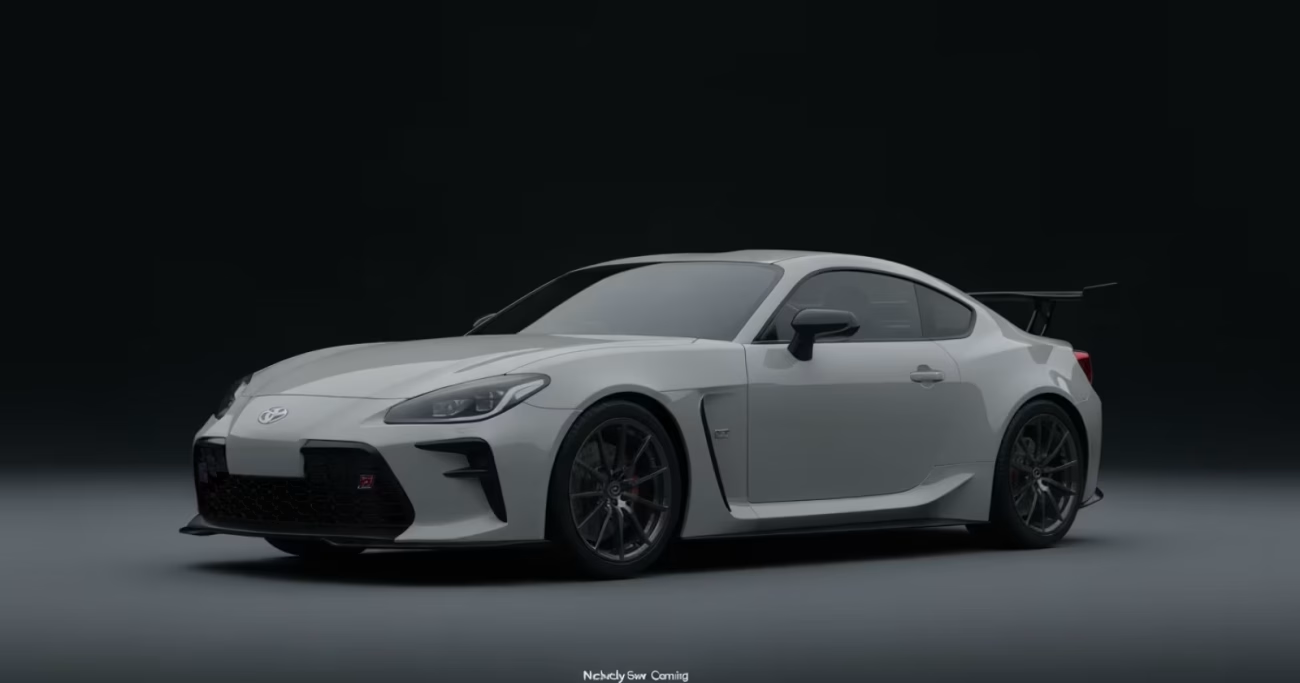
Toyota is not just building a rare supercar. It is preparing to decide who deserves to buy one.
Toyota Is Treating Ownership Like An Audition
I have seen automakers limit production, raise prices, and quietly reward loyal customers before. What Toyota is preparing for the GR GT feels more personal, because the company appears to be screening for intent, not just wealth.
The idea is simple but unusually aggressive. Toyota wants the people who buy this V8-powered coupe to drive it, keep it, maintain it properly, and represent the Gazoo Racing brand as serious enthusiasts rather than quick-profit speculators.
That matters because hot performance cars have become financial instruments. Limited production creates instant demand, and the first wave of cars can end up parked in climate-controlled garages or listed online with brutal markups before most fans ever see one on the road.
Toyota seems determined to slow that cycle down. According to comments attributed to Gazoo Racing Sports Car Director Jeff Bal, the buying process will be exhaustive, with prospective owners evaluated before allocations are handed out.
The company has not fully explained the criteria yet. Still, the direction is clear enough: Toyota does not want reckless clout-chasers, garage queens, or flippers defining the first chapter of its new flagship.
The 641 hp Number Changes Toyota’s Image
The GR GT is not another mild special edition with louder trim and a heritage badge. It is expected to use a 4.0-liter twin-turbocharged V8 hybrid system producing roughly 641 hp and about 627 lb-ft of torque.
That output places Toyota in a completely different conversation. I am talking about the same performance airspace occupied by serious grand-touring exotics, not just tuned versions of familiar sports cars.
| Spec | Detail |
|---|---|
| Model | Toyota GR GT coupe |
| Expected output | About 641 hp and 627 lb-ft |
| Powertrain | 4.0-liter twin-turbo V8 hybrid |
| Layout | Front engine with rear hybridized transaxle |
| Structure | All-aluminum monocoque |
| Buyer process | Screened allocations for serious drivers |
| Unexpected detail | Sold through select Lexus retailers |
The real story is not just the headline power figure. It is the engineering approach behind it, especially the front-mounted V8 paired with a rear-mounted hybridized transaxle.
That layout suggests Toyota is chasing balance as much as speed. A low center of gravity, lightweight structure, and aluminum-intensive construction point toward a car built for sustained driving rather than one-lap theater.
There is also an interesting intake detail. A novel manifold design is expected to help share pressure between both banks of the engine, improving consistency and response.
Here’s the catch: Toyota has to make this feel emotional. A hybrid twin-turbo V8 can be brutally fast, but the GR GT must also feel alive enough to justify the drama around who gets one.
The Anti-Flipping Strategy Has Real Teeth
Automakers hate flipping because it damages brand control. A company spends years building a halo car, then the first public impression becomes inflated resale listings instead of real owners driving the machine.
Toyota has already played this kind of defense before. With the first-generation Lexus LFA in the US, buyers initially entered a 2-year lease structure before they could fully purchase the car, which helped keep early cars away from instant resale chaos.
I would not be surprised if Toyota uses some version of first-refusal language or resale restrictions with the GR GT. Those tools can require owners to offer the car back to the brand or receive approval before selling within a certain window.
Toyota has not confirmed those exact contract terms. But if the company is serious about vetting buyers, paperwork usually follows the handshake.
The goal is not only to punish flippers. It is to protect the car’s reputation during its most important years, when every delivery, sighting, and resale number shapes the mythology around it.
This is where Toyota’s decision becomes fascinating. The brand is not acting like a mass-market giant simply selling an expensive toy; it is acting like a curator guarding the identity of a performance flagship.
Lexus Retailers Make The Whole Thing Stranger
One of the more surprising details is that GR GT sales will reportedly happen through certain Lexus retailers. That means Toyota’s most intense Gazoo Racing road car may arrive with Lexus-level service treatment.
I actually think that is smart. Anyone buying a rare, high-output hybrid V8 coupe will expect white-glove support, and Lexus dealers already know how to manage high-touch customers better than most mainstream showrooms.
The ownership process will also include a Gazoo Racing Meister. That person is expected to guide buyers through screening, ordering, service questions, and long-term ownership support.
Toyota reportedly wants that specialist to remain part of the owner experience well after delivery. I like that approach because complicated halo cars need continuity, not a random service desk handoff every time something unusual happens.
What Toyota isn’t saying yet is how many buyers will make it through the process. Allocation scarcity is where emotions get sharp, especially if longtime Toyota loyalists lose out to well-connected collectors.
There is also the matter of the GR GT’s electric Lexus sibling. The next LFA-related model is expected to share the aluminum-intensive structure while taking an all-electric path, which gives Toyota and Lexus two very different ways to attack the exotic performance market.
This Is About More Than One Supercar
The GR GT represents Toyota trying to reshape its performance identity from the top down. The GR Supra, GR Corolla, and GR86 already gave enthusiasts reasons to care, but this coupe aims at a more exclusive and symbolic level.
That is why the buyer screening matters so much. Toyota is not only selling horsepower; it is selecting the first ambassadors for a car that could define Gazoo Racing’s road-car credibility for years.
I also think rivals should pay attention. Porsche, Mercedes-AMG, Chevrolet, Nissan, and even Ferrari understand that ownership experience can be as important as raw performance when buyers are spending serious money.
The GR GT’s biggest advantage may be its contrast. Toyota has the reliability reputation, Lexus has the service reputation, and Gazoo Racing has the motorsport attitude. Put those together, and the result could feel very different from the usual exotic playbook.
But there is risk here. If the vetting process feels arrogant or unclear, Toyota could alienate the very enthusiasts it wants to attract.
The verdict is that Toyota is making the right move, even if it annoys people. A 641 hp GR flagship deserves to be driven, not treated like a stock certificate in a locked garage.
If Toyota gets the screening, support, and driving experience right, the GR GT could become one of the defining Japanese performance cars of this decade. I would watch allocations closely, contact a qualified Lexus retailer early, and be ready to prove you are buying this car for the road, not the resale listing.
