
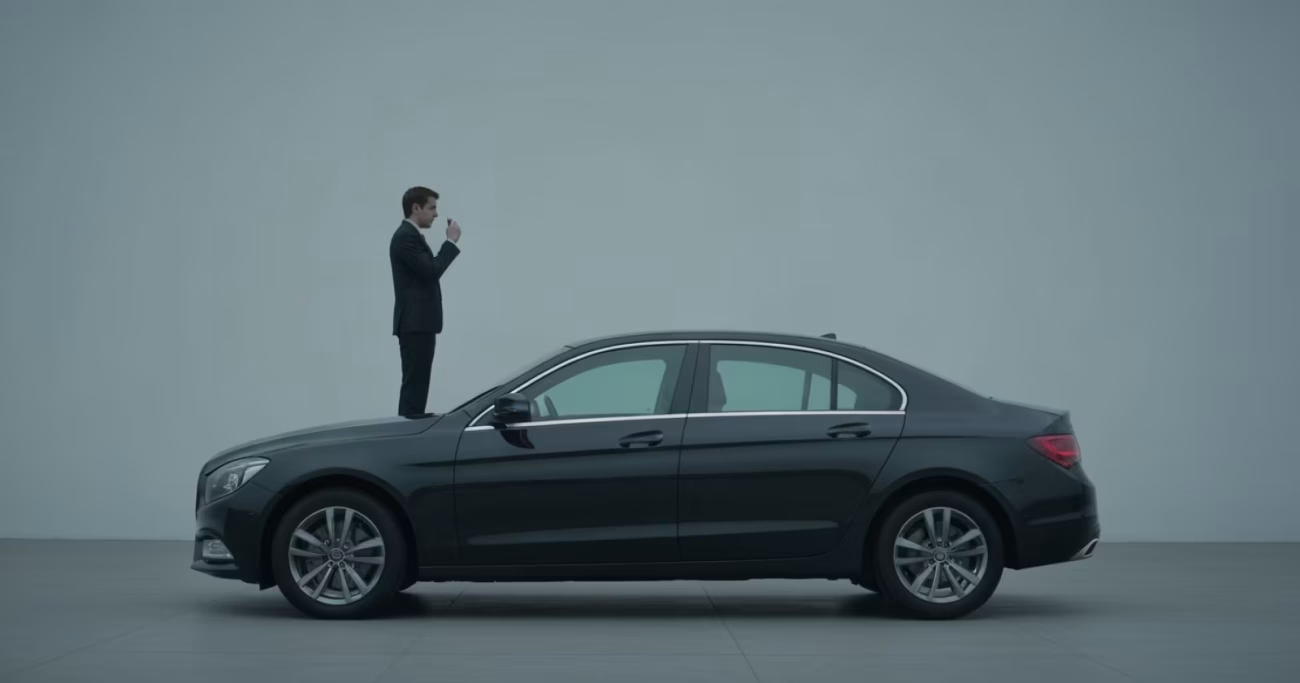
The US Congress is weighing language that could block Mercedes-Benz from selling vehicles in America. The trigger is not one model, but a 9.98% stake tied to China and a wider crackdown on foreign-adversary ownership.
That creates a shockingly blunt threat for a brand with 2 US assembly plants and more than 10,000 American workers. If the wording survives, the real story is bigger than Mercedes.
Why one shareholder could upend everything
The bill under review would target automakers with “any direct or indirect equity interest by a foreign-adversary government.” That sounds broad because it is broad, and here’s the catch: Mercedes-Benz has major shareholder links that could fall into the crosshairs.
BAIC, a Chinese state-owned automaker, holds 9.98% of Mercedes-Benz. Tenaciou3, owned by Geely founder Li Shufu, holds 9.7%. Those stakes may not control the company, but the proposed language appears to care less about control and more about exposure.
| At a glance | Detail |
|---|---|
| Threat level | Possible US market ban |
| China-linked stake | 9.98% held by BAIC |
| Second major stake | 9.7% held by Tenaciou3 |
| US footprint | 2 assembly plants in America |
| American jobs | More than 10,000 workers |
| Truck exposure | Close to half of US heavy trucks |
Mercedes builds in America, but politics may ignore that
Mercedes-Benz is not some offshore brand trying to sneak in from the margins. It operates major US plants, builds SUVs and vans locally, and serves both the domestic market and export demand from the same footprint.
The real story is that local production may not be enough if the bill keeps its current wording. An exemption exists in the draft for automakers building in the US since at least January 1, 2021, but Mercedes-Benz may still miss the cutoff depending on how lawmakers define the rule.
Volvo is the warning sign Mercedes cannot ignore
This is not the first time Chinese investment has collided with US auto policy. Another recent law aimed at connected vehicles required specific approval for Volvo to keep selling in the US, and Volvo eventually received that clearance.
That precedent matters because it shows how political this fight has become. If Volvo could be forced into a special permission process, Mercedes-Benz could end up chasing the same kind of exception, especially if the bill moves from idea to law.
The truck business could be the real prize
What Mercedes-Benz isn’t saying loudly enough is that the issue may not stop at passenger cars. If the bill is interpreted broadly, Daimler Trucks could be dragged in too, and that would hit a business with huge US importance.
Freightliner, part of Daimler Trucks, builds close to half of all heavy trucks sold in the US. BAIC also has a 6.49% stake in the truck company specifically, which means the politics around this bill could reach far beyond luxury sedans and SUVs.
How it stacks up
| Model | US footprint | China-linked ownership | Market risk | Edge |
|---|---|---|---|---|
| Mercedes-Benz | 2 assembly plants | BAIC 9.98%, Tenaciou3 9.7% | High under current draft | Deep US manufacturing, but exposed ownership |
| Volvo | US plant in operation | Geely 80% | Medium under similar rules | Already tested by US approval process |
| Ford | Massive US production base | None of concern here | Low | Political distance from the bill’s target |
The table makes the imbalance obvious. Mercedes-Benz has the most to lose because it is large enough to be noticed and global enough to be targeted, yet still deeply rooted in America.
That combination is dangerous in Washington. A company big enough to matter becomes a symbol, and symbols get used in policy fights long before the legal language is fully settled.
Why this matters beyond one brand
This bill could reshape how investors think about automakers with global shareholding structures. If lawmakers decide that even minority stakes are disqualifying, the entire industry will have to rethink where its money comes from.
It also raises the stakes for companies with US factories and international parents. The market may reward local jobs, but the real test is whether politicians reward them too when the ownership chart looks messy.
For readers following the auto industry, this is the kind of policy fight worth watching closely. If the current language survives review, Mercedes-Benz may be the biggest headline, but it will not be the only automaker forced to defend its place in America.
I’d keep an eye on how the bill changes before the vote. If the language stays broad, this could become a defining 2026 fight over who gets to build and sell cars in the US.
