
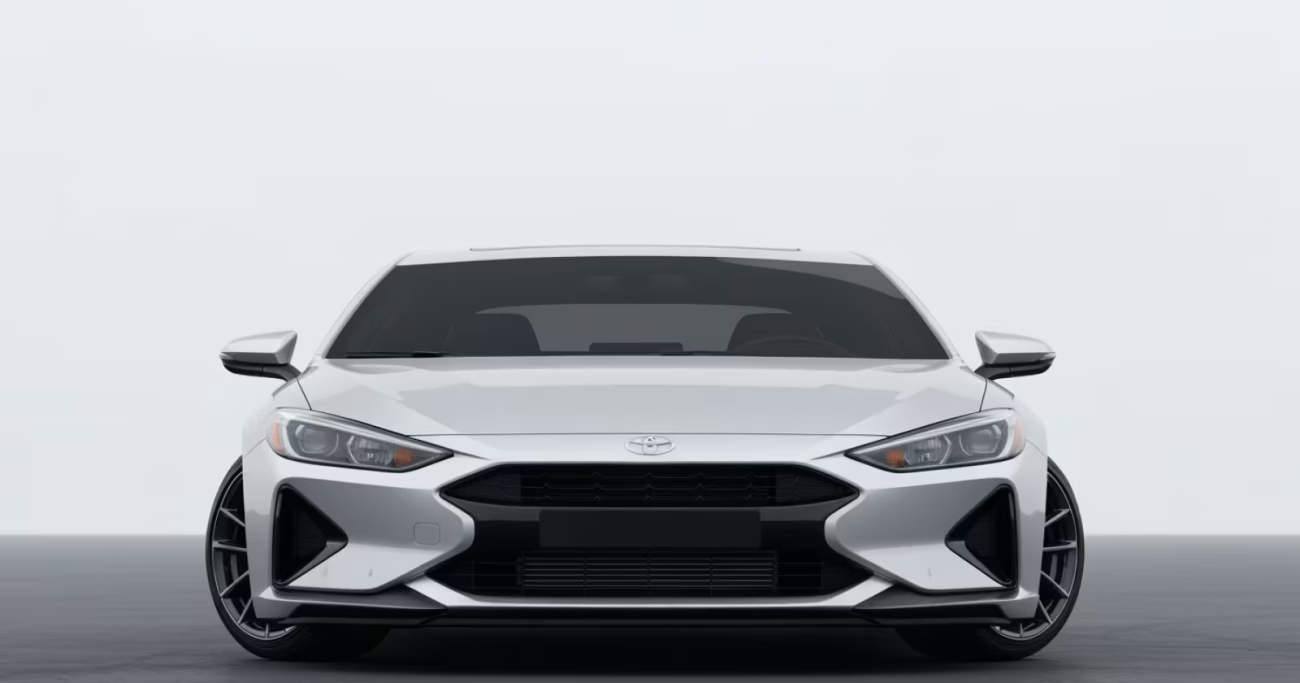
Toyota has filed a patent that could let an electric vehicle stall like a manual transmission car. The idea goes far beyond fake shifts and virtual redlines.
It adds a clutch pedal, a shift lever, and software that can punish bad timing with a sudden loss of torque. For EV enthusiasts, that is either brilliant or absurd.
Why a fake clutch changes the EV debate
Toyota’s core move is simple to describe and wild to imagine. It wants an EV to behave like a stick shift, down to the embarrassment of stalling.
The system uses software to simulate gear changes, engine speed, and clutch behavior. That means the driver can be told by the car when the “shift” was wrong, even though no real gearbox is there.
Here’s the catch: this is not about efficiency or range. It is about emotion, and Toyota knows many drivers still judge EVs by how involved they feel.
The real story is that the company is trying to make electric performance cars feel more alive to people who miss manual control. For some buyers, that may be enough to change how an EV feels from day one.
Hyundai already opened this door first
Hyundai has been exploring fake shifting too, especially in the Ioniq 5 N. Its setup can create a virtual redline, a rev limiter, and the sensation of pulling gears in a near-silent car.
Toyota’s version pushes the joke farther. Instead of just simulating a shift point, it can simulate failure, including the jerk and pause that come with a real stall.
That is where the rivalry gets interesting. Hyundai is making EVs playful, while Toyota appears to be making them performative in a more old-school way.
What Toyota isn’t saying is just as important: this is still a patent, not a production promise. Automakers file ideas to protect them all the time, and many never leave the drawing board.
The Lexus RZ is the likely test bed
The patent points toward Lexus as the first likely home for the system. The Lexus RZ already sits in the brand’s EV lineup, and a performance-focused version would fit the concept neatly.
Toyota’s filing also describes a fake hill start, a launch control mode, and even automatic assistance if the computer decides the driver is not “good” enough. That sounds playful until the car starts grading behavior.
Here’s the catch: the whole thing is software-heavy, so Toyota can add the experience without major hardware changes. That makes it cheaper to experiment, and easier to scale if executives think enthusiasts will buy into it.
The real story is that automakers now see involvement as a feature, not a side effect. If the EV market wants skeptics to come along, it may need more than silence and instant torque.
What this says about the future of driving
Fake manuals are no longer just a novelty idea. They are becoming a serious tool for brands trying to make electric cars feel less sterile and more human.
That matters because the most vocal critics of EVs often complain about missing engagement, not missing technology. Toyota is trying to answer that complaint with theater that feels oddly authentic.
| Model | Power | Transmission Trick | Likely Edge |
|---|---|---|---|
| Toyota Lexus RZ concept | Not disclosed | Fake clutch, stall logic | Most immersive gimmick |
| Hyundai Ioniq 5 N | 641 hp | Virtual gears and redline | Proven track-focused fun |
| Lexus RZ 600e F Sport Performance | Not fully disclosed | Manual-style software setup | Luxury brand theater |
| Polestar 4 | 544 hp | Single-speed EV simplicity | Cleaner performance feel |
For enthusiasts, the appeal is obvious. A fake clutch can make an EV feel less like an appliance and more like a car with a personality.
For everyone else, it may sound silly, and maybe it is. But the real lesson is that manufacturers are chasing emotional connection as aggressively as they chase range.
My view is that Toyota is testing the boundaries of what an EV can feel like, not just what it can do. If this reaches production, it could give Lexus a signature trick that other brands rush to copy. For now, it is one of the clearest signs that the EV fight is moving from specs to sensation.
If manual driving still matters to you, keep an eye on Toyota’s next move and watch how Lexus turns this patent into a real cabin experience.
