
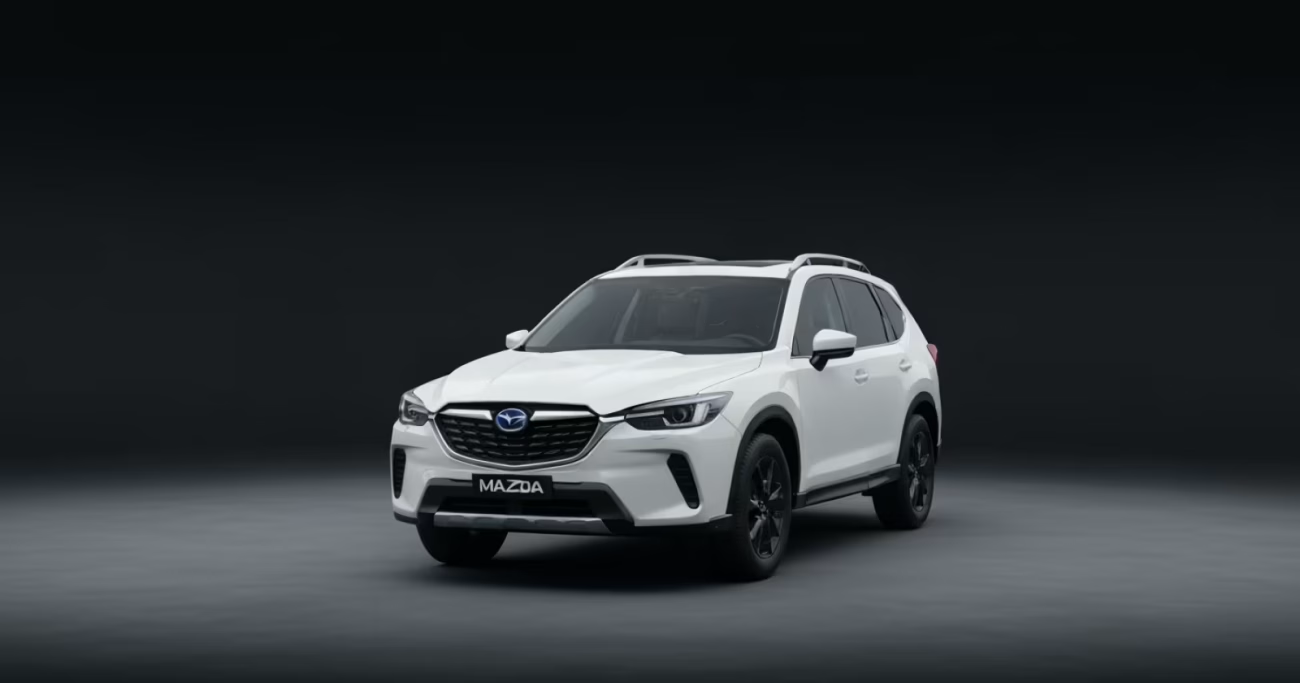
Subaru’s compact SUV momentum just snapped back in a big way. The Forester posted a 26.8% gain in May while the Mazda CX-5 fell 17.9% over the same stretch.
That split says more about buyer priorities in 2026 than any glossy launch event. Hybrids are becoming the fast lane, and brands without them are paying for it.
Subaru’s Hybrid Bet Is Paying Off Fast
The real story here is not just one strong month. Subaru’s U.S. sales rose 10.4% in May to 57,748 units, the first monthly increase this year versus 2026.
The Forester did the heavy lifting with 19,577 deliveries, and the Crosstrek added another 17,409. Both SUVs benefited from hybrid availability or stronger electrified appeal, which matters more when fuel prices stay painful and shoppers still want practical crossovers.
What Subaru is not saying too loudly is how much timing helped. The Forester was redesigned for 2026, and that fresh product cycle is now working alongside the added hybrid variant to keep it relevant.
Here’s the catch: Subaru is still down year to date overall, so this is a rebound, not a full recovery. But when one nameplate can push a brand back into growth, that is a strong signal for the rest of the market.
Why Mazda’s Safe Play Looks Risky
Mazda’s CX-5 was redesigned for 2026, yet May sales still slipped to 7,805 units. That is the part Mazda wishes it could explain away, because the vehicle looks newer, feels polished, and still lost ground while buyers waited for a hybrid.
The real story is simpler. In 2026, refinement alone is not enough if the showroom answer to fuel savings is “coming later.” Mazda is intentionally delaying its hybrid rollout to get the system right, but the market is not pausing with it.
That delay is helping the CX-50 steal attention. Mazda’s other compact SUV surged 107.2% in May to 14,897 units, showing what happens when the hybrid box is checked earlier.
And because the CX-50 is built in the U.S. while the CX-5 continues to come from Japan, shifting tariff pressure may be part of the wider picture too. Mazda’s lineup is growing, but its longtime bestseller is suddenly the one under the most pressure.
The Forester Is Winning The Value War
At a base price of $29,995, the Forester hits a sweet spot that still feels attainable for mainstream SUV shoppers. It pairs a 2.5-liter boxer engine with 180 hp, standard all-wheel drive, and 29 mpg combined.
That combination is not outrageous on paper. It is exactly the kind of sensible package that keeps families from looking elsewhere when prices, weather, and fuel economy all matter at once.
The updated Forester also has something Mazda cannot match right now: momentum backed by variety. Between the core SUV, the hybrid angle, and the Wilderness derivative, Subaru is giving different buyers reasons to stay inside the same badge.
Meanwhile, the Forester Wilderness is adding more off-road credibility and better refinement, which broadens the model’s appeal beyond commuters. That matters because the compact SUV class is no longer won by one number alone; it is won by how many real-world needs one vehicle can cover.
| Model | 2026 Starting Price | Power | May 2026 Sales | Edge |
|---|---|---|---|---|
| Subaru Forester | $29,995 | 180 hp | 19,577 | Strongest mix of price, AWD, and momentum |
| Mazda CX-5 | Not disclosed in source | Not disclosed in source | 7,805 | Fresh redesign, but no hybrid yet |
| Mazda CX-50 | Not disclosed in source | Hybrid available | 14,897 | Proof that electrification is driving demand |
| Subaru Crosstrek | Not disclosed in source | Improved hybrid option | 17,409 | Supports Subaru’s sales rebound |
What This Says About 2026 Buyers
I see a market that is rewarding practical electrification faster than automakers expected. Subaru’s May rebound shows that buyers will move for hybrids without waiting for a full EV transition, especially in SUVs.
Mazda’s challenge is more complicated. It is growing overall, but its best-known compact SUV is losing speed just as the CX-50 and other electrified products are gaining relevance.
For industry watchers, this is the clearest evidence yet that hybrid timing matters as much as design. For enthusiasts, it is a reminder that the most important battles are often fought in the boring-looking parking-lot segment where brands make or lose volume.
For family buyers, the message is even simpler: the Forester now looks like the safer all-around pick, and Subaru’s sales prove it. If Mazda wants to stop the slide, the hybrid CX-5 cannot arrive soon enough.
The lesson is plain. In 2026, a compact SUV with the right efficiency story can still move the market, and Subaru is showing exactly how to do it. If you are tracking where the next sales surge will come from, this is the battle to watch closely.
