
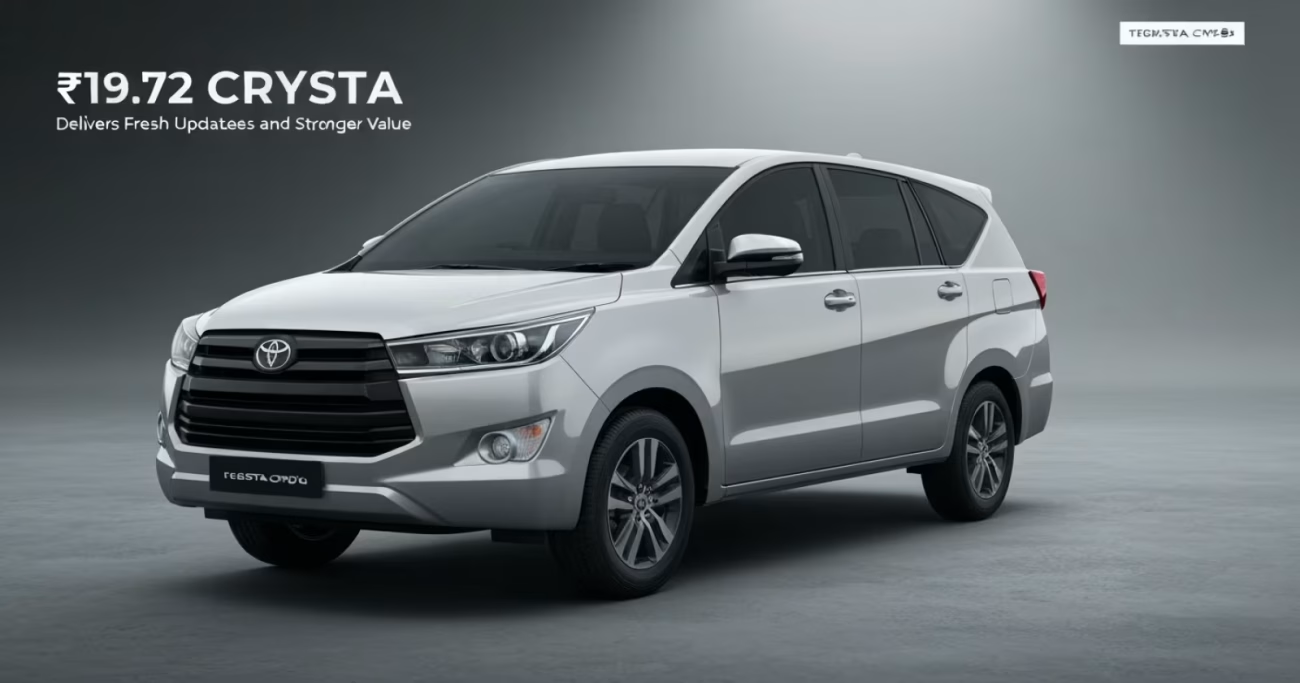
Some nameplates survive because they keep changing just enough to stay relevant, and this one has done exactly that in India. I can see why Toyota still knows how to keep buyers interested, because this latest refresh is all about subtle upgrades, a stronger road presence, and a cabin that feels more premium than before.
The most important part is the entry price, which keeps this MPV squarely in the conversation for fleet buyers, family users, and anyone who values durability over drama. Even with the newer Hycross in the showroom, the ladder-frame diesel format still has a loyal audience that wants a familiar formula with a fresher face.
What has changed outside
I think the biggest visual update is the new fascia, which gives the MPV a more muscular and rugged look. The grille has been reworked with a thick chrome surround, and the black applique at the centre adds a cleaner break for the number plate area.
The front bumper also gets a redesigned treatment with more chrome detailing, while the rear bumper has been tweaked too. These are not wild changes, but they are the kind that make an ageing model look better aligned with today’s road presence expectations in India.
From my perspective, the overall stance still fits what Indian MPV buyers want: tall roof, practical proportions, and a commanding look that works in both city traffic and long highway runs. It remains the kind of vehicle that feels at home outside a dealership, on a busy urban road, or moving confidently through intercity traffic.
Interiors get a richer feel
Inside, Toyota has tried to lift the ambience without disturbing the formula that buyers already trust. I like the way the Grace Copper inserts are used across the steering wheel, dashboard, centre console, and door trims because they make the cabin feel a bit more special.
There is also updated detailing around the AC controls, and the new dual-tone seat upholstery helps the cabin feel fresher. These changes may look modest on paper, but in a family MPV they matter because the cabin is where most owners spend their time and form their opinion.
For me, the update is less about flashy tech and more about making the interior feel cleaner, warmer, and more modern without losing its practical character. That approach makes sense in India, where buyers often judge premium value by how durable, comfortable, and easy the cabin feels in daily use.
Features and mechanicals stay familiar
Toyota has added a wireless charging pad for the VX and ZX trims, which is a useful addition for modern users who keep their phones busy all day. The ZX variant also gains TPMS, and that adds a layer of convenience and confidence for long-distance travel.
Mechanically, the formula remains unchanged, and I think that will please the audience that chooses this MPV for reliability more than novelty. Under the bonnet sits the 2.4L turbo diesel engine, producing 148 bhp and 343 Nm, paired with a 5-speed manual gearbox that sends power to the rear wheels.
That setup is old-school in the best possible way for many Indian buyers. It is the kind of drivetrain that feels honest, durable, and predictable, especially when the vehicle is used for family duty, chauffeur-driven travel, or commercial running.
Why this update still matters in India
The Innova badge has built a reputation that very few vehicles in India can match. Toyota has sold over 1.3 million units of the Innova family, and that tells me the brand has understood Indian expectations better than almost anyone else in this segment.
This refreshed version continues that story by keeping the familiar strengths intact while adding enough freshness to justify attention in 2026. It does not try to reinvent the MPV category, and that restraint is exactly why it works.
Even with concerns around ageing underpinnings and the possibility that this could be one of the final major updates, the demand pattern suggests Toyota still has time to milk this formula. For many buyers, the appeal lies in a simple combination of comfort, mechanical robustness, and resale confidence.
| Item | 2026 Update Details |
|---|---|
| Launch price | ₹19.72 lakh |
| Body style | MPV |
| Engine | 2.4L turbo diesel |
| Power | 148 bhp |
| Torque | 343 Nm |
| Transmission | 5-speed manual |
| Drivetrain | Rear-wheel drive |
| Key additions | Wireless charging, TPMS, interior trim updates |
My take on the buying appeal
If I were shopping for a dependable people mover in India, I would still see strong logic in this update. The design changes add freshness, the cabin gets a more premium feel, and the proven diesel powertrain remains the biggest reason to trust it over the long term.
The presence of the newer Hycross does create an interesting internal choice for Toyota, but I do not think that weakens this model’s relevance. Instead, it gives buyers a clearer split between modern hybrid sophistication and rugged diesel simplicity, which is exactly the kind of choice Indian customers appreciate.
What stands out to me most is that Toyota has not overdone the update. The result is a vehicle that still feels familiar, but just polished enough to stay desirable in a market where loyalty is earned slowly and lost quickly.
If you are following India’s MPV market closely, this is one update worth keeping on your radar. I would watch how buyers respond over the coming months, because the reaction will tell us whether Toyota can stretch this trusted formula a little further or whether this refreshed version becomes a graceful final chapter.
Personally, I think the recipe still works. If you value strong resale, proven diesel performance, and a cabin that has been gently upgraded rather than reinvented, this is the kind of launch you should not ignore, so I would keep an eye on showroom availability and real-world buyer response next.
